page
FSA Strategy: Annual Update on Progress Indicators
FSA 26/06/04 - Report by Strategy Unit
1. Summary
1.1 This paper provides the third annual update on the high-level progress indicators for our strategy, ‘Food you can trust,’ agreed by the Board in March 2022. The indicators are drawn from a mix of internal and external data sources and are intended to monitor our progress against our three strategic ambitions set out in the ‘FSA 3-year Corporate Plan’.
1.2 Overall, the indicators suggest that we continue to make sustained progress against all three ambitions. Public, business and stakeholder confidence in food safety, food authenticity and the FSA’s role remain high. Recent consumer data indicates a recovery and slight improvement in trust following earlier declines. Business data suggests that trust in the FSA has declined but remains at a relatively high level. This supports the assessment that we are maintaining food you can trust (Ambition 1) but should continue to monitor measures relating to the confidence of small and micro food business operators.
1.3 High and stable levels of compliance across the regulated system provide strong assurance that baseline food safety and authenticity standards are being maintained (Ambition 2). Rates for two foodborne pathogens exceeded agreed thresholds in the most recent surveillance data and investigations are underway to understand the drivers and inform proportionate risk management. An increase in the number of incidents, including allergen-related incidents, should be monitored to understand whether this is likely to be an ongoing trend and to identify any underlying causes. The National Food Crime Unit (NFCU) continues to contribute to protecting the integrity of the food system through sustained disruption activity. Public confidence in food safety and labelling remains high, reinforcing the picture that regulatory controls continue to be effective and visible.
1.4 Indicators related to healthier and more sustainable food show positive responses in self-reported consumer behaviour, with a large proportion of the population reporting dietary changes for health and sustainability reasons. While this does not demonstrate a direct causal link between these trends and FSA activity, case studies, particularly in Northern Ireland, show how we are using our expertise and partnerships to make a meaningful contribution to longer-term change (Ambition 3) There is potential for the FSA to undertake further activity in relation to sustainability and health, for example supporting the UK government’s work to develop and implement mandatory reporting and targets for the healthiness of food sales.
1.5 Taken together, the indicators suggest that we are making progress against our strategic ambitions, though areas such as business confidence and incidents should be monitored closely. With 2026/27 being the final year of the current FSA strategy, this update provides an evidence base for the forthcoming planned strategy refresh.
2. Introduction
2.1 The FSA strategy, ‘Food you can trust,’ was agreed by the Board in March 2022. The strategy sets out our vision for food that is safe, that is what it says it is, and that is healthier and more sustainable. The ‘FSA 3-year Corporate Plan’ was published in July 2023. It sets out how we will deliver the strategy and monitor progress through a set of high-level indicators.
2.2 Baseline data for the progress indicators was provided in the corporate plan. This is the third annual update on the progress indicators. Previous papers were submitted to the Board in 2024 and 2025.
2.3 We monitor delivery of the strategy against three strategic ambitions set out in the corporate plan:
-
Ambition 1: Maintaining food you can trust
-
Ambition 2: Maintaining food standards, so that food is safe and is what it says it is
-
Ambition 3: Growing our contribution to, and influence on, food that is healthier and more sustainable
2.4 The indicators in this paper provide a high-level, strategic overview of trends relating to our strategy. These are intended to show our progress towards our strategic ambitions and ensure that we are accountable to our stakeholders and to the public. They also help to identify emerging risks and issues which may warrant further attention. The data are obtained from both FSA and external sources.
3. Ambition 1 – Maintaining food you can trust
3.1 Our ambition is that trust and confidence in the food system and in the FSA remain at a high level.
3.2 We maintain trust by setting and enforcing clear, evidence‑based food safety and authenticity rules; identifying, assessing, and communicating food‑related risks using transparent, science‑led processes, and acting independently and visibly in the public interest. By responding decisively to incidents and emerging risks and by explaining our decisions clearly, we provide assurance that risks are being managed and consumers are protected.
3.3 Our indicators for ambition one are:
-
Consumer confidence that the food we buy is safe to eat,
-
Consumer confidence that the information on food labels is accurate,
-
Consumer confidence that we can rely on the FSA to protect the public from food related risks, and
-
Research into stakeholder trust in the FSA.
3.4 The consumer data come from the ‘Food and You 2’ survey, the stakeholder data come from the ‘Small and Micro Food Business Operator (FBO) Tracker’.
Food and You 2
3.5 The most recent data for the Food and You 2 survey come from wave 11 covering May-August 2025 and published in March 2026. For these data we only comment on differences if they are statistically significant. Where there is not a statistically significant difference, we refer to results as stable or having no change. Statistically significant results which vary less than 10 percentage points are referred to as ‘slight’ changes.
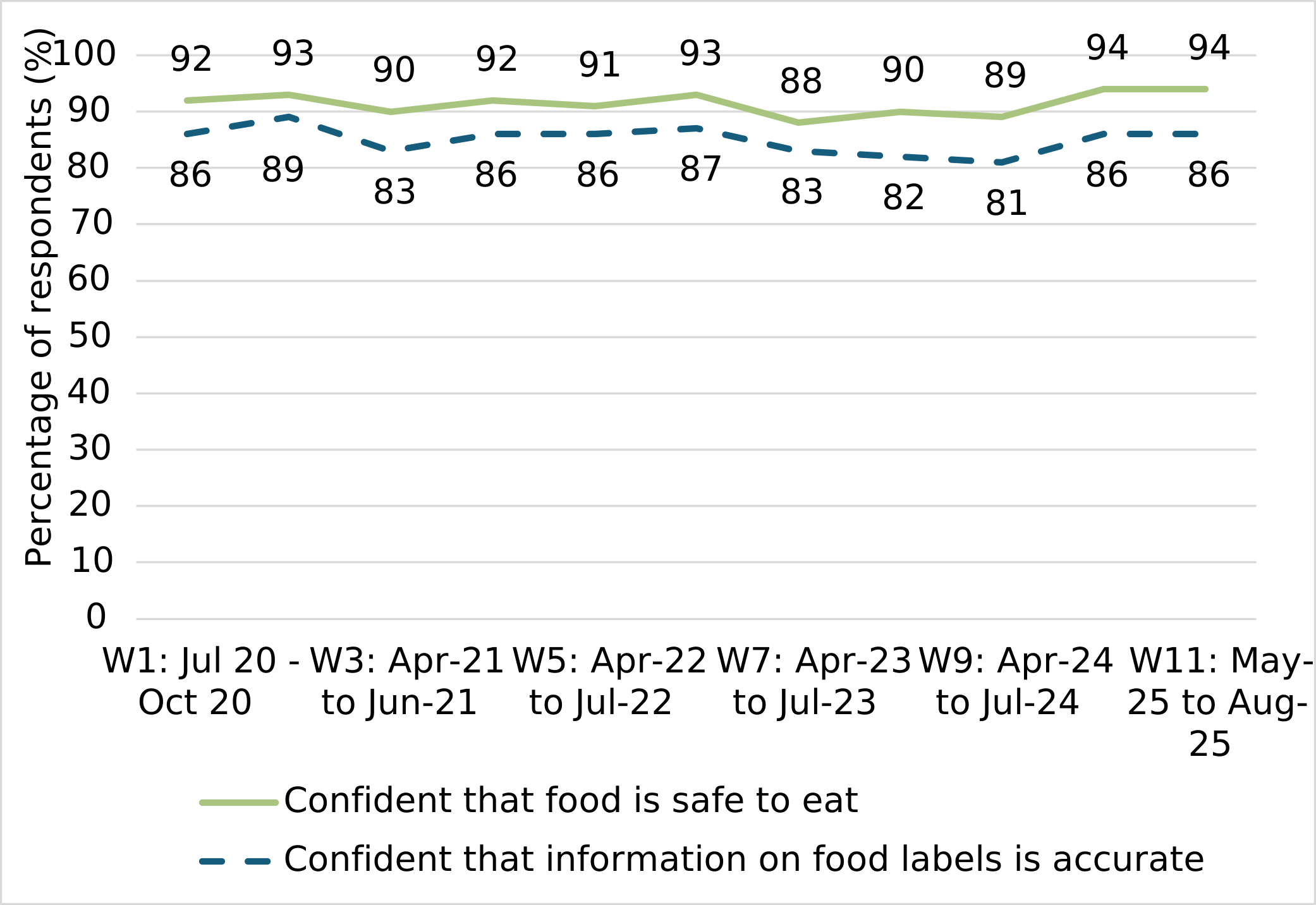
3.6 Most respondents reported confidence (meaning they were very confident or fairly confident) in food safety and authenticity in wave 11. 94% of respondents reported that they were confident that the food they buy is safe to eat, and 86% of respondents were confident that the information on food labels is accurate (Figure 1). Both demonstrate a slight increase in confidence, following a slight decline in 2023 and 2024, but are in line with data collected prior to this.
Figure 1 Confidence that food is safe to eat and that information on food labels is accurate. Food and You 2 Waves 1-11
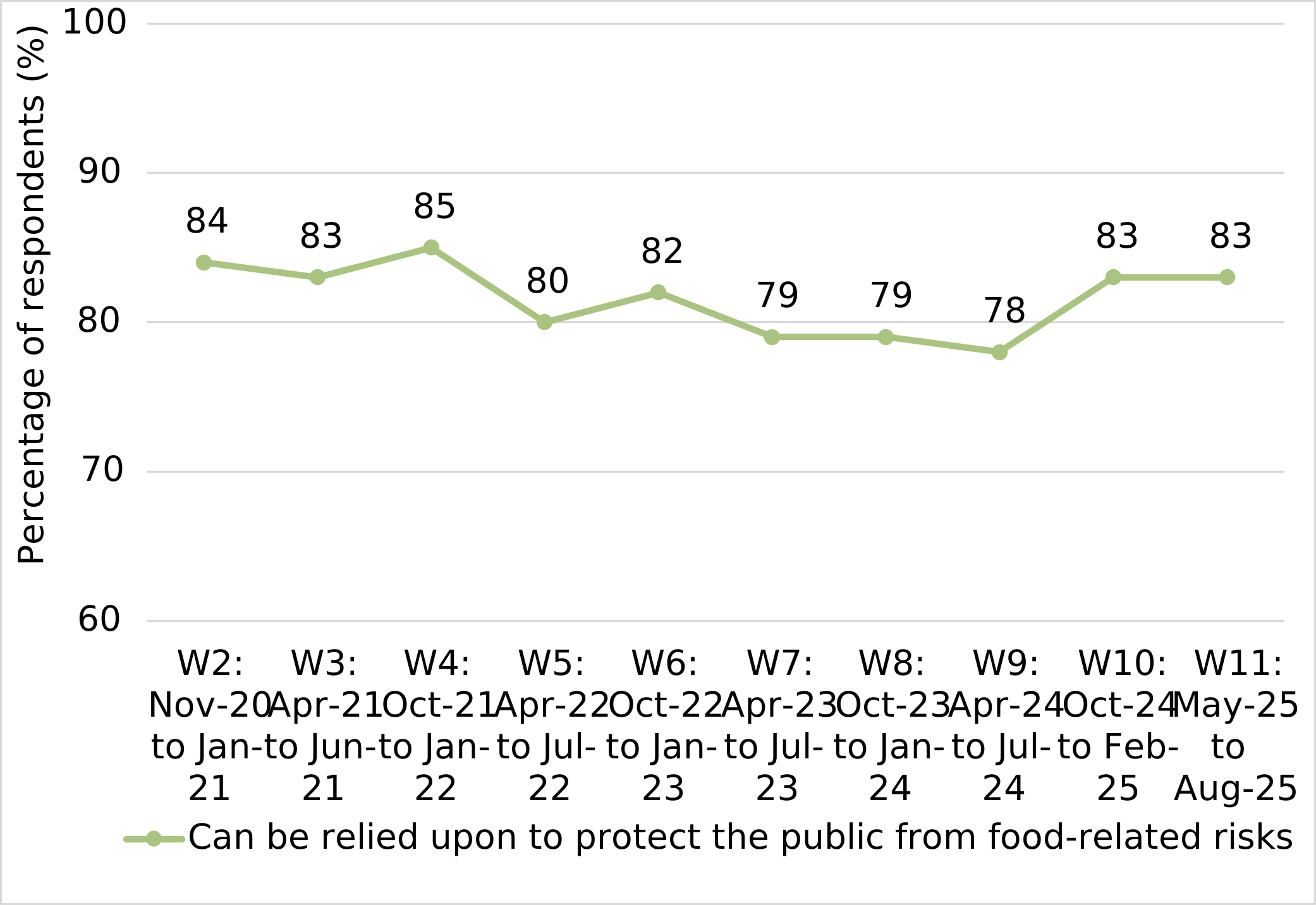
3.7 The percentage of respondents who reported being confident that the FSA (footnote 1) can be relied upon to protect the public from food-related risks (such as food poisoning or allergic reactions from food) gradually declined from 84% in November 2020 to January 2021 data to 78% in April to July 2023 before recovering with a slight increase to 83% from the data collected from October 2024 onwards (Figure 2). Further analysis of the Food and You 2 data showed no significant differences between nations (England, Wales, and Northern Ireland) on these measures over time.
Figure 2 Confidence that the FSA can be relied onto protect the public from food-related risks. Food and You 2 Wave 2-11
Small and Micro Food Business Operator (FBO) Tracker
3.8 Fieldwork for the Small and Micro FBO Tracker Wave 5 took place in September-November 2025 with 700 small and micro FBOs. The latest data from the tracker show that 96% of small and micro FBOs surveyed were aware of the FSA (a reduction from 98% in 2023), but only 24% reported that they knew a lot about us (reduced from 32% in 2023).
3.9 Respondents also scored the FSA highly on trustworthiness with an average score of 9.0 out of 10, consistent with previous data (8.8 in 2023).
3.10 91% of respondents were confident that the FSA works hard to ensure that food safety and standards are maintained and improved within the food industry, which was consistent with the previous wave of the survey. However, the survey data demonstrate that confidence in the FSA has declined significantly in several other measures since 2023, though it is unclear what the underlying causes of this change are.
-
Confidence that ‘The FSA can be trusted to use any information you give to them appropriately’ reduced from 94% to 87%.
-
Confidence that ‘The FSA is good at identifying where poor standards exist and takes appropriate action’ reduced from 90% to 85%.
-
Confidence that ‘The FSA understands the needs of businesses like yours’ reduced from 87% to 79%
-
Confidence that ‘The FSA effectively communicates and promotes regulations within the food industry’ reduced from 83% to 74%.
3.11 The research paper ‘Understanding Consumer Trust in the FSA and Food System’ published in 2025 observed a general decline in trust in the UK government, aligning with a downward trend in institutional trust seen globally. The Business Perceptions Survey 2024 remains the most recent UK‑wide evidence on business confidence in regulators. It shows a continued deterioration in trust‑related perceptions compared with 2022. This suggests that the decline in trust and confidence in the FSA amongst FBOs should be interpreted as part of a wider context and warrants monitoring rather than indicating a cause for concern at this time.
Conclusion for Ambition 1
3.12 The indicators suggest that the FSA continues to achieve its ambition to maintain food you can trust. Evidence from consumer research remains positive, indicating sustained public confidence in food safety, food authenticity, and the FSA’s role. Whilst a significant majority of small and micro FBOs still have confidence in the FSA, recent data show a decline in many confidence measures, though these are set against a background of declining trust in governments and regulators. The indicators point to continued resilience in trust in both the FSA and the wider food system, but we should stay vigilant for any continued decline in the trust of FBOs.
Board line of sight – Ambition 1
Public trust in the FSA has returned to previous high levels but has plateaued. The Board should consider whether we should be aiming for further improvement or maintenance of levels of public trust.
Trust in the FSA amongst small and micro FBOs has declined in most measures but remains relatively high. Due to all of the reasons above, we think that this doesn’t require immediate action but more careful monitoring. Does the Board agree?
4. Ambition 2 - Maintaining food standards, so that food is safe and is what it says it is
4.1 Our second ambition is to maintain the high levels of food safety and authenticity in the UK with risks identified early and controlled effectively. A safe and trusted food system depends on high baseline compliance, timely detection of emerging risks and credible deterrence of non‑compliance and food crime. Effective regulation reduces the likelihood and impact of harm.
4.2 We maintain food standards through a combination of direct regulation, such as in meat, dairy and wine establishments, and oversight of regulatory activity delivered by others, such as inspection of most food establishments by local authorities. We set clear regulatory requirements and monitor system‑level risk using surveillance, intelligence, and incident data. We respond proportionately to incidents and food crime, disrupting non‑compliance and addressing root causes. High and stable compliance across the regulated system provides assurance that food is largely safe and authentic.
4.3 Our indicators for this ambition in the corporate plan are:
-
Rates of foodborne disease (4 key pathogens),
-
Rates of business compliance (Food Hygiene Rating Scheme and meat processing establishment and dairy hygiene inspections),
-
Food incidents,
-
Allergen related food incidents, and
-
Responses to food crime.
4.4 The 3-year plan also includes an indicator relating to the targeted sampling of food product compliance. Targeted sampling has continued over a number of workstreams. However, the ‘basket of food’ element of this surveillance was decommissioned in 2024/25 in favour of a more intelligence and prioritisation – led approach. This has enabled the FSA to respond to emerging trends of concern in a more timely fashion, e.g. Dubai Chocolate for which the FSA issued a press release to consumers prior to Christmas 2025 due to labelling and contamination issues.
4.5 The most recent data on foodborne disease rates are taken from official surveillance for calendar year 2024, published by UK Health Security Agency and the devolved public‑health bodies in June 2025, with further analysis published in December 2025. The Board has received updates on these data, including at its March 2026 meeting, where initial findings from investigations into increases in some pathogens were discussed.
Foodborne disease
4.6 We monitor rates of foodborne disease against agreed thresholds for four key pathogens: Campylobacter, Salmonella, Listeria monocytogenes, and Shiga toxin‑producing E. coli (STEC). The 2024 data show that rates of Campylobacter and Salmonella exceeded their threshold levels, while Listeria monocytogenes and STEC remained below their respective thresholds.
4.7 The FSA Executive has initiated investigations to understand the drivers of the increases in Campylobacter and Salmonella, with a programme of evidence‑gathering and analysis underway throughout 2026 to inform any further risk management actions. Consolidated findings from the investigation, along with a proposed action plan, will be reported to the Board as part of the next annual foodborne disease update in March 2027.
Business compliance
4.8 Business compliance, as measured through the Food Hygiene Rating Scheme (FHRS), remains high. The most recent data, covering Q4 2025/26, show that 96.9% of food businesses achieved a hygiene rating of 3 or above in their most recent inspection and 91.1% received a rating of 4 or above. This level is consistent with previous periods, with no material change over time, and continues to demonstrate a stable baseline of compliance with food hygiene requirements.
4.9 As of 1 April 2026, our audits of meat establishments report high levels of compliance with hygiene standards. The proportion of establishments achieving either ‘good’ or ‘generally satisfactory’ ratings is 99.6% in England, and 100% in both Wales and Northern Ireland. Establishments that do not achieve ‘good’ or ‘generally satisfactory’ ratings are subject to proportionate, risk‑based regulatory action, including follow‑up inspection, enforcement and, where necessary, restrictions on operations until compliance is achieved. This ensures issues are addressed promptly and public health is protected.
4.10 Audits of dairy establishments in Northern Ireland are conducted by the Department for Agriculture, Environment and Rural Affairs (DAERA) on behalf of the FSA. These audits demonstrate continued high levels of compliance with hygiene standards with 99.7% of establishments rated as ‘good’ or ‘generally satisfactory’ in 2025.
4.11 Since last year, the rating system for dairy establishments in England and Wales has changed from a four-point scale (good, generally satisfactory, improvement needed and urgent improvement needed) to a three-point scale (broadly compliant, improvement needed and urgent improvement needed). Establishments previously rated as ‘generally satisfactory’ are now rated as ‘improvement needed.’ Due to this change in methodology, we are unable to compare to previous years. As of 20 April 2026, 89% of establishments in England and Wales were rated as ‘broadly compliant’ and 11% were rated as ‘improvement needed’ from their most recent inspection. No establishments were rated as ‘urgent improvement needed.’ This demonstrates a continued high level of compliance with our hygiene standards in dairy establishments.
Incidents data
4.12 A food incident occurs when concerns around the safety or quality of food and or feed may require action to protect consumers. We continue to ensure that we have the capacity and capability to effectively detect, respond and prevent food and feed safety incidents. More detailed reporting and thematic analysis of incidents can be found in the Incidents and Resilience Annual Report. We were notified of 2067 food and feed safety incidents in England, Northern Ireland, and Wales during 2025/26, this is an increase of 13% from the previous year (Figure 3). It is unclear whether this increase is driven by any external factors and the data do not yet show a sustained trend in incident reporting. Our investigations into the increase in foodborne disease will help to explain the cause of the most common incidents. We should continue to monitor incident data for emerging trends and respond with a more detailed analysis of the cause of incidents if this increase continues.
Figure 3 Number of incidents and allergen related incidents reported to the FSA.
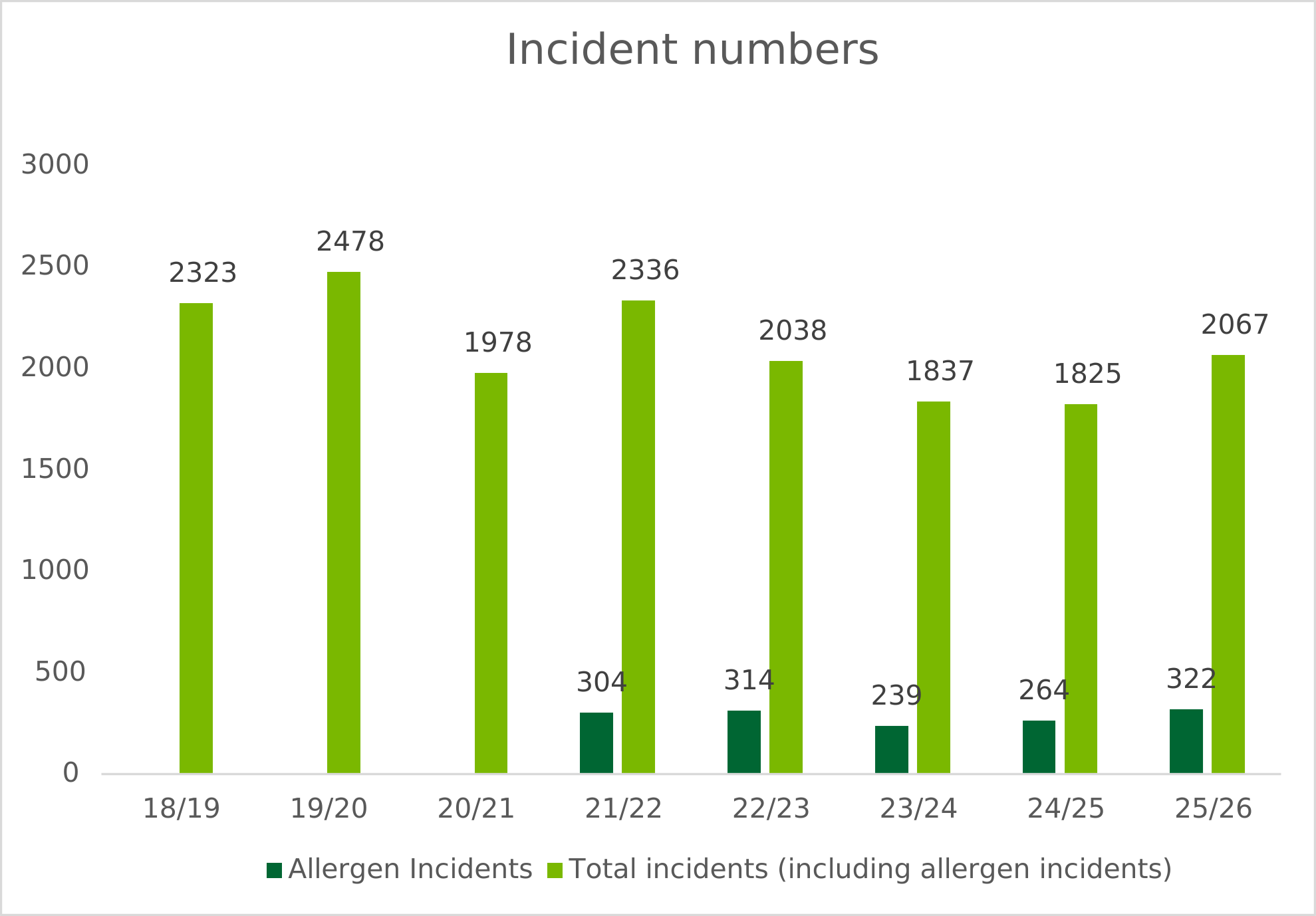
4.13 Allergens are the second largest cause of incidents and can be fatal for people with a food hypersensitivity. After a noticeable reduction in 2023/24 and 2024/25, the number of allergen incidents has increased significantly in the past year. Root Cause Analysis data continue to show that allergen incidents are most frequently associated with labelling verification failures and weaknesses in quality control, rather than novel or emerging hazards.
4.14 While the continued occurrence of allergen incidents underlines the need for sustained focus on prevention and compliance, the consistent identification, management, and communication of these incidents provide assurance that risks are being detected and controlled.
National Food Crime Unit disruptions
4.15 A disruption is an action which is confirmed to have reduced the risk of harm done by food crime. The National Food Crime Unit (NFCU) achieved 83 disruptions in 2025/26, representing a slight increase on the previous two years. This indicates an increasing level of NFCU interventions resulting in directly recordable impacts on food crime. Impact from recorded disruptions included five convictions against offenders, resulting in a total of 72 months imprisonment and 46 months suspended imprisonment, and securing £110k of offenders’ money through court orders. In 2026, the NFCU worked closely with our Science, Evidence and Research Division (SERD) to assess the feasibility of developing metrics to further understand the impact of their work on protecting the public and wider economy. This work is expected to continue in 2026/27.
Additional data from Food and You 2
4.16 The ‘Food and You 2’ survey provides additional data in support of Ambition 2. Increasing awareness and use of the Food Hygiene Rating Scheme (FHRS), suggests that regulatory controls remain effective and visible to consumers. Awareness of the FHRS (those who reported they had heard of the FHRS and had knowledge about it) increased from 47% in Wave 2 (November 2020-January 2021, the first year in which this question was asked) to 62% in Wave 11, whilst those who reported checking the food hygiene rating of a business in the last 12 months increased to 55% in Wave 11 (compared to 41-44% in all previous waves). Declining levels of concern about the safety or authenticity of food produced in the UK further reinforce this picture. In Wave 2, 57% reported concern about the safety of food produced inside the UK, whilst 55% reported concern about the authenticity of food produced inside the UK; these figures decreased to 36% and 35% respectively in Wave 11.
Conclusion for Ambition 2
4.17 The indicators suggest that we continue to progress positively against our ambition to maintain food standards so that food is safe and is what it says it is. While threshold breaches for some foodborne diseases underline the need for continued vigilance, proactive investigation and evidence-gathering are in place to understand drivers and inform proportionate risk management. High and stable levels of compliance across the regulated system, including through the Food Hygiene Rating Scheme and at meat and dairy establishments, provide assurance that baseline food safety standards are being maintained. Incidents continue to be proactively managed. The rise in reports over the past year should be treated cautiously and continue to be monitored, with particular focus on allergen incidents. Alongside this, the National Food Crime Unit continues to contribute to protecting the integrity of the food system through sustained disruption activity.
4.18 Evidence from the Food and You 2 survey supports the conclusion that food standards are being maintained at a system level. Public confidence that food is safe and that the information on food labels is accurate is high and stable; 94% of respondents reported that they were confident that the food they buy is safe to eat, and 86% of respondents were confident that the information on food labels is accurate in Wave 11; consistent with Wave 10, following a slight decline in 2023 and 2024. Taken together, these measures indicate that our regulatory and enforcement activity is translating into outcomes that matter to the public, supporting the assessment that we are meeting our ambition of maintaining the current high levels of food safety and authenticity in the UK.
Board line of sight – Ambition 2
High and stable compliance across the regulated system (e.g. hygiene ratings, official controls) provides the Board with significant assurance in the safety of the food system.
Threshold breaches for foodborne diseases are being investigated thoroughly, with Board-level reporting demonstrating a commitment to proactive risk management.
An increase in the number of reported incidents, including allergen incidents, should be monitored closely to understand whether there is a systemic cause and to direct preventative actions. Board should consider whether this increase requires immediate action.
5. Ambition 3 - Growing our contribution to and influence on food that is healthier and more sustainable
5.1 Our third ambition is to contribute to making food healthier and more sustainable. We aim to use our skills and expertise to encourage and contribute to positive change. While the FSA does not hold responsibility for food sustainability policy, and outside of Northern Ireland we also do not hold responsibility for nutritional health policies, our contribution can influence the food system by shaping the regulatory and informational environment within which food is produced, promoted, and consumed.
5.2 In Northern Ireland, we have responsibility for dietary health policy, surveillance and nutrition labelling, composition and standards and therefore take a more active role.
5.3 Our indicators for Ambition 3 are:
-
Food and You 2 data on consumer self-reported behaviour related to changes in eating habits,
-
Case studies related to growing our contribution to healthier and more sustainable food, and
-
Case studies from the Making Food Better programme in Northern Ireland.
Consumer behaviour
5.4 The data on consumer behaviour related to changes in eating habits comes from Wave 11 of Food and You 2 (May to August 2025). In previous years, this strategic indicators report has reported data on the types of changes made by consumers and the reasons for those changes. Last year we reported that most respondents had self-reported making changes to their diet, such as reducing their consumption of processed foods, and gave health reasons as their main motivation.
5.5 The survey no longer asks these questions in the same way. From Wave 11, the survey now asks respondents to report from a list of options, which, if any, changes they had made in the previous 12 months were for health reasons specifically.
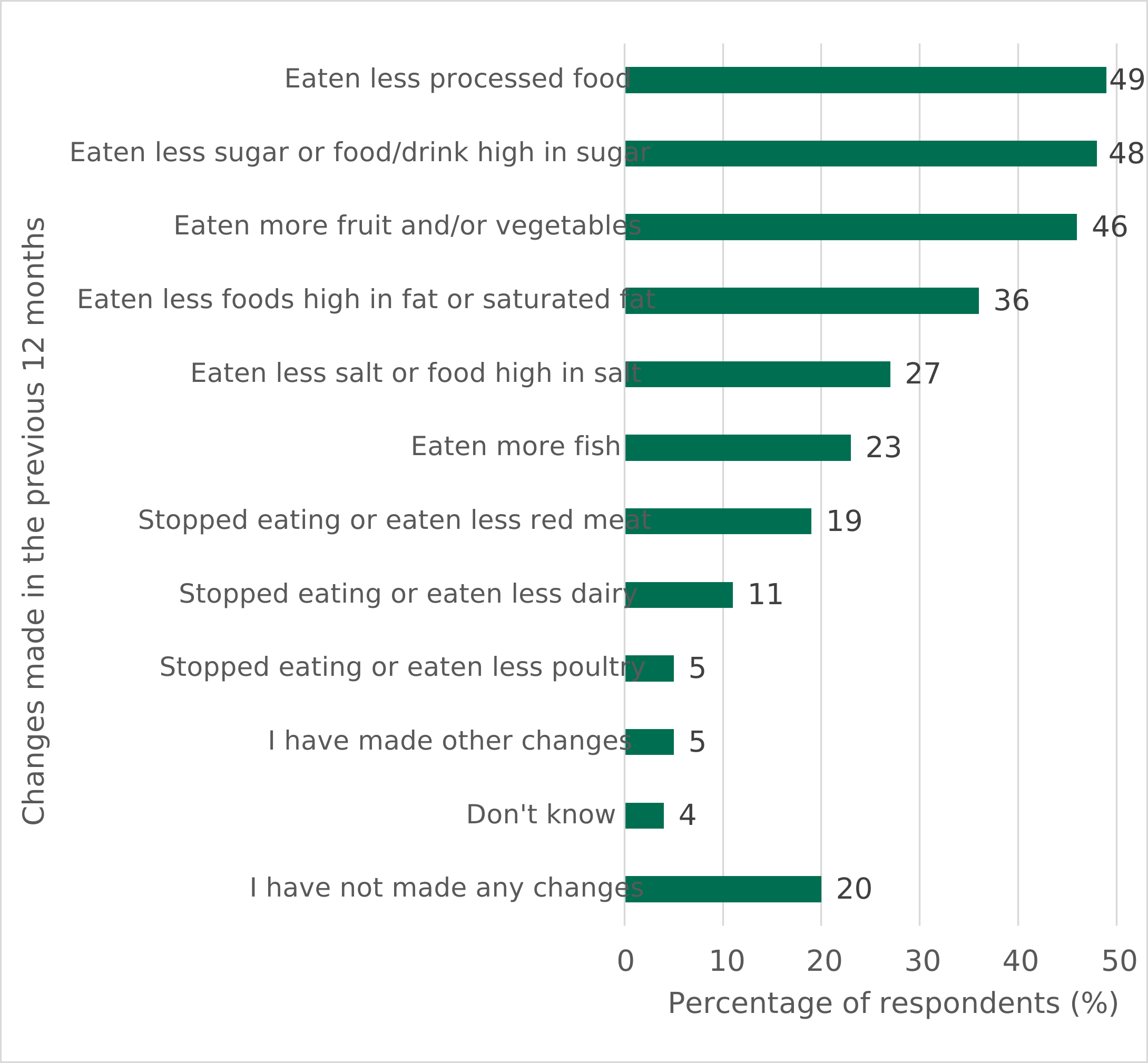
5.6 Three-quarters of the population in Wave 11 (75%) self-report making at least one change for health reasons in the past 12 months (Figure 4). The most common changes reported by these respondents were that they had eaten less processed food (49%), eaten less sugar or food/drinks high in sugar (48%) and eaten more fruit and / or vegetables (46%). It is important however to note that these data are self-reported and should be considered alongside other data such as Defra’s 2024 Family Food Survey report, which shows a more mixed picture. Between 2023 and 2024, purchases of confectionary (by weight) decreased by 12%. However, purchases of cakes, buns and pastries only dropped by 1.2%, purchases of biscuits and crispbreads did not change, and purchases of sugar and preserves increased by 9%. Purchases of fruit only increased slightly (by 1.3%) while purchases of vegetables decreased by 5.5%.
Figure 4 Changes respondents had made in the previous 12 months for health reasons
5.7 Over half of the population (55%) self-reported they had made a change to their diet for sustainability reasons in the past 12 months. When asked what, if any, changes they had made to their diet in the last 12 months were due to sustainability reasons specifically, the most common changes reported by these respondents were that they started to minimise food waste (36%), started buying foods with minimal or no packaging (25%) and started buying locally produced food or food that is in season (21%).
5.8 Further analysis of these data comparing England, Wales and Northern Ireland did not show that there were meaningful differences in the survey results for these questions.
5.9 Although we do not hold policy responsibility for dietary health outside of Northern Ireland, the findings from ‘Food and You 2’ relating to healthy and sustainable diets show that health and sustainability matter to people and is influencing their decisions. This validates our ambition to grow our contribution to healthier and more sustainable food, and these data should continue to be monitored to help us to understand the value of work in making food healthier and more sustainable.
Healthier Food Targets and Reporting programme
5.10 We are supporting the Department for Health and Social Care (DHSC) to deliver the Healthier Food Targets and Reporting programme. This programme is led by the DHSC as part of the ‘10 Year Health Plan for England’. It aims to deliver the Government’s commitment to introduce mandatory healthier food sales reporting for large food businesses and to set targets to increase the healthiness of sales. We are contributing to this work with evidence-based advice on what would be deliverable, enforceable, and workable in practice, in line with relevant regulatory expertise and statutory role in providing advice and developing policy in the interests of consumers and relating to food. We are drawing on our experience in setting guidance, engaging businesses, and supporting compliance in ways that put consumer protection first.
Making Food Better
5.11 Our Making Food Better (MFB) programme aims to support Northern Ireland food businesses to make the food environment healthier. We do this by supporting businesses to reduce calories, saturated fat, sugar, and salt in the food they produce, sell, or serve. We support them to reduce portion sizes, provide nutritional information, and to deliver responsible promotions. In 2025/26, we worked closely with stakeholders to deliver several projects under the MFB programme.
5.12 In September 2025, we launched updated nutritional standards for health and social care settings in Northern Ireland and published the outcome of a pilot of vending standards in public sector sites. This work has supported wider adoption, with several local councils and public sector venues now implementing these standards.
5.13 We have also published research examining the number of food retail and out of home businesses that may be impacted if legislation currently in place in England, which restricts the promotion of unhealthy foods, were to be introduced in Northern Ireland. This research showed that the policy could have wide reaching implications for the sector, particularly in how less healthy foods are promoted and displayed.
5.14 In 2025/26 we worked with the College of Agriculture, Food and Rural Enterprise (CAFRE) and local councils to collect data on the nutritional quality of commonly consumed foods in Northern Ireland and develop technical guidance to support food businesses with reformulation. We will use this data to further motivate businesses to take action to reduce the fat, sugar, salt, and calories in the food they produce, sell, or serve, helping to shape a healthier food environment.
5.15 MenuCal is a free online tool which helps food businesses put allergen and calorie information on their menu. Use of the MenuCal tool was lower than in previous years. Our efforts this year have focused on improving the accessibility of the tool rather than active promotion.
Conclusions for Ambition 3
5.16 The indicators for Ambition 3 demonstrate positive responses from people who self-report that they are choosing a healthier and more sustainable diet, but these data should be treated cautiously. Moreover, it is difficult for us to demonstrate a causal link between our work and people choosing healthier diets, to the extent they are doing so. The case studies, however, show that we are delivering against Ambition 3 by taking an active role in promoting healthier and more sustainable diets.
Board line of sight – Ambition 3
Evidence indicates a large proportion of the public self-report making food choices for health and sustainability reasons, though it is unclear whether this represents a positive change in behaviour, reinforcing the relevance of the ambition.
Our direct role as a contributor to food health in England and Wales is limited and it is not possible to measure a causal link between our contributions and improvement in food health.
Our contributions are primarily health-related rather than related to sustainability, an area where we do not hold policy responsibility for in any of our three regions. It would be valuable for the Board to comment on the priority which we should give to sustainability in the coming year.
6. Conclusions
6.1 Overall, the indicators suggest that we are making sustained progress against our ambition to ensure food you can trust, with consumer surveys suggesting that most people trust the system. Delivery against Ambition 2 underpins this position. Strong compliance across the regulated system, proactive responses to emerging food safety risks and continued disruption of food crime provide assurance that food is safe and is what it says it is. This foundation demonstrates the success of the FSA in delivering an effective regulatory regime, which underpins trust and standards.
6.2 Our performance under Ambition 2 also strengthens our credibility and influence across the wider food system. By maintaining high food standards and demonstrating effective regulatory and enforcement capability, we are better positioned to work with partners and businesses to support longer-term change. This enables us to grow our contribution under Ambition 3 through evidence-led interventions and partnership working aimed at healthier and more sustainable food.
6.3 Taken together, the indicators show that we are achieving our strategic ambitions. While pressures and risks continue to evolve, the overall picture is positive, with our regulatory activity, intelligence-led interventions and engagement providing a strong platform for maintaining trust, protecting consumers, and supporting future progress.
6.4 We should continue to be vigilant of these data, particularly in trust amongst Food Business Operators which has declined recently and the number of incidents which has increased. Neither of these measures are cause for immediate concern but may be the beginning of a worsening trend.
6.5 2026/27 is the final year of our strategy. The Strategy Unit are planning the approach to reviewing our indicators for the future. In parallel to this work, we are undertaking strategic workforce planning activity to proactively anticipate the future size, shape and skills needs of the future workforce needed to deliver our strategic priorities, including taking into account changes that are expected to result from a UK-EU agreement on sanitary and phytosanitary standards (SPS).
6.6 We have also been considering how changes in the food system could influence the nature and scale of risks over the longer term. During the year, we commissioned a Strategic Assessment which is due to publish between July and September 2026. We should also remain vigilant to the potential effects of ongoing cost‑of‑living pressures, including changes in consumer behaviour, substitution towards lower‑cost foods, and increased risk‑taking by some food businesses, which could alter exposure to food safety, hygiene and authenticity risks.
6.7 A final update on the indicators for the current strategy will be delivered to Board next year.
6.8 The Board is asked to
-
Note the updated progress indicators and conclusions.
-
Discuss the issues raised
-
What action, if any should be taken in light of the decline in food business operator (FBO) trust and confidence measures?
-
What action if any should be taken in light of the increase in allergen incidents?
-
Can the Board provide a steer on whether we should give additional priority in the next year to work on sustainability?
-
-
Agree that the Strategy Unit will return to the Board next year with a further update.