page
Consumer insights on innovative food technologies
Research exploring consumer views and information needs around innovative food technologies, with a focus on precision fermentation.
Executive summary
Consumer awareness of innovative food technologies is currently low, but trust in the UK’s food safety system provides an important foundation for consumer acceptance of these technologies.
As these technologies move from research and pilot stages towards commercial application, consumers may encounter foods produced using unfamiliar methods. As these technologies emerge, public understanding, confidence and trust in regulation will play an important role in how they are received.
In this report, 'innovative food technologies' refers to newly developed approaches to producing, processing, and consuming food that are different to traditional methods and ingredients.
These developments are driven by various factors including health, advances in technology, concerns about environmental sustainability and changing consumer preferences.
The research explores how people react to the idea of these methods and what information they would want to see.
Because attitudes can change as people become more familiar with a technology and as products appear on the market, these findings should not be treated as a forecast of future public opinion.
The Food Standards Agency (FSA) is the food safety regulator for England, Wales and Northern Ireland. The Food Standards Scotland (FSS) is the food safety regulator for Scotland. This report brings together new consumer research commissioned through the Market Authorisation Innovation Research Programme (IRP), a programme jointly commissioned by the FSA and FSS.
The findings support a clearer understanding of consumer awareness, perceptions and information needs in relation to innovative food technologies, with a particular focus on precision fermentation.
Survey findings in this report relate to adults in England, Wales and Northern Ireland. The survey findings do not cover Scotland on this occasion.
This report intends to inform ongoing FSA work on regulatory preparedness, communications and stakeholder engagement.
By using precision fermentation as a case study, the report also provides transferable learning that may be relevant to other emerging food technologies as the innovation landscape continues to evolve.
The insights presented in this report draw on two complementary research activities conducted through the IRP.
The first is a nationally representative quantitative survey among a sample of 2,053 online adults aged 16-75 in England, Wales and Northern Ireland during December 2025 conducted by Ipsos UK.
The survey measured awareness, willingness to try food by innovative technologies and concerns relating to the following innovative food technologies:
- controlled environment agriculture
- precision fermentation
- liquid oil structuring
- molecular arming
- 3D food printing
See annex B for definitions of each of these innovative technologies.
The second is a qualitative study delivered by the Cellular Agriculture Manufacturing Hub (CARMA) focused on a bespoke precision fermentation session of its Citizen Forum with 15 participants in January 2026.
Together, both these sources provide a baseline 'temperature check' and snapshot of current consumer attitudes, exploring:
- baseline awareness of innovative food technologies
- openness to trying products made using these methods
- perceived benefits and concerns
- the factors that shape trust in food safety information and regulation
Summary of key findings
The key findings from this research on consumer insights encapsulates feedback from both the survey and focused Citizen Forum. The remainder of the report provides detail behind each finding.
- There is low consumer awareness about innovative food technologies. Overall, a third (32%) of consumers are aware of any of the innovative food technologies highlighted in this research, while more than half (55%) say they have not heard of any of them, according to the survey. None of the forum participants had heard of precision fermentation prior to the session.
- There is moderate confidence that foods produced by authorised innovative technologies are safe to eat. Around half of survey respondents (47%) are confident that the UK government puts safety first when approving food products made using innovative technologies. Within the forum there was a strong sense of trust in the UK food regulation and that if food was available for sale it was assumed to be safe.
- Willingness to eat innovative products varies by technology, but the data shows consumers generally show caution. Consumers are most willing to try products made using controlled environment agriculture (64%) and are most hesitant about molecular farming (38%) and 3D printed food (30%). Precision fermentation was somewhere in the middle with just under half of consumers (46%) saying they are willing to eat precision fermented food.
- Localised food production and cheaper food are key benefits consumers would like to see from innovative technologies. Animal welfare, environmental benefits and food waste reduction are also important.
- Top concerns consumers have about food produced by innovative technologies relates to food being produced in a way that is not natural (35%) and safety of the food (31%), according to the survey.
- Consumers consider taste and texture, and cost as the most important factors when deciding whether to purchase food made using innovative technologies according to the survey data. Other important factors raised from a mix of the survey and forum include results from safety tests, nutritional benefits, and the impact on long-term health.
- When seeking information on food safety, the FSA website is seen as the most trustworthy source while social media is the least trusted.
- FSA communication materials are viewed as trustworthy, accessible and effective at increasing awareness and interest in food safety.
These findings indicate that familiarity and reassurance about safety is integral to willingness to try foods made using unfamiliar methods, and confidence in food produced by innovative food technologies.
The findings also show that regulatory oversight and accessible communications, in plain language is important for consumers.
The research indicates that there is value in using trusted channels (particularly FSA-owned content) to share materials that clearly explain the purpose and benefits of regulation and that this helps consumers understand why authorisation matters.
Context and purpose
The Market Authorisation Innovation Research Programme (IRP) is a one-year strategic programme set up by the Food Standards Agency (FSA) in collaboration with Food Standards Scotland (FSS), following an award of £1.4 million from the Department of Science, Innovation and Technology (DSIT) for 2025/2026.
The IRP has been rapidly developing and expanding specialist expertise in regulating innovative technologies with an emphasis on precision fermentation. This report published by the FSA draws on research it commissioned last year.
This report intends to inform the FSA’s ongoing work on regulatory preparedness, communications and stakeholder engagement, and may be of interest to partners across the UK.
The UK food system is undergoing a period of rapid technological change. Advances in engineering biology, biotechnology and food manufacturing are enabling new ways of producing ingredients and foods, including through fermentation-based processes, cellular agriculture and other novel production methods.
Many of these technologies are moving from research and pilot stages towards commercialisation, increasing the likelihood that consumers will encounter foods produced using unfamiliar processes in the near future.
As highlighted in the United Nations Food and Agriculture Organisation (FAO) Food Safety Foresight exercise published in 2025, technologies such as precision fermentation products are considered to have high market feasibility within the future landscape of new food sources and production systems.
Some food products and ingredients using precision fermentation, such as omega 3 supplements, are already on the market and interest from businesses in new applications is increasing. This makes it important to understand early public perceptions and information needs.
While new production methods may change how some foods are made, they can also raise questions for consumers about safety, transparency and how regulation works.
As innovative food products enter the market, public understanding and attitudes will naturally evolve. These shifts may influence how consumers perceive food safety, transparency and trust in regulation. For unfamiliar or emerging food technologies, confidence in regulation, clarity about how safety is assessed, and access to understandable information are central to maintaining trust in the food system.
This is why the FSA commissioned Ipsos UK and Cellular Agriculture Manufacturing Hub (CARMA) to undertake research to help us to develop an understanding of consumer attitudes and behaviours in relation to such new food types and technology by commissioning primary research work.
This work has helped us to take a temperature check of consumer awareness of emerging and innovative food technology, potential consumer acceptance of these technologies, and the communication opportunities for the FSA and FSS to build consumer trust in innovative foods domestically and globally.
The findings of this research can help the FSA and FSS to develop an understanding of the information needs of consumers and businesses to improve communication and ensure guidance is relevant and impactful. In doing so, the report supports our aims of ensuring that regulation keeps pace with innovation while maintaining high levels of consumer protection and confidence.
This paper sets out the key insights from the quantitative study delivered by Ipsos UK on:
- controlled environment agriculture
- precision fermentation
- liquid oil structuring
- molecular farming
- 3D food printing
This was followed by CARMA’s findings, which focused on precision fermentation, as an innovative food technology.
The findings from the Ipsos survey include a nationally representative sample of consumers in England, Wales and Northern Ireland. CARMA’s Citizen Forum was attended by 15 citizens and is not statistically representative of wider public views.
Why precision fermentation products as the case study?
Precision fermentation has been selected as the focus of this research because it is a priority technology within the IRP and a prominent example of an emerging food production method that may likely increasingly feature in the UK food supply.
Precision fermentation is a specialised form of fermentation that uses single-celled prokaryotic or eukaryotic microorganisms grown in a controlled environment. It uses biotechnological methods to cultivate microorganisms (such as bacteria, yeast or other microbes) to produce specific target molecules, including proteins, lipids and vitamins.
Unlike traditional fermentation, which relies on natural microbial processes to generate broad metabolic products, precision fermentation is designed to produce high purity, well defined compounds. This is often achieved through the use of engineered microbial strains and advanced biotechnology.
After fermentation, the resulting ingredient is extracted and purified from the fermentation broth ensuring that no live production organisms remain in the final food product.
Precision fermentation is also a useful case study because it sits at the intersection of several issues relevant to consumer confidence. It is an area of low public awareness, involves advanced biotechnology, and for some consumers it may raise questions about processing, transparency and regulation, despite being underpinned by established regulatory frameworks.
Insights gained from consumer research on precision fermentation can therefore inform not only precision fermentation-specific communications, but also broader approaches to communicating about innovative food technologies.
Methodology
Quantitative research: online omnibus survey by Ipsos UK
The FSA commissioned Ipsos UK to undertake a survey among a nationally representative quota sample of 2,053 online adults aged 16 to 75 in England, Wales and Northern Ireland during December 2025. Interviews were conducted online through an Ipsos omnibus survey.
Quotas were set on age within gender, region and working status to ensure a broad representation of groups. Final data was then weighted by age within gender, region, social grade, working status within gender and education level using estimates from the Office of National Statistics (ONS) Annual Population Survey and RAJAR data (for social grade).
The survey assessed public awareness and expectations of innovative food technologies, and to identify information needs of consumers related to these technologies. It specifically asked to elicit views on 5 specific innovative food technologies:
- controlled environment agriculture
- precision fermentation
- liquid oil structuring
- molecular farming
- 3D food printing
Ipsos UK sought to help the FSA better understand:
- public awareness of innovative food technologies
- reported willingness to consume food products made using innovative food technologies
- attitudes towards the regulation of food products made using innovative food technologies
- public perceptions regarding the benefits of food products made using innovative technologies
- public concerns about food products made using innovative food technologies information needs of consumers related to food products made using innovative food technologies
- how awareness and views differ among consumers with different dietary requirements
Qualitative research: precision fermentation Citizen Forum by the Cellular Agriculture Manufacturing Hub (CARMA)
The CARMA Citizen Forum brings together people with wide-ranging opinions on the challenges and opportunities facing cellular agriculture. The CARMA Citizen Forum previously partnered with the FSA in June 2025 to explore how cultivated meat should be labelled.
The CARMA Citizen Forum for the 2025/2026 cohort took place online on 8 January 2026. The forum, ran in collaboration with the FSA, focused exclusively on precision fermentation.
The forum consists of members selected to broadly represent the demographic diversity of the UK public. 15 of the 22 forum members attended this session. The findings are not statistically representative. They represent the views of those attending the forum and not the public more widely.
A CARMA scientist gave an overview of precision fermentation processes and uses, including answering citizens’ clarifying questions. The forum then focused on 5 deliberative questions, supplemented with several additional polls using Vevox.
Questions were grouped under four prompts:
- current awareness and understanding of precision fermentation
- perceptions and trust
- motivations and behaviour intentions
- our communication methods (consumer advice web and an explainer video)
The forum’s findings highlight the range and diversity of suggestions offered by citizens.
While the findings are not intended to predict future behaviour or represent definitive public opinion, they provide valuable insights into how consumers currently interpret and respond to innovation in the food system.
The Citizen Forum findings also provide depth, rather than statistical representation, and are best interpreted as insights into how consumer views are formed when people are given information and a space to deliberate.
Findings
This section presents survey findings alongside qualitative insights from the Citizen Forum. Where there are descriptions between awareness, confidence and willingness to try, these are associations in the data and do not on their own prove cause and effect.
1. There is low consumer awareness of innovative food technologies
Overall, a third (32%) of consumers are aware of any of the innovative food technologies tested in this research, while more than half (55%) say they have not heard of any of them. None of the forum participants had heard of precision fermentation prior to the session.
The survey found that that only a third of respondents (32%) were aware of any of the following innovative food technologies:
- controlled environment agriculture
- precision fermentation
- liquid oil structuring
- molecular farming
- 3D food printing
Awareness was highest for 3D food printing (17%) and lowest for precision fermentation (7%) and liquid oil structuring (5%). However, more than half (55%) said that they had not heard of any of them.
Figure 1: Awareness of innovative food technologies
Base: All adults aged 16-75 in England, Northern Ireland and Wales (n=2,053).
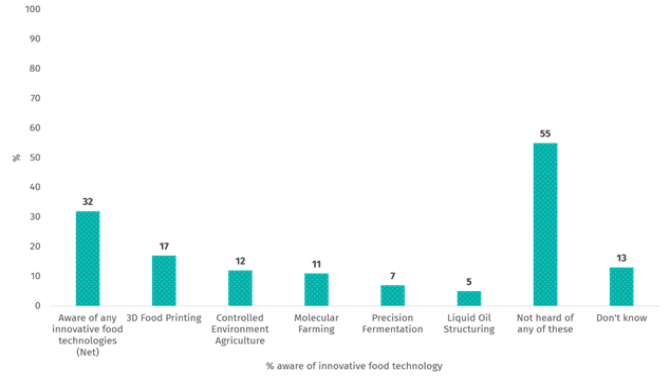
Figure 2: Awareness of innovative food technologies, by demographic group
Base: All adults aged 16-75 in England, Northern Ireland and Wales (n=2,053). Significant differences vs total indicated by arrows.
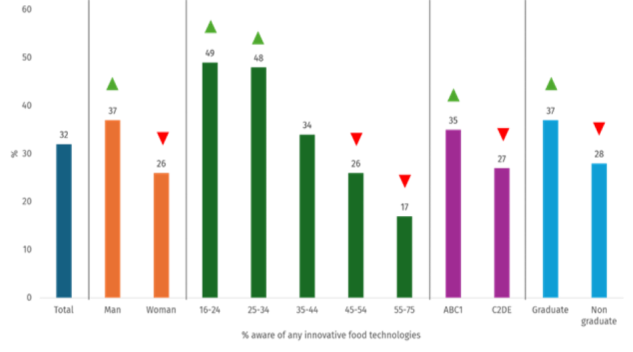
The survey found that awareness was stronger among men, younger adults (aged 16-44), graduates and those in higher social grade groups compared with women, older adults (aged 45-75), non-graduates and those from lower social grade groups.
This suggests that awareness is uneven across the population and that communications may need to be tailored so that people who are less familiar with these terms can still access clear, usable information.
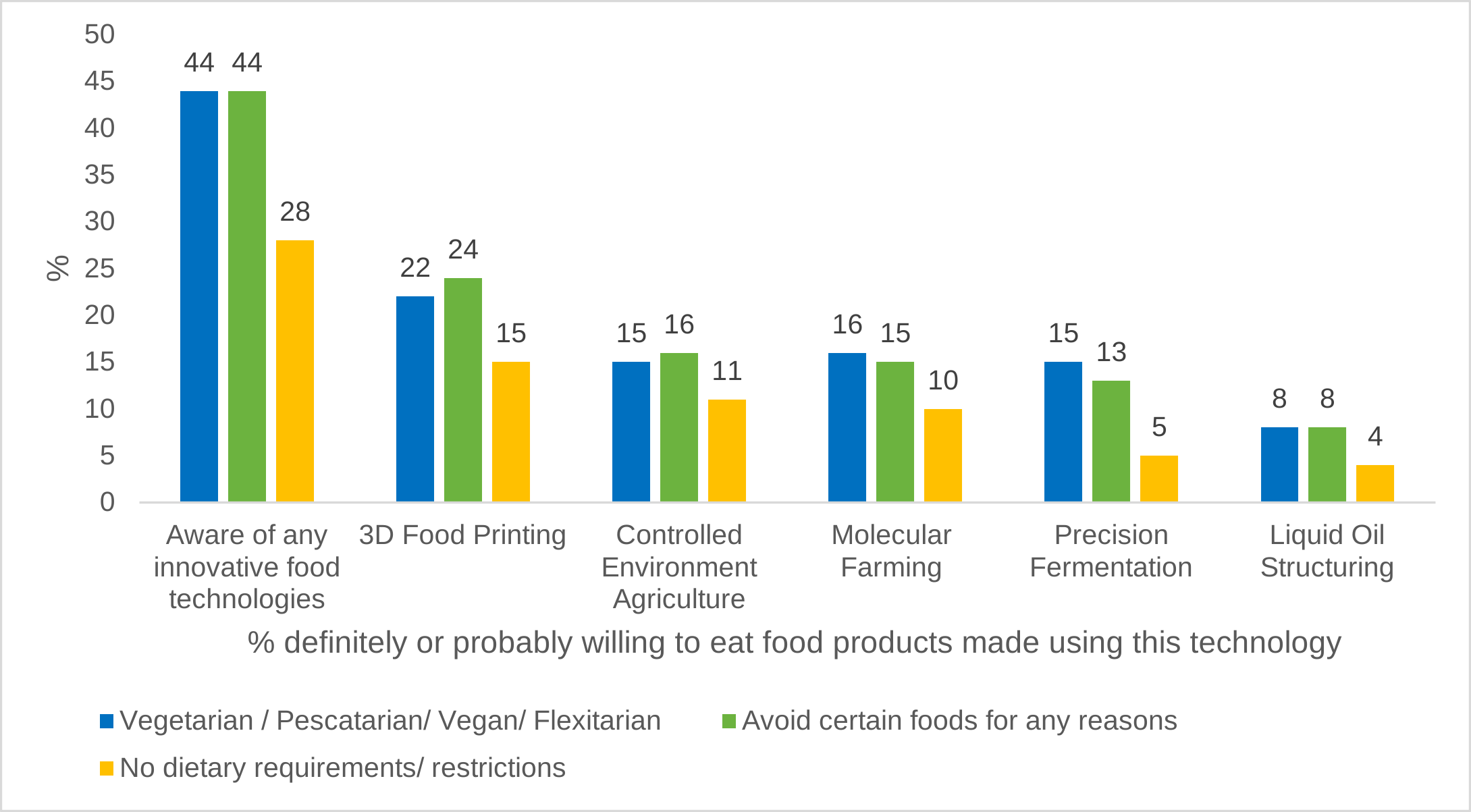
It also highlights that awareness was also greater among consumers with specific dietary requirements compared to those who do not have any.
Figure 3: Awareness of innovative food technologies, by dietary requirements
Base: All adults aged 16-75 in England, Northern Ireland and Wales (n=2,053).
Broadly in line with these survey results, the awareness of precision fermentation among the forum was generally low as none of the forum attendees had encountered the term before the session. Some participants had encountered fermentation in familiar contexts (for example, beer).
Early reactions to the term included associations ranging from 'brewing' and 'yeasts' to 'scientific' and 'innovative'. It should be noted that precision fermentation was not being compared to other innovative food technologies like they were in the survey.
In the absence of familiarity, consumers rely heavily on existing perceptions of processing and regulation to make sense of precision fermentation products.
The forum discussions suggest that clarity about what precision fermentation is, and how it fits within existing food regulatory systems, is important for early understanding, while recognising that consumers vary in how much technical detail they want or expect.
2. There is moderate confidence that foods produced by authorised innovative technologies are safe to eat
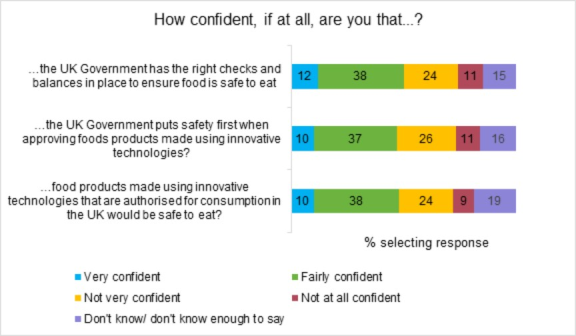
Around half (47%) are confident that the UK government puts safety first when approving food products made using innovative technologies. Within the forum there was a strong sense of trust in the UK food regulation and that if food was available for sale it was assumed to be safe.
The survey found that 50% felt confident that the UK Government has the right checks and balances in place to ensure food is safe to eat in general. 47% said that they were confident that the UK Government puts safety first when approving food products made using innovative technologies.
In this question, respondents were asked about the UK Government as a proxy for the wider food safety system. In practice, food safety regulation involves independent scientific assessment and regulatory decision making by the relevant food safety authorities.
Similarly, just under half (48%) of respondents said that they were confident that food products made using innovative technologies that are authorised for consumption in the UK would be safe to eat (net confident – very or fairly confident).
The survey also found that a third of respondents said that they are not confident (24% not very confident and 9% not at all confident) with the regulation of innovative food technologies in the UK.
Figure 4: Confidence in regulation of innovative food technologies
Base: All adults aged 16-75 in England, Northern Ireland and Wales (n=2,053).
In contrast to the survey findings, Citizen Forum participants express a strong underlying trust in UK food regulation and in the FSA’s role in ensuring food safety.
Some said that they often assume that products available for sale have already been rigorously assessed and as a result did not feel the need to independently seek out further information.
Past food incidents (for example, mislabelling scandals) are nevertheless cited as reasons for ongoing vigilance and scepticism.
Some forum members said independent regulation was important for building consumer trust. Other trusted sources of information suggested by forum members included:
- independent researchers (with some wariness about commercial ties)
- trusted journalists
- consumer groups
- health professionals
Some forum members indicate greater trust for the FSA and similar European agencies compared to central government.
3. Willingness to eat innovative products varies by technology, but the data shows consumers generally show caution
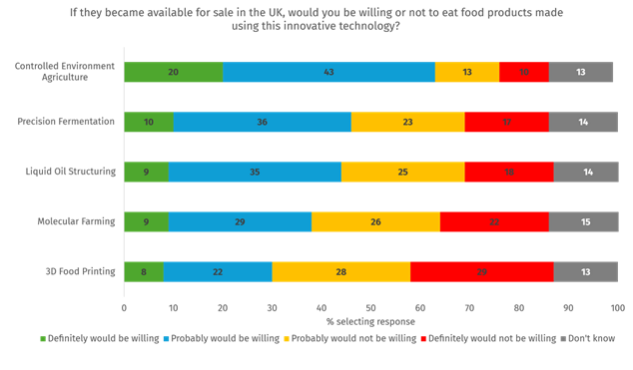
Overall, willingness to try varied by technology. For example, controlled environment agriculture attracts the highest openness, precision fermentation is in the middle, and 3D food printing attracts the lowest openness in this survey.
The survey found that 64% of respondents will definitely be or probably be willing to eat food products produced using controlled environment agriculture; 46% of respondents said they will definitely be or probably be willing to eat food produced by precision fermentation; with 44% for liquid oil structuring.
Respondents are most hesitant about molecular farming (38%) and 3D food printed products receiving the lowest support with only 30% of respondents saying that they will definitely be or probably be willing to eat food produced in this way.
Figure 5: Willingness to eat food products made using innovative food technologies
Base: All adults aged 16-75 in England, Northern Ireland and Wales (n=2,053)
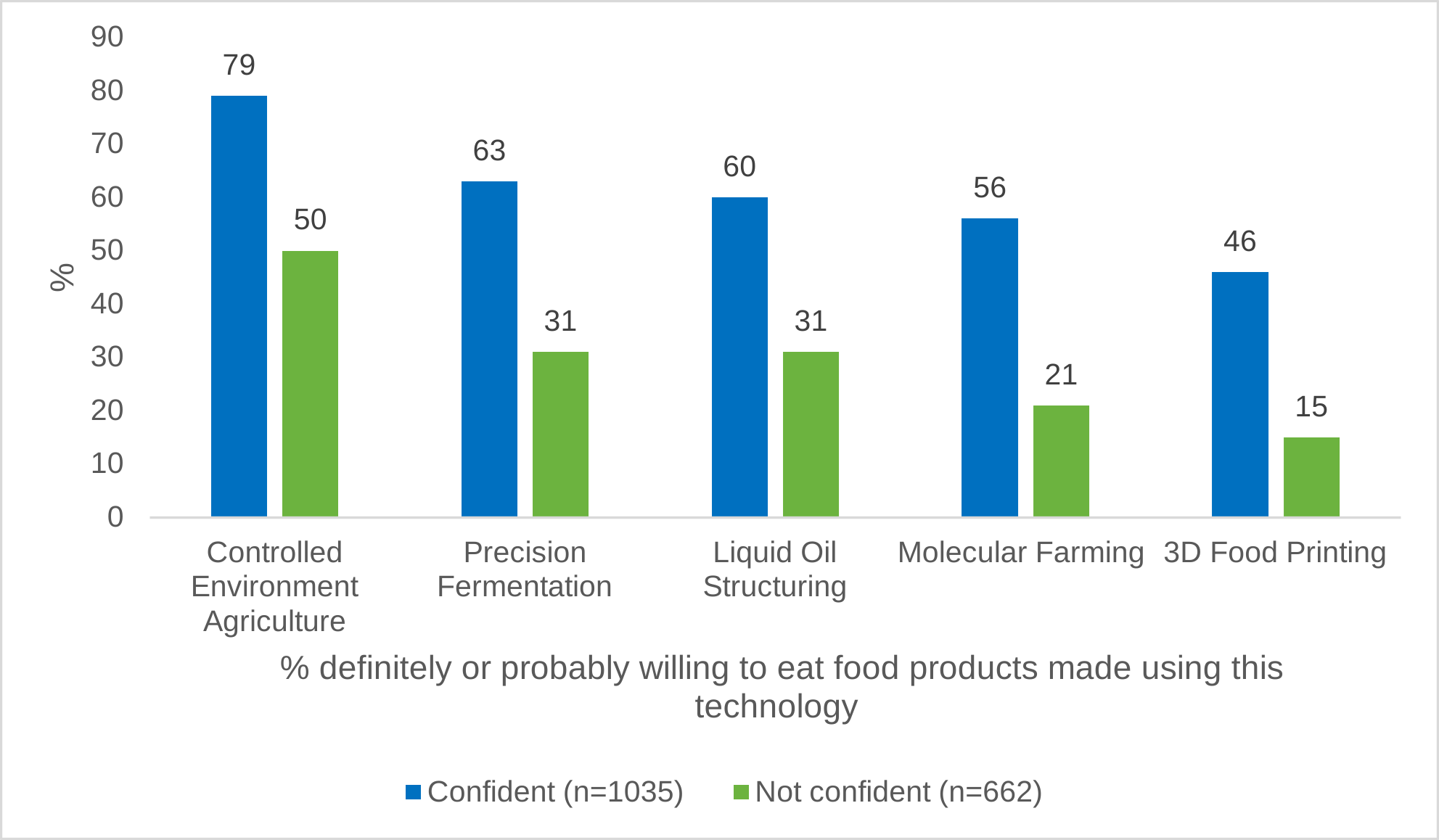
The survey found a correlation between the willingness to eat food produced by innovative technology and confidence that the food produced is safe (figure 6). This does not tell us whether awareness causes a willingness to try, but it suggests that people who are more familiar with a technology (or feel more confident about safety), tend to be more open to trying it.
Figure 6: Willingness to eat food products made using innovative food technologies, by confidence that food products made using innovative technologies would be safe to eat
The Citizen Forum participants indicate a willingness to try food produced by precision fermentation.
Most forum participants indicate they would be willing to try a precision fermented product, provided they felt reassured about safety and understood what the benefits were in an electronic poll conducted in-session.
Many indicate that they would consider trying such products if reassured about safety, regulatory approval and potential benefits such as environmental sustainability or improved nutrition. This finding tallies with findings in the survey that indicate that willingness to try would be influenced by safety.
The survey found that greater awareness of innovative food technologies correlated with greater acceptance and consumption. Willingness to eat food products made using innovative technologies is also greater among those who report being aware of each of the specific technologies.
Figure 7: Willingness to eat food products made using innovative food technologies, by awareness of technologies
During discussions in the Citizen Forum, participants felt the need to know more about precision fermentation, as a technology producing food for consumption. They wanted to know more about:
- the process
- information on labels
- information about the benefits of precision fermentation
Citizen Forum participants suggest that exposure to and growing familiarity over time of food produced by precision fermentation would increase consumers’ comfort. This implies that greater awareness could lead to willingness to consume precision fermented food. This would support the findings of the survey on this point.
The survey found differences in willingness to eat food made using innovative technologies according to dietary requirements.
Compared to consumers with no specific dietary requirements those following a vegetarian/ pescatarian/vegan/flexitarian diet are more willing to eat products made using precision fermentation (56% vs 45%) and liquid oil structuring (54% vs 43%). Those who avoid certain foods because of how they have been produced are more willing to eat products made using controlled environment agriculture (74% vs 64%).
Most respondents following a vegetarian/pescatarian/vegan/flexitarian diet would eat foods produced through precision fermentation (56%) compared to their peers with no requirements (45%). This could be because precision fermentation offers alternatives to animal derived products. This finding highlights an opportunity for targeted awareness raising for those who have no dietary requirements.
There were no corresponding findings in the Citizen Forum about dietary requirements and willingness to try foods produced by innovative technologies.
4. Localised food production and cheaper food are key benefits consumers would like to see from innovative technologies
Animal welfare and food waste reduction are also important.
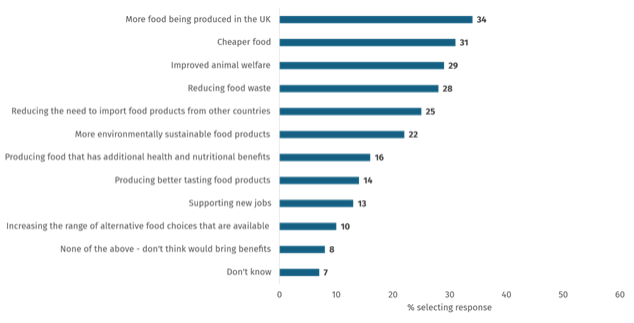
When asked what benefits they would most like innovative foods to deliver, survey respondents most often selected more food being produced in the UK (34%), cheaper food (31%), improved animal welfare (29%) and a reduction in food waste (28%).
Some Citizen Forum members feel that environmental benefits are also important.
Figure 8: Main benefits consumers would like to see because of using innovative food technologies
However, the primary benefits of using innovative food technologies that consumers would like to see differ significantly according to dietary requirements.
As shown in Table 1, consumers with dietary requirements are more likely to emphasise environmental benefits, whereas those with no requirements place a greater emphasis on domestic food production and cheaper food.
Table 1: Top three benefits consumers would most like to see because of using innovative food technologies, according to dietary requirements
| Dietary requirements | Number 1 benefit | Number 2 benefit | Number 3 benefit |
|---|---|---|---|
| No dietary requirements | More food being produced in the UK (37%) | Cheaper food (36%) | Reducing food waste (29%) |
| Vegetarian / Pescatarian / Vegan / Flexitarian | Improved animal welfare (44%) | More environmentally sustainable food products (34%) | More food being produced in the UK (32%) |
| Avoid certain foods | Improved animal welfare (35%) | More food being produced in the UK (30%) | Reducing food waste (29%) |
| Avoid certain foods due to food hypersensitivity | Improved animal welfare (36%) | More food being produced in the UK (29%) | Reducing food waste (29%) |
| Avoid certain foods because of how they have been produced | Improved animal welfare (45%) | More food being produced in the UK (35%) | Reducing food waste / more environmentally sustainable food products (33%) |
Citizen Forum participants say that if precision fermentation is used more widely, they would want it to deliver:
- lower food prices
- environmental benefits (such as reduced greenhouse gas emissions and land use)
- improved nutrition
- enhanced food security through more resilient and localised production
5. Consumers are most concerned about food produced by innovative technologies related to the production not being natural, and the safety of the food
The survey found that participants’ main concerns about food produced by using innovative technologies relate to the food not being natural (35%) and safety risks (31%).
Further to these, 26% of respondents are concerned whether food made using innovative technologies would have the same nutritional value as products made using traditional methods. A lack of information about the technologies (24%) is also noted as a concern.
Citizen Forum participants express concerns over precision fermentation having a negative impact on farmers and rural livelihoods, the cost of and access to the food products, consumer trust and acceptance, health impacts and potential harm to the environment. Participants express a concern about food products produced by precision fermentation being overly processed.
Citizen Forum participants, although they express trust in the FSA, are concerned about food standards, and transparency and oversight. Several participants draw parallels with earlier debates around genetically modified foods, suggesting that public acceptance could be a key challenge.
Participants also question who would benefit most from food being produced by precision fermentation, such as whether they provide health benefits or are primarily used for production efficiency.
Some forum members state that ethical considerations are central to how they evaluate food products, which could reflect an overarching moral consideration for consumers.
Several forum participants suggest that concerns about precision fermentation may be high at present because the technology is unfamiliar.
Similar to the survey findings linking willingness to try to awareness, there is speculation that attitudes could change over time as products become more established and their impacts better understood. However, this is not a consensus and views varied.
Figure 9: Main concerns about food products that are made using innovative food technologies compared to traditional methods
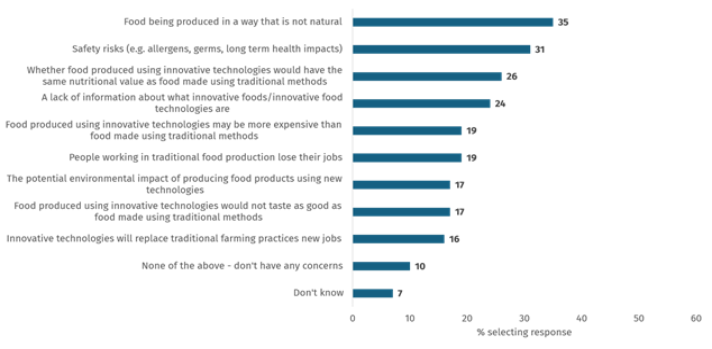
Consumers’ primary concerns are generally similar regardless of dietary requirements. However, there are some key differences highlighted in the survey findings:
- consumers who avoid certain foods because of how they have been produced (41%) or who have a food hypersensitivity (38%) are more concerned about safety risks compared to those with no dietary requirements (30%)
- consumers who avoid certain foods because of how they have been produced (46%) are more concerned about food being produced in a way that is not natural compared to those with no requirements (34%)
- consumers who avoid certain foods because of how they have been produced (31%) and those following a vegetarian/pescatarian/vegan/flexitarian diet (25%) are more concerned about the potential environmental impact of producing food products using new methods, compared to those with no requirements (15%)
- consumers with no dietary requirements are much more likely to report not having any concerns (12%), compared to those who do have them (4%)
6. Consumers consider taste and texture, cost and safety as the most important factors when deciding whether to purchase food made using innovative technologies
Other important factors from a mix of the survey and the Citizen Forum include safety tests, health and nutritional benefits, and the impact on long-term health.
The survey found that most important factors for consumers when deciding whether to purchase food products made using innovative technologies are taste and texture (36%), and cost (35%).
However, results from safety tests (27%), labelling on the product that explains how it has been made (26%) and how the product is regulated (25%), are important to around a quarter of consumers.
Citizen Forum participants consider a range of factors that could influence them to buy foods produced by precision fermentation. They say that they would need to know:
- whether the products had health benefits
- how the health benefits compared to traditionally produced alternatives
- the nutritional content
- whether allergens were present
- the potential long term health effects
Some Citizen Forum participants are also concerned about the potential of unknown effects of food produced by precision fermentation. The concerns about safety were similar to the survey finding on safety being important to 26% of respondents.
Survey respondents feel that the following factors are of lesser importance:
- one in six consumers say information on product compatibility with dietary requirements (16% said it was important)
- environmental impact of making the product (16% said this was important)
- information on whether the product is organic (10% said it was important)
- religious standards (7% said it was important)
Figure 10: Most important factors when deciding whether or not to purchase food products made using innovative technologies
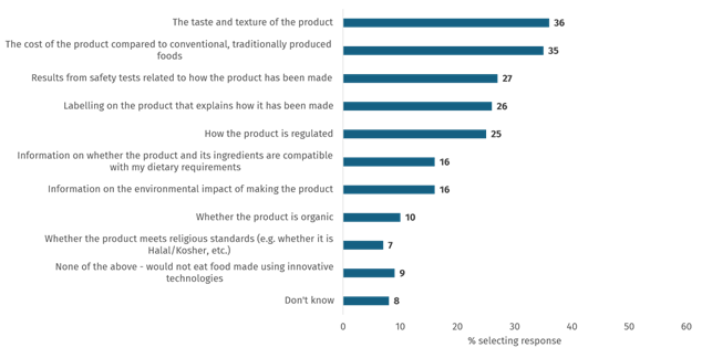
According to the survey findings, the importance of different factors varies according to consumers’ dietary requirements. Taste/texture (40%) and cost (37%) are more widely mentioned by consumers with no dietary requirements.
In contrast, consumers with certain dietary requirements attach greater levels of importance to some regulatory factors. For instance:
- consumers who avoid certain foods because of how they have been produced are more likely to say results from safety tests (38% compared to 27% on average) and information on how the product is regulated (32% compared to 25% on average) are important
- consumers who avoid certain food because of religious reasons (39%) and who avoid certain foods because of how they have been produced (34%) are more likely to say labelling that explains how a product has been made is important compared to the average (26%)
Consumers with certain dietary requirements also attach greater importance to information related to the environmental impact of the production method and compatibility with dietary requirements:
- information on whether the product and its ingredients are compatible with dietary requirements is more important for consumers who avoid certain foods for any reason (30% compared to 16% on average); especially those with a food hypersensitivity (38%)
- information on whether the product and its ingredients are compatible with dietary requirements is more important than average for those following a vegetarian/pescatarian/vegan/flexitarian diet (28%)
- information on the environmental impact of making the product is more important for consumers who avoid certain foods because of how they have been produced (29%) than those following a vegetarian/pescatarian/vegan/flexitarian diet (24%), compared to the average (16%)
Citizen Forum participants express that approval by the FSA would reassure them that the product had been rigorously tested, and some state they wouldn't read up on detailed information on the product if it was approved by the FSA, such is their trust in the regulator.
Some participants say that clarity on the provenance of ingredients would be a factor they would consider. There is a perception that products made outside of the UK and not within the FSA’s oversight might be less safe as equivalent standards might not apply.
Participants feel it is important to know whether precision fermentation products are better for the environment.
Participants also consider transparency and labelling, with some saying that they would want to know a product was made by precision fermentation. Some in the session are surprised that omega 3 supplements are produced using precision fermentation already, without consumers necessarily being aware of it.
In a similar vein, participants would want to see more information included on labels although there was recognition that there is limited space for comprehensive explanations of precision fermentation on packaging or labelling.
7. When seeking information on food safety, the FSA is seen as the most trustworthy source while social media is the least trusted
Given the low levels of awareness of innovative food technologies, it is important to understand what sources of information consumers trust about food safety.
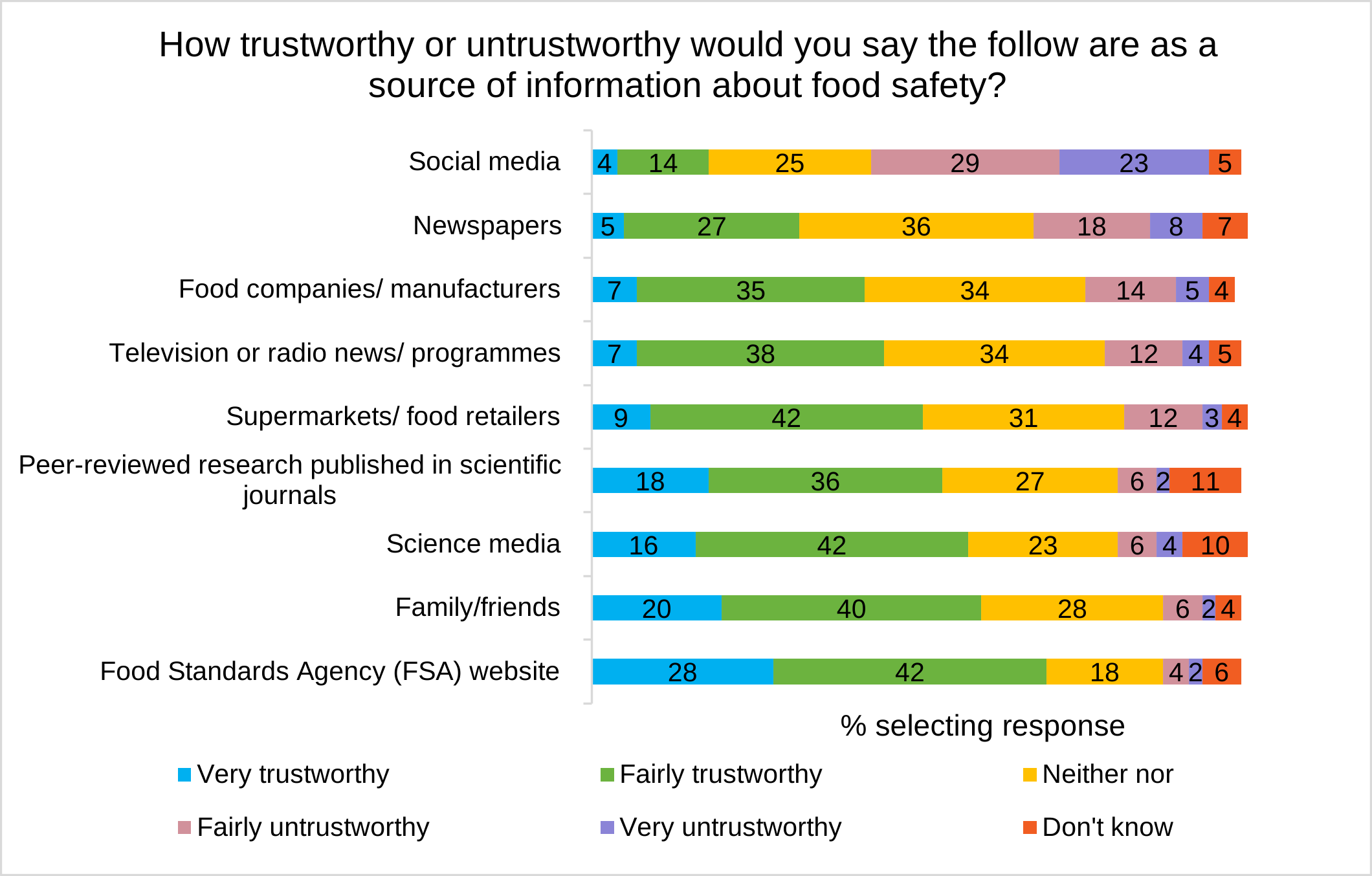
Of the 9 sources of information about food safety tested in the survey, a majority consider the FSA website (70%), family/friends (60%), science media (58%), peer-reviewed research published in scientific journals (54%) and supermarkets/food retailers (51%) to be trustworthy. In the survey, 'science media' refers to science-focused news and publications, for example science journalism and specialist science news outlets.
Television or radio news/programmes (45% trustworthy vs. 16% untrustworthy) and food companies/manufacturers (42% trustworthy vs. 19% untrustworthy) are more widely trusted than not.
A similar proportion of consumers consider newspapers to be both untrustworthy and trustworthy (32% trustworthy vs. 26% untrustworthy). Social media is considered the least trusted source, with half (52%) of consumers saying that it is untrustworthy as a source of information about food safety.
Citizen Forum participants discussed trust less in terms of single sources of information and more as a process underpinned by independence, transparency and oversight.
The FSA is consistently identified as a trusted organisation, often more so than government more broadly. Independent regulation, separation from commercial interests, and clear approval processes are seen as essential to maintaining public trust.
Participants also trust health professionals and university researchers, both of whom could provide evidence-based advice.
Conversely, participants list sources they viewed with distrust including social media and influencers, private companies and, in some instances, government. Participants feel that independent regulation is 'very important'.
The discussions also reveal that many participants do not always seek out information about food products and assume that if a product is on the shelf that it has been checked and approved for safety.
Figure 11: Trustworthiness of sources of information about food safety
8. FSA communication materials are viewed as trustworthy, accessible and effective at increasing awareness and interest
This part of the research explored how members of the public reacted to the way the FSA communicates about innovative food technologies (such as precision fermentation). To better understand this, forum members reviewed 2 FSA communication products at the session: consumer advice web copy and an explainer video.
The web copy is widely described as clear, accessible and easy to read. Participants value its structure, concise sections and explanatory tone. Examples included in the text prompted engagement, particularly where they challenged assumptions about how familiar products are made.
References to omega 3 supplements were frequently discussed, with many participants expressing surprise that fats used in these products are already produced using precision fermentation. For some, this increased interest while for others, it raised questions about transparency and awareness.
Participants suggest that the web copy could be strengthened by adding slightly more explanation of how the process works and by clarifying potentially ambiguous phrases (for example, 'made without animals' or 'highest standards'), which some feel could be interpreted in different ways.
Reactions to the explainer video are more mixed. Many participants find it clear and trustworthy and describe the presenter as knowledgeable and credible. Others feel the video is overly polished, lacks depth, or does not clearly explain why precision fermentation matters. Several participants want more explicit information about our role in regulation, testing and safety assurance, and clearer signposting to further information.
The forum members indicated that our communications are generally trusted and accessible, but that participants are sensitive to tone, clarity and perceived transparency.
Examples such as omega 3 are effective in prompting engagement but also highlights the importance of clearly communicating regulatory oversight and approval processes. Participants value the option to access further information without being overwhelmed.
This feedback reinforces that familiar examples can be useful for explaining a process but also highlights that people have different expectations about how information should be presented, whether it is on labels, online, or through other trusted sources.
Supporting consumer confidence in food
The FSA’s role is to help ensure food is safe and what it says it is, so that people can make informed choices, whatever their views are on new production methods and innovative food technologies.
The findings suggest that consumer acceptance of innovative food technologies is likely to be shaped by a combination of familiarity and reassurance.
Low consumer awareness indicates that people begin from a position of uncertainty about these technologies, however their willingness increases when consumers feel confident about safety and regulatory oversight.
Communications that explain what authorisation means, how safety is assessed, and how oversight is arranged may be central to maintaining trust as products become more visible in the market.
The findings also indicate that consumers evaluate innovative foods through a benefits versus concerns trade-off. Affordability, where a food is produced (domestic production), and food waste reduction are seen as benefits of a product, while consumer concerns focus on the apparent 'naturalness' of a products, safety and health impacts (including issues related to processing and any long-term effects).
Providing clear, accessible information about safety testing, labelling, and other nutritional information is important to addressing consumer concerns.
Concerns raised in the forum about whether something is 'natural' reflects broader questions that people may have about processing, how ingredients are made, and whether long-term effects are understood.
Clear explanations of how safety is assessed before a product can be brought to market are informed by evidence and scientific expertise, can help people make informed choices, alongside transparent labelling and making information on food safety available to consumers.
The Citizen Forum feedback suggests that well-structured written materials can increase consumer understanding, interest and confidence if familiar examples are used, and by avoiding ambiguous wording.
Finally, the research reinforces the value of trusted messengers. The survey data shows that there is high trust in the FSA website as a source of food safety information and low trust in social media.
The research suggests that future materials that are produced may benefit from clearer signposting of the FSA’s role, explicit explanation of safety assurance, and information that provides simple explanations on innovative food technologies (with the option for additional detail for those who want it).
Annex A: methodology
Ipsos UK Sample Profile
| Category | Total sample (n - unweighted) | Total sample (% - weighted) |
|---|---|---|
| Gender: man | 1005 | 49 |
| Gender: women | 1030 | 50 |
| Age: 16-24 | 254 | 14 |
| Age: 25-34 | 398 | 18 |
| Age: 35-44 | 371 | 18 |
| Age: 45-54 | 395 | 18 |
| Age: 55-75 | 635 | 32 |
| Nation: England | 1908 | 92 |
| Nation: Wales | 89 | 5 |
| Nation: Northern Ireland | 56 | 3 |
| Education level: graduates | 1092 | 36 |
| Education level: non-graduates | 961 | 64 |
| Social grade: ABC1 | 1301 | 57 |
| Social grade: C2DE | 752 | 43 |
| Working status: working | 1364 | 67 |
| Working status: not working | 689 | 33 |
| No reported dietary requirements | 1310 | 66 |
| Any requirements | 691 | 31 |
| Vegetarian/Pescatarian/Vegan/Flexitarian (any) | 355 | 16 |
| Vegetarian | 99 | 4 |
| Pescatarian | 60 | 3 |
| Vegan | 46 | 2 |
| Flexitarian | 150 | 7 |
| Avoid certain foods (any) | 408 | 19 |
| Avoid certain foods due to food hypersensitivity | 189 | 9 |
| Avoid certain foods for religious reasons | 81 | 4 |
| Avoid certain foods because of how they've been produced | 187 | 8 |
Annex B: innovative technology definitions
The following are definitions used by Ipsos UK in their survey:
Precision fermentation
Using microbes (tiny living organisms such as yeast or bacteria) to make new, specific food ingredients, including proteins, sugars and fats. These foods are created without using animals or plants. For example, through precision fermentation, it is possible to produce products that have the same properties as palm oil, with the product being used in food items such as baked goods and confectionery
Controlled environment agriculture
Growing crops in managed indoor spaces e.g. growing plants without soil, using nutrient-rich water or growing crops indoors in vertical, stacked layers with no soil (‘vertical farms’). For example, by controlling light and delivering nutrients vertical farms can be used to produce strawberries that have the same characteristics as strawberries grown in a traditional way
Liquid oil structuring
A process used to change vegetable oils into solid or spreadable fats, for example, to make vegan butter, or replace cocoa butter in confectionery
Molecular farming
Genetically modifying plants to produce specific chemicals or proteins, like diary proteins, that can be used in food products. For example, Casein, which is a protein found in milk, can be grown in genetically modified potato and soya plants. This protein can then be used to make cheese that is chemically identical to cheese produced from dairy cows
3D food printing
Building foods like chocolate or mashed potato out of layering edible ingredients from a 3D printer.
Annex C: acknowledgements
The FSA would like to thank everyone who contributed to the development of this consumer insights report.
In particular, the FSA are grateful to Ipsos UK and the Cellular Agriculture Manufacturing Hub (CARMA) for designing and delivering the primary research that underpins the findings presented here.
Thank you to colleagues across the FSA and FSS who supported the commissioning, development and interpretation of this research, as well as the Department for Science, Innovation and Technology (DSIT) for funding support through the Market Authorisation Innovation Research Programme.
Disclaimer
We may use automated tools, including AI, to assist with drafting or processing information. All outputs are reviewed by a human before publication or decision‑making.