page
Thematic report on emerging food innovations in the UK
A report on the top emerging food innovations that the Food Standards Agency (FSA) and Food Standards Scotland (FSS) foresee will have relevance to the future of the food system, and which will likely reach United Kingdom (UK) markets in the next 5-10 years.
Executive Summary
This thematic report developed by the Food Standards Agency (FSA) and Food Standards Scotland (FSS) provides a forward looking analysis of emerging food innovations most likely to create food safety, risk analysis and regulatory preparedness needs in the United Kingdom over the next 5–15 years. It groups technologies based on expected impact and feasibility, identifies cross-cutting safety and regulatory themes, and outlines actions that can support consistent, evidence-based decision-making as these innovations develop.
The analysis draws on horizon scanning (footnote 1) and desktop research and builds on the United Nations Food and Agriculture Organisation (FAO) Food Safety Foresight exercise published in 2025, which identified 44 emerging innovations across nine clusters, to ensure the report builds on and supports longer-term monitoring of relevant trends (footnote 2). The FSA took part in the Food Systems and Food Safety division’s Food Safety Foresight exercise. (footnote 3)
This paper groups technologies based on expected impact and feasibility, with the tiering presented intended to assist both regulators and industry plan and focus on what may need attention soonest. The foresight exercise notes that these technologies (including new food sources and ingredients) were likely to have a substantial system‑level effect, either through widespread adoption, transformation of production methods, or the introduction of novel safety questions that require regulatory oversight. (footnote 4)
This paper indicates where guidance, capability building, stakeholder engagement and evidence are likely to be needed soonest. It is not a statement that a technology is 'approved' or 'endorsed', nor a prediction of market success or authorisation outcomes; decisions are subject to the relevant legal framework and guidance, and authorised conditions are reflected through the Great Britain (GB) authorisation system and register. (footnote 5) (footnote 6) This report does not provide product specific risk analysis, does not replace legal requirements or statutory guidance, and does not provide commercial forecasts or investment advice. It also does not attempt to describe every FAO cluster in detail. (footnote 7)
This thematic report, produced by the FSA and FSS, covers three broad areas. First, it explains how emerging innovations are grouped and how food safety requirements apply at a high level. The second section summarises emerging technology areas using a tiered approach. Finally, it draws out cross‑cutting safety themes and sets out high‑level policy options to support preparedness and transparent communication.
Technologies assessed as having the highest near-term combination of likely impact and practical feasibility include Controlled Environment Agriculture (CEA) and Precision Fermentation. Liquid Oil Structuring (structured fats) and Cellular Agriculture (cell-cultivated products) also present significant potential but may require additional clarity on hazard considerations, specifications and evidence.
Emerging technologies such as molecular farming and 3D food printing are at an earlier stage of development, while Reverse Food Manufacturing is treated as a technology to be kept under review. The report also notes early‑stage innovations such as new‑to‑nature (designer) proteins that may be designed using advanced computing methods to achieve specific functions in food because any future use would need to be supported by evidence on identity, production method, intended use and safety before being considered for market authorisation. (footnote 8) Additional technologies, food production methods and ingredients, such as edible insects, algae and seaweed, and biomass/gas fermented foods are included given their relevance to the regulatory landscape and likely future workload. This report also identifies a small number of wider trends for ongoing monitoring, where they may interact with the technologies discussed over time. (footnote 9)
Across all emerging technologies, recurring safety and regulatory themes include allergenicity (particularly for novel or recombinant proteins), microbiological hazards in controlled or closed systems, chemical and material safety considerations (including process contact materials), residual impurities and process controls in bioprocessed products, and the importance of traceability and accurate consumer information.
This report does not specifically examine food contact materials in relation to emerging new materials and processes being developed as sustainable alternatives to fossil fuel-based single-use plastics and conventional paper and board. This includes new bio-derived/biobased materials and new recycling processes. It should be noted that all the technologies included in the report require equipment and thus the use of food contact materials in their production. These considerations are covered in the cross-cutting safety and regulatory themes section of the report.
This report also discusses key regulatory pathways. This includes:
- novel foods
- where genetically modified (GM) production organisms are used
- where a genetically modified microorganism (GMM) is involved
- precision breeding routes where relevant
Alongside learning from structured engagement with stakeholders and key partners, desktop research and international alignment, this report translates these insights into practical recommendations to support regulatory preparedness. This report is also intended to assist with planning and transparency about emerging evidence needs and regulatory questions and should be read alongside relevant published guidance and the applicable legal framework for authorisation and compliance.
Overview and Purpose
As part of the Department for Science, Innovation and Technology (DSIT) funded Market Authorisation Innovation Research Programme (IRP), the Food Standards Agency (FSA) and Food Standards Scotland (FSS) are undertaking innovation research and horizon scanning to identify key evidence gaps associated with emerging food technologies. This work helps with regulatory preparedness by improving understanding of potential safety considerations and the types of evidence that may be needed to demonstrate safe use as new products and processes develop. The FSA and FSS role is to protect consumers and ensure food is safe and what it says it is. This report does not promote or discourage any particular technology.
This thematic report builds on the ongoing work being conducted by the Food and Agriculture Organization of the United Nations (FAO) Food Safety Foresight Programme, which explored the future landscape of new food sources and production systems through expert consultation and structured foresight methods. The FAO exercise identified 44 emerging innovations across nine clusters and assessed them across short, medium, and long-term horizons, highlighting both opportunities and recurring food safety issues (including allergenicity, microbiological hazards and chemical migration) and emphasising the importance of proactive preparedness and communication (See Annex C for more information). (footnote 10)
A key output of the IRP is this thematic report, which synthesises insights from desktop research, horizon scanning, and both internal and external stakeholder engagement to identify emerging food innovations most likely to generate regulatory enquiries and safety assessment needs in the United Kingdom. It summarises cross-cutting safety and regulatory themes, highlights where clearer evidence or guidance may be useful, and sets out recommendations to support evidence-based decision-making. The report is intended to be accessible to businesses, researchers, policymakers and interested stakeholders and to provide transparency about emerging regulatory questions and evidence needs.
Acknowledgements
The FSA would like to thank everyone who contributed insights and expertise to the development of this thematic report. This includes colleagues across the FSA and FSS, external stakeholders and delivery partners, academic collaborators, and the many industry representatives and innovators who shared perspectives on emerging technologies and evidence needs throughout the IRP. The FSA and FSS are also grateful to the DSIT for funding support through the Market Authorisation Innovation Research Programme, and to the Regulatory Innovation Office (RIO) for constructive engagement on cross‑government regulatory preparedness.
How this report groups emerging innovations for regulatory preparedness
This report groups emerging food innovations to support regulatory preparedness and transparent communication. The grouping reflects the potential timing and nature of regulatory engagement (for example, the extent to which technologies are already generating enquiries, applications to the market authorisation service, or compliance questions). It does not make a judgement about whether any technology is likely to succeed commercially or to receive market authorisation. Decisions on whether a product can be placed on the market in Great Britain are made through the relevant legal and evidence‑based processes and are assessed case‑by‑case.
The tiers used in this report are a planning and communication tool. They indicate where emerging innovations are most likely to raise evidence questions for safety assessment and where businesses and stakeholders may most benefit from public information about requirements. The tiers are not an approval status, endorsement, or a commitment to prioritise regulatory resources for any specific technology. Any application must meet the relevant legal requirements and be supported by appropriate evidence before authorisation can be considered, and authorised conditions are reflected through the Great Britain (GB) authorisation system and register.
The tiers are outlined as follows:
Tier 1 (0–5 years)
Technologies most likely to be relevant in GB in the near-term because they are already authorised on the domestic market, nearing market authorisation, or generating active regulatory engagement. These are technologies with high impact and near-term feasibility that require immediate guidance and hazard frameworks.
Tier 2 (5–10 years)
Technologies that are developing quickly and may reach GB markets later in the decade. These may need further research and scale‑up, as well as an understanding of the regulatory route and the evidence that would be needed to demonstrate safe use. This tier covers technologies with medium-term opportunities where clarity on standards and specifications will support growth.
Tier 3 (10+ years)
Earlier‑stage technologies that are unlikely to be widely available in the next decade but are important to monitor through horizon scanning and research. The focus here is to maintain a close watch and identify emerging safety questions early.
This approach helps ensure that regulatory resources are directed to where they are most needed, supporting application requirements, consistent assessment, and transparent communication.
This report uses a qualitative horizon scanning approach to explain why certain innovations are discussed as near‑term, medium‑term or longer‑term monitoring areas. This report has not used an open horizon scanning process, but has been focused on emerging technologies identified through the FAO Food Safety Foresight Programme. For each innovation, the report considers:
- how and where certain technologies or ingredients may be used in the GB food system (for example, as an ingredient, a production method, or a new food category)
- observable evidence of technological maturity (for example, pilots, demonstration facilities, and supply‑chain readiness)
- the likelihood of regulatory engagement (for example, expected enquiries, classification questions, or potential novel food applications)
- the recurring food safety and consumer trust/safety questions that typically need to be addressed (for example, identity/specifications, hygiene controls, allergenicity, and consumer information)
- the extent to which guidance clarity and evidence could reduce avoidable confusion for businesses and consumers
Figure 1 and Table 1 outline the technologies assessed as having the most relevant combination of likely GB market impact and practical feasibility over the next 5–15 years. It is intended to assist with strategic planning by indicating where regulatory clarity and evidence is likely to have the greatest effect on preparedness.
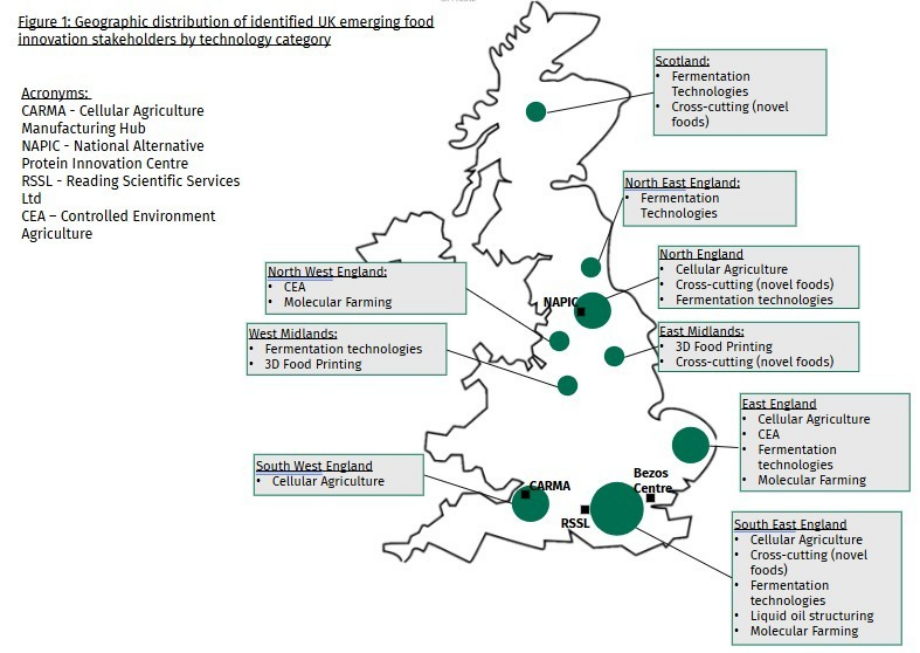
| Fermentation technology | Cellular agriculture | Cross-cutting (novel foods)* | Molecular farming | Liquid oil structuring | Controlled environment agriculture | 3D food printing |
| 34% | 19% | 19% | 15% | 4% | 4% | 4% |
*Cross‑cutting (novel foods) refers to stakeholders whose work spans more than one of the emerging technology categories (for example, innovators active across precision fermentation and cell‑cultivated products).
This will assist with future guidance development, capability building and stakeholder engagement, while maintaining a consistent, science-led approach to consumer protection and food safety. Any decision on whether a product can be placed on the GB market is made through the relevant legal process and is based on the evidence provided for that specific product and use.
Other FAO technology areas to be kept under review
This report focuses on emerging technological innovations most likely to generate regulatory and safety assessment needs in Great Britain over the next 5–15 years. The FAO foresight work (footnote 11) also highlights other clusters that are not covered in detail here but are relevant for horizon scanning and longer‑term preparedness, including digital and data‑based technologies, packaging innovations, and personalised nutrition/food as medicine. These areas will likely evolve as evidence and maturity signs develop. (footnote 12)
Tier 1 – High impact and near-term feasibility (UK scaling)
Controlled environment agriculture (CEA), including vertical farming
CEA (including vertical farming) grows crops such as leafy greens and herbs indoors in climate controlled indoor spaces where conditions are heavily monitored and nutrients are administered precisely. Vertical farming is where crops are produced indoors with the use of LED lighting systems. (footnote 13) These farms can produce food year-round, independent of the weather. Industry reports that CEA continues to expand as United Kingdom (UK) retailers and growers seek climate resilient crops, and a year-round supply. (footnote 14)
UK studies show strong yields and water savings for vertically farmed lettuce for example, compared with some field grown imports. While their carbon footprint can be higher because of energy use and certain materials, there are ways to improve on this, by boosting efficiency and using renewable power. (footnote 15)
CEA may help growers to produce certain crops more consistently through the winter and reduce disruption in imported supplies. CEA can mitigate climate risks and urbanisation challenges, meaning it could contribute to more resilient food systems. It offers high readiness and scalability, addressing food security and sustainability goals. It can also reduce pesticide use and water consumption, however, faces high energy costs and upfront investment, which affects whether it is viable at scale and the overall environmental impact. (footnote 16)
Any claims about food security or sustainability therefore need to be considered case by case, based on the specific crop, site, and operating model, while ensuring food safety and consumer information requirements are fully met.
There is no evidence that food produced by such means is more, or less safe. However, as with any new technology, vigilance is needed to respond to a changing production environment. (footnote 17) For CEA/vertical farming, it is generally captured by existing food safety and hygiene requirements. In practice, this means managing hygiene at the growing stage and, where relevant, during harvest, handling and packing, focused on preventing contamination and keeping traceability and records so businesses can demonstrate due diligence and act quickly if problems arise. (footnote 18)
For the FSA and FSS, 'near-term readiness' focuses on confirming that hygiene controls work as intended (for example, how reused water is managed and how microbial build up on surfaces is controlled), checking that food contact materials used in new equipment are compliant, and ensuring consumer facing claims are accurate and not misleading (in line with applicable food information and marketing rules). Energy costs can be a determinant of scale, but process innovation is narrowing feasibility gaps. (footnote 19) (footnote 20) (footnote 21)
Precision Fermentation
Precision fermentation (PF) is a specialised form of fermentation that uses biotechnological methods (such as bacteria, yeast, or other microbes) to cultivate selected or modified microorganisms to produce specific target molecules. After fermentation, the resulting ingredient is extracted and purified from the fermentation broth ensuring that no live production organisms remain in the final food product. It builds on decades of safe use for enzymes and preservatives and now extends to animal free dairy proteins and similar functional components.
The technology is well established and scalable (i.e., fermentation at industrial scale is widely used), and it is being applied to produce newer, more complex 'functional' ingredients (for example, animal free proteins) that can improve texture or stability which supports consumer confidence.
In GB, most precision fermented ingredients need pre-market authorisation before they can be sold. UK applicants should refer to the FSA Innovative Food Guidance Hub which provides guidance on product identity, production, composition, toxicology, nutrition and allergenicity, and helps align application requirements for those looking to submit an application for authorisation. (footnote 22) (footnote 23) There is increasing investment interest for this technology in GB (footnote 24), however, there are still challenges such as reducing costs while scaling capacity, achieving consistent batch-to-batch quality, and generating effective safety specifications (including allergenicity assessments) that meet dossier requirements. (footnote 25) (footnote 26)
PF ingredients, including those used in infant formula, such as human identical milk oligosaccharides (HMOs), and established PF produced ingredients like rennet, are widely available in the UK and European Union (EU) markets. Innovation is now focused on advancing from pilot to scale next generation HMOs, blends, and broader applications, supported by translational hubs, UK research capability and Contract Development and Manufacturing Organisation (CDMO) capacity. The FSA and FSS’s role is to provide transparent information on novel foods, requiring reliable production/process data, traceability, labelling, and assessment for recombinant proteins. (footnote 27)
The FSA and FSS provides pre-submission support through the Innovative Food Guidance Hub and the Business Support Service pilot for precision fermentation. Through the IRP, the FSA and FSS is supporting regulatory clarity, including guidance and predictable routes to market. This is helping to improve applicant understanding and quality, so companies understand the steps needed for safe, compliant commercialisation. The FSA and FSS will continue to publish practical guidance to improve dossier quality. Recent public reporting indicates ongoing investment activity in precision fermentation in Europe.
Cellular agriculture (cell-cultivated products)
Cellular agriculture or cell-cultivated products are new foods that do not involve traditional farming such as rearing livestock or growing plants and grains. They are made by taking cells from plants or animals, which are then grown into food. While industry reports there are strong ethical and sustainability drivers for cell-cultivated products, there is still low market readiness due to consumer scepticism and issues around scalability. Subject to meeting regulatory requirements and demonstrating safe use, this technology has the potential to change protein supply chains. (footnote 28) (footnote 29)
Despite this, there is growing UK regulatory activity in this technology via the FSA and FSS cell-cultivated products (CCP) sandbox, which focuses exclusively on cell-cultivated products of animal origin and provides industry guidance (for example, on allergenicity, hygiene, toxicology and labelling) (footnote 30) to support the market authorisation process.
In addition, there has been £30m public investment in this technology, such as funding for UK research institutions to support broader, UK‑wide collaboration to develop and test scalable manufacturing approaches for cell-cultivated products. (footnote 31) Publicly reported infrastructure developments (including pilot and scale-up facilities) and industry collaborations aimed at reducing costs and improving processes are continuing.
Emerging innovations in the CCP sector have a strong potential to overcome long standing barriers to scale and cost too. Research into next‑generation, serum‑free and animal‑component‑free growth media, including recombinant and plant‑based growth factors, is aiming to significantly reduce media costs. Advances in cell‑line engineering are producing more reliable cells with improved proliferative capacity, reduced dependence on costly growth factors, and greater stability across multiple passages. At the same time, new bioprocess approaches such as perfusion bioreactors, continuous processing, and modular microcarrier‑based systems are being explored to increase yields while lowering resource demands.
Alongside these developments, increasing automation and digitalisation, including AI‑enabled growth media development, monitoring, and enhanced quality assurance technologies, are expected to improve consistency and support commercially scalable production. Together, these innovations signal a sector that is rapidly maturing scientifically and technologically. These developments may support small scale, limited market products in some jurisdictions, including in pet food, where limited launches and approvals have already been reported in both the UK and Singapore. (footnote 32) Guidance on application requirements and naming is expected to build consumer safety and trust.
While CCPs are advancing there are other barriers that affect the feasibility of scaling to price points suitable for mass markets. Another constraint is the cost and availability of inputs used in cell culture media (footnote 33), particularly where specialised components are required at food-grade scale (for example, PF or molecular farming). (footnote 34) However, scaling from small, tightly controlled production systems to larger industrial volumes introduces engineering and operational challenges, including maintaining sterility, controlling process conditions, and managing downstream handling consistently. (footnote 35) Even where regulatory requirements are met, wider adoption will depend on consumer acceptance, including confidence in safety, clarity on what the product is, and whether it delivers on taste, texture and price.
Biomass fermentation (Mycoprotein)
Biomass fermentation exploits rapid microbial growth to produce protein rich biomass for food. A well-known example is mycoprotein (a meat substitute), which has been sold in the UK for decades. The UK has strong, industrial scale production and new facilities are expanding ingredient supply for food manufacturers showing this is not an experimental concept but an established manufacturing route. (footnote 36)
While most products would not be considered novel and are covered by general food law, some go through the novel food authorisation process. FSA and FSS oversee safety, labelling and safeguard consumer protection. Biomass fermentation can deliver high protein, fibre rich foods with lower land and water use than livestock.
Decades of consumer experience with mycoprotein supports rapid retail adoption, while new formats (for example, mince, fillets, ready meals) expands consumer choice. (footnote 37) More innovative uses of biomass fermentation are emerging, including new fungal, bacterial and microalgal ingredients, and using fermentation approaches to improve taste, texture or functionality in plant-based foods. Other challenges for these newer applications typically centre on scaling cost‑effectively (footnote 38), maintaining consistent composition and sensory quality, and managing food safety considerations such as process controls and, where relevant, intolerance and allergenicity.
Across the UK and EU, new mycoprotein and mycelial products are scaling up through shared utilities and retail partnerships, which is boosting production capacity and lowering costs. (footnote 39) The FSA and FSS prioritises consistent, risk‑based assessment for biomass fermentation using novel strains and processes that focuses on identity, specifications, microbiological safety, mycotoxin absence, and a realistic intake modelling. To reduce repeated requests for additional information (RFIs), the FSA and FSS uses guidance and templates to help applicants provide the right evidence the first time.
Other considerations for applicants include demonstrating that the product can be made consistently at scale (with precise identity and specifications), maintaining stable sensory quality, and managing food safety issues linked to process controls and, where relevant, intolerance or allergenicity. (footnote 40) (footnote 41) Recent state‑of‑industry analyses (footnote 42) (footnote 43), and European Food Safety Authority (EFSA) colloquia (footnote 44) (footnote 45), note new facilities and expanding investor bases in Europe, suggesting there is incremental demand for GB authorisation for this technology that may increase over time. (footnote 46) (footnote 47)
Edible insects
Edible insects may be sold as whole insects or used as ingredients (for example, powders added to familiar foods). In Great Britain, edible insects are generally regulated as novel foods, meaning they must undergo pre‑market safety assessment and authorisation before they can be placed on the market. (footnote 48) (footnote 49) (footnote 50)
No edible insect species have been authorised for sale in Great Britain at the time of publication of this report. However, since 1 January 2024, certain edible insect products have been on the GB market temporarily under specific transitional arrangements, where a valid novel food application for that insect species was received by the food safety authorities on or before 31 December 2023. Valid applications were received for four species: yellow mealworm (Tenebrio molitor), house cricket (Acheta domesticus), banded cricket (Gryllodes sigillatus), and black soldier fly (Hermetia illucens). Products containing other insect species must be removed from the GB market until authorised. (footnote 51)
Key consumer protection considerations include allergen information and hygiene/contaminant controls. FSA and FSS’s risk assessment highlights evidence of allergic cross‑reactivity between insect proteins and allergens associated with shellfish (particularly crustaceans) and mites, meaning unambiguous labelling is important so consumers with relevant allergies can avoid exposure.
The same assessment also notes potential risks from microbial contamination and accumulation of heavy metals (for example where rearing substrates are contaminated), reinforcing the need for appropriate controls across rearing, processing and traceability. (footnote 52) (footnote 53) Wider growth is less about the legal route, and more about medium‑term adoption factors/barriers, including consumer familiarity, suitable product formats, and explicit labelling (particularly for allergens), alongside the outcome of pending authorisation decisions. Future market presence of edible insects will depend on authorisation outcomes and public perceptions.
Tier 2 – Medium impact (5-10+ years)
Liquid oil structuring (oleogelation)
This technology can be used to structure liquid oils to achieve functional properties similar to solid fats, which may support product reformulation depending on the reformulation and intended use. Liquid oil structuring or oleogelation and related techniques support saturated fat reduction while preserving texture in bakery, spreads, confectionery and alternative protein products. (footnote 54) This technology also can align with public health and sustainability goals (by reducing palm oil dependency for example). (footnote 55)
In oleogelation applications, the role of the FSA and FSS is to clarify specifications for structuring agents and processing aids, set proportional migration and toxicology information, and ensure nutrition and health claims are justifiable. While UK research leadership underpins strong scientific evidence for scale up (footnote 56), there are current commercial challenges with scale up and consumer acceptance. (footnote 57) However co-development with cultivated fat innovators could accelerate uptake. (footnote 58) Harmonised standards for additives and processing aids could support market entry. (footnote 59)
Molecular farming
Molecular farming uses plants or plant cells as tiny factories to make specific food ingredients, such as proteins and enzymes. The strengths of UK research in synthetic biology means new ingredients can be prototyped quickly. It can enable rapid prototyping and, if scaled successfully, could broaden the UK’s ingredient options alongside approaches like precision fermentation by providing a different route to produce high‑value functional ingredients. (footnote 60)
Any products for sale will first need to be assessed case by case under the regulated products framework because the applicable route depends on both the ingredient and the production method. In molecular farming, the rules can be complex because different regimes look at different parts of the same product.
For molecular farming, the novel foods route is about determining whether the ingredient itself is new to the UK or EU diet or made using a new process, while the GMO and precision breeding (PB) routes are about the plant used to make it and whether it counts as GMO or meets the definition of a precision‑bred organism. Therefore, early classification is critical to determining the correct evidence, safety information and authorisation pathway. (footnote 61)
Gas fermentation
Gas fermentation uses microbes to convert captured carbon dioxide, hydrogen or other industrial gases into single-cell proteins and other useful food ingredients. UK pilot projects have already shown this can make single-cell protein for animal feed. (footnote 62)
To sell products for human food in Great Britain, companies will need to submit evidence to the FSA or FSS for a safety assessment under the regulated products (novel foods) framework. If proven safe and suitable, gas fermentation could support a circular economy (using resources that would otherwise be wasted), help with net zero goals, and provide a domestic, year-round source of protein that doesn’t rely solely on farmland or fishing.
For food products produced via gas fermentation in GB, they would be assessed case by case and, where they meet the definition of a novel food, would require pre‑market authorisation before being placed on the GB market. Where genetically modified production organisms are used, additional requirements may also apply. (footnote 63)
In the UK, pilot and demonstration activity has shown gas fermentation can produce single-cell protein for animal feed, including programmes that convert carbon dioxide into microbial protein for aquafeed and poultry feed trials. (footnote 64) There are established products however, new strains and formats continue to emerge. They deliver high protein, low carbon foods with strong consumer familiarity.
If products progress towards food uses, applications will need to include a precise description of the production organism and process, compositional specifications and batch consistency, identification and control of process related contaminants and impurities (including those linked to feed gases and downstream processing), and evidence to support safe use under the proposed conditions of use. (footnote 65) (footnote 66) (footnote 67)
Algae and seaweed ingredients
Algae and seaweed ingredients (sometimes grouped by industry under biobased ingredients) provide oils, fibres, and proteins, and has growing adoption in food and supplements. These ingredients are often discussed in the context of sustainability and functional nutrition.
Across the UK and EU, companies are scaling algal fibres, oils and proteins for functional foods and supplements (such as functional foods). The FSA and FSS remit are to ensure accurate species identification, strong iodine/heavy metal specifications, and well-defined intake guidance, interpreting the EU Novel Food Catalogue (for recognised cultures/species) and requiring authorisations for new uses.
Many species are recognised as non-novel in the EU catalogue, but GB requires reliable specifications for iodine, heavy metals, and species identification. (footnote 68) As these ingredients continue to expand on the GB market, the need for guidance and templates to support GB innovators is likely to grow (and this will further safeguard consumers). (footnote 69) (footnote 70)
Tier 3 – Future technologies (monitoring)
3D food printing
3D printing builds foods layer by layer, but it’s likely to be at a smaller scale and specialist in the UK because it is expensive, and hard to keep consistently clean and reliable across recipes. (footnote 71) Currently, 3D printing supports personalisation and dysphagia friendly foods but faces hygiene risks and low consumer acceptance. It also offers the potential for waste reduction and customised nutrition. (footnote 72) Despite cost and reliability issues, UK activity is growing, with ongoing pilots informing practical expectations for hygiene, equipment validation and claims substantiation.
As the regulator, the FSA and FSS will be focused on supporting industry with any future applications, anticipating hygiene validation requirements for equipment and printed foods, and tailored guidance. Current National Health Service (NHS) and care catering pilots using 3D printing to produce food will need to be monitored for regulatory implications. International approaches differ in process design and guidance detail.
Comparing these approaches will help identify where UK guidance or templates could reduce avoidable requests for further information while maintaining the same safety threshold. (footnote 73) (footnote 74)
Reverse food manufacturing
Reverse food manufacturing means taking nutrients back out of food by-products and turning them into new ingredients. These technologies are mostly at pilot or concept stage. (footnote 75) Studies are exploring how reverse food manufacturing may help recover nutrients and make better use of surplus or waste materials. Benefits have been highlighted for the circular economy and waste valorisation; however, the long-term sustainability trends may not be apparent for next decade. (footnote 76)
Scaling for these technologies depends on demonstrating safety and supply chain integrity over the next decade and beyond. The FSA and FSS will continue to monitor developments, and regulatory approaches related to these technologies. Companies will need to show food safety and consistency, including compliance for any materials, and good manufacturing controls under food contact and regulated products guidance. As pilots emerge, the FSA and FSS will apply anticipatory hazard analysis (contaminant pathways, process validation, traceability) and consider international standards to keep assessments evidence-based and risk-based.
New-to-nature (designer) proteins
New-to-nature proteins are tailor made using advanced computing or artificial intelligence (AI) to create new molecules that do not exist in nature. The proteins are used to create new sequences with specific properties (for example improved gelling, foaming, emulsifying, or nutritional characteristics). (footnote 77) (footnote 78) These approaches can generate proteins that do not exist in nature in the same form, and the field is developing quickly in research settings. (footnote 79)
These could eventually be used to improve food texture or nutrition but are early stage for food and would require novel foods approval with evidence that they are safe to eat.
If designed proteins are proposed for use in food, they would need to be supported by a strong safety case before any market authorisation could be considered. At a high level, this would be expected to include information on what the protein is, how it is made, how it will be used, likely dietary intake, and appropriate safety evidence, including allergenicity where relevant. (footnote 80) Given the early stage for food applications, the FSA and FSS will continue to monitor and horizon scan, so that emerging safety questions can be identified early and communicated as the evidence base develops. (footnote 81)
Novel food evidence (identity, production, composition/specifications, intended uses, intake, toxicology, nutrition, allergenicity) is set out in FSA and FSS novel foods guidance, which provides guidance for a typical dossier at a high level. (footnote 82)
Cross-cutting safety and regulatory themes
Emerging food technologies introduce novel production processes and ingredients that challenge traditional safety frameworks. While some of these new innovations promise potential sustainability and nutrition benefits, they also can create new hazards that require proactive regulatory attention. This report also outlines cross-cutting safety themes and technology-specific risks, highlighting why these issues matter and what actions are needed.
For the FSA and FSS, the focus is on supporting consistent, evidence-based regulatory decisions and maintaining consumer confidence in the food system. This includes clarifying application requirements, supporting higher quality applications, and reducing avoidable requests for further information (RFIs) through technical guidance and (where appropriate) templates. Hazard frameworks help ensure that novel products are assessed consistently while maintaining food safety protections.
This section looks at the identity/characterisation, composition, specifications, key parameters, and any relevant impurities/residues that are part of the product description.
Food contact materials and process contact materials
Food contact materials (FCMs) are a cross-cutting regulatory consideration because food comes into contact with materials throughout production, processing, transportation, storage, preparation, and serving (footnote 83) (not only in the final packaging process). (footnote 84) As the regulator, the focus is on ensuring that materials that may come into contact with food must be sufficiently inert so they do not transfer materials into food at levels that could endanger human health or cause unacceptable changes in the food’s composition or quality. (footnote 85)
For emerging food innovations, this becomes more prominent because novel manufacturing routes could increase the number and novelty of process contact materials, including single-use bioprocess bags, tubing, seals, filters, printer components and new equipment surfaces, sometimes under operating conditions (temperature, acidity, extended contact times, cleaning regimes) that can influence migration risk. (footnote 86) (footnote 87)
In Great Britain, FSA and FSS guidance defines FCMs broadly (including contact during production and processing) and outlines the authorisation framework and categories where specific requirements apply (for example substances used in plastic such as monomers/additives, active/intelligent materials, plastic recycling processes and substances in regenerated cellulose film). (footnote 88)
Against that framework, a risk-based approach should identify which materials contact the product, the conditions of contact, and how suitability and change control are maintained as processes scale. As fermentation, cell-cultivated products and controlled environment systems scale, safety assurance may need to cover both (a) final packaging and (b) key process contact materials that could contribute migrants or unintended substances to the finished food. (footnote 89)
This is most relevant where food is in prolonged contact with equipment or single‑use systems. For example, in bioprocessing (including precision fermentation and cell-cultivated products), the evidence may need to map the food‑contact pathway and explain how change control and suitability are managed as systems scale. Similarly, in 3D food printing, consumables and internal components can make migration considerations, cleaning and hygiene controls particularly important.
Nutrition, nutritional adequacy, and dietary impact
Nutritional considerations are an important part of regulatory preparedness for emerging food technologies, particularly where products are positioned as replacements for mainstream foods (for example alternative proteins, structured fats, and cultivated or fermentation derived ingredients). Alongside identifying hazards, assessments often consider whether the product’s composition, proposed uses and anticipated intake support safe use without unintended nutritional disadvantage for consumers under the proposed conditions of use.
In the UK context, this also links to consumer confidence and providing evidence on consumer responses to unfamiliar categories or new foods (such as cell-cultivated products) highlighting the importance of transparent communication and precise labelling, and how nutritional information can form a part of how consumers judge unfamiliar foods. (footnote 90) (footnote 91)
Safety is built in through early hazard identification and risk-based controls. This is grounded in good hygiene practice and Hazard Analysis Critical Control Point (HACCP) principles verification, so that risks are prevented and managed consistently across new processes.
Microbiological hazards, hygiene and process control
Microbiological hazards are core food safety consideration for emerging innovations, but the hazard pathways can shift when production moves into closed or highly controlled systems. Across technologies, the regulatory focus is usually on whether hazards are anticipated through hazard analysis, controlled through good hygiene practices and HACCP principles, (footnote 92) and verified through monitoring, corrective actions and records. Codex General Principles of Food Hygiene provides an internationally recognised basis for this approach, emphasising that food safety is underpinned by effective hygiene practices and HACCP principles control systems across the food chain. (footnote 93)
For novel manufacturing systems, microbiological risk is shaped by the interfaces between biology, equipment and operations. This includes contamination risks arising from complex equipment, recirculated systems, sterile handling requirements, and the use of new processes. Where the process depends on maintaining controlled conditions (for example, aseptic steps or recirculating water), evidence that hygiene controls are validated, verified and consistently implemented becomes central to both risk assessment and enforceability. The work done via the FSA and FSS cell-cultivated products sandbox explicitly frames how hygiene regulations and HACCP principles apply, reinforcing that established hygiene requirements still apply even as the production method changes. (footnote 94)
For closed or recirculating systems, the key question is whether hygiene controls are validated and verifiable. For instance, CEA systems with water reuse may need monitoring for biofilms and corrective action triggers, while aseptic steps in cell‑cultivated or fermentation processes require demonstrable contamination control and documented verification.
A risk-based approach to microbiological assurance is to define 'what good looks like', with HACCP principles hazard identification, validated controls, meaningful verification, and record keeping that supports both business assurance and process control. This provides continuity with existing food safety principles while recognising where new production methods can alter hazard pathways.
Allergenicity and novel proteins
Allergenicity is a recurring cross-cutting theme where emerging innovations introduce new proteins, proteins produced via novel routes, or ingredients with known cross reactivity concerns. This theme is particularly relevant where innovations introduce new or redesigned proteins (for example proteins produced via biotechnology or future designed proteins), because allergen risk and consumer information may not be obvious from the product’s name or how it is used. (footnote 95) The regulatory focus is typically on:
- appropriate allergenicity assessment that is proportionate to the novelty and intended exposure
- accurate consumer information where relevant
- ensuring that naming conventions and claims do not obscure allergen risks
FSA and FSS Novel Foods Guidance sets out the types of scientific information typically used to support safety assessment of novel foods, including allergenicity considerations where relevant, and it provides a useful reference point for describing common application questions at a high level. (footnote 96)
For emerging food innovations, allergenicity can arise not only from the ingredient itself but also from aspects of production (for example, whether the protein characteristic differs from familiar comparators, or whether impurities are relevant). This means that allergenicity is best treated as a 'whole chain' issue identity and characterisation, exposure estimates based on intended uses, and risk management and labelling where needed. (footnote 97) This links strongly to consumer confidence, for example FSA and FSS’ evidence review on cell-cultivated products indicates that confidence in regulation and labelling is important to trust in unfamiliar or new product categories. (footnote 98)
This is particularly important where a product contains proteins that consumers may not readily recognise from the name or format (for example, animal‑identical proteins made via PF or proteins in edible insects). In some cases, PF products produce ingredients that are molecularly identical to allergens listed in Annex II of Regulation (EU) 1169/2011.
If a product contains an allergenic protein but does not originate from the traditional source, for example if it is molecularly identical to milk, it cannot legally be labelled as 'milk'. At the same time, failing to communicate the allergenic risk would breach consumer safety obligations. This creates a regulatory gap where businesses will need to phrase allergen warnings accurately without misleading consumers or violating labelling law. Therefore, it’s important to check for allergenicity and provide understandable consumer information and labelling (this supports safe use).
Allergenicity should also be risk-based and evidence-based. This means that the goal is not to create new requirements, but to ensure that the evidence provided and consumer information are aligned to the novelty of the protein, the intended exposure, and any cross-reactivity risks. This strengthens dossier quality and supports consistent assessment across technologies.
Food safety culture and capability
Food safety for emerging innovations depends not only on written processes but also on how consistently controls are implemented in practice. Codex General Principles of Food Hygiene recognises that effective food safety management is supported by appropriate behaviours, competence and implementation. (footnote 99)
This is relevant for complex or novel/new processes (for example aseptic bioprocessing, closed systems, specialist equipment), where the difference between safe and unsafe outcomes may hinge on staff training, capability, oversight and consistent execution of controls.
Preparedness for emerging technologies involves not only identified safety controls, but also the practical capability to apply them consistently. This includes ensuring appropriate training and distinct roles and responsibilities, supported by routine verification and good recordkeeping so that hygiene and HACCP principles controls operate effectively in day-to-day production. (footnote 100)
In a UK context, published guidance for cell-cultivated products sets out how existing hygiene requirements and HACCP principles can be applied to new production methods, reinforcing continuity with established food safety standards and supporting businesses to demonstrate compliance in practice. (footnote 101)
In practice, capability and culture are most visible where safety relies on disciplined implementation of process‑dependent controls. Some notable examples include applying hygiene and HACCP principles across end‑to‑end cell‑cultivated production, maintaining consistent verification and hygiene practices in fermentation and other bioprocessing scales, and demonstrating effective cleaning validation and monitoring in settings such as controlled environment agriculture and 3D food printing.
Technological risks and novel hazard profiles
While many hazards are familiar (for example microbiological hazards, allergenicity and chemical contaminants), emerging innovations can introduce distinct hazard profiles because of how food is produced, handled or formulated. For some emerging technologies, the biggest difference is that safety depends heavily on the process working reliably every time.
In other words, it’s not only about what the ingredient is, but also whether the production steps stay stable and the inputs are well controlled. Published international studies and reports on precision fermentation and cell culture‑derived foods shows how regulators can use a “step‑by‑step” view of the production process to identify where hazards could occur and what evidence is needed to show they are controlled. (footnote 102) (footnote 103)
In practice, this is most relevant where there are stages where things could go wrong if controls are not consistently applied. For example, for cell‑cultivated products, strong contamination control and hygiene/HACCP principles approaches are important to be understood across the full process, and learning from structured programmes can help clarify the evidence expected. In precision fermentation, the main safety questions often relate to the production microorganism, how the process is controlled, and how the final ingredient is purified.
For earlier‑stage concepts such as reverse food manufacturing, potential concerns may be driven by variable inputs (because the starting materials can differ), so evidence would likely need to focus on validation, traceability and consistent composition if pilot activity matures.
These 'process‑dependent' risks can be addressed by setting out clearly what the application requires. This includes a straightforward description of how the food is made, identification of plausible hazards and 'what could go wrong', support consistent assessment and can be verified as processes develop over time.
Reliable, transparent evidence on identity, specifications, intended use and exposure needs to be supported by validated methods to enable consistent, science-led risk assessment and decisions on safe use.
Traceability and labelling
Strong traceability underpins accurate labelling and helps reduce the risk of food being described or presented incorrectly. It also supports effective incident response, because businesses and regulators can identify where products and ingredients came from and how they have been used. For regulated products such as novel foods, traceability also helps show that any conditions set in an authorisation are being met in practice. In GB, this links directly to the requirement that authorised novel foods must be placed on the market in line with the legal framework and the conditions recorded in the GB register, which provides a reference point for day‑to‑day compliance.
This is particularly important for emerging innovations because some products may look or behave like familiar foods but be made in different ways or combine more than one production route (for example 'hybrid' products). Evidence on consumer responses to unfamiliar categories (including CCPs) suggests that people place value and confidence in regulation and labelling when deciding whether they trust a new type of food. This strengthens the case for information that is consistent, easy to understand and supports informed choice.
In practical terms, good labelling should help people quickly understand what the product is, what it contains, and any information they need to use it safely. This means accurate names, consistent ingredient descriptions, and appropriate allergen information. Where claims are made, they should be accurate, not misleading, and able to be supported by scientific evidence. When these basics are designed in from the start, they support both consumer understanding and compliance checks across the supply chain.
These issues are often most visible where supply chains or production methods are more complex. For example, newer production routes may require easy to follow documentation to ensure the final product is correctly described and traceable through the supply chain. Some supply chains may need stronger separation and tracking to prevent mix‑ups where different production routes operate in parallel, while certain ingredients (for example specific algae species or insects) may need identification and allergen communication, including where cross‑reactivity may be relevant.
To ensure preparedness on traceability and labelling, consumer information should be designed so that compliance is workable in real-world settings. This helps ensure authorised conditions can be applied consistently across supply chains and can be checked through business due diligence and official controls.
A recent FSA survey indicated there was a lower willingness by consumers to try cultivated meat relative to conventional products, alongside concerns about foods perceived as 'ultra processed.' (footnote 104) For plant-based foods, acceptance can be supported by familiar ingredients, nutritional information, and competitive pricing, alongside transparent communication that enables informed choice.
While plant-based products are more established in the market, mainstream consumer uptake and acceptance can be limited when prices are higher than conventional products or when ingredient lists are perceived as overly complex. Improvements in formulation, processing efficiency and supply chain scale can support affordability, while nutritional information and transparent labelling can help build trust and repeat purchase. (footnote 105)
Consumer perceptions and confidence
FSA and FSS contributes to effective food regulation by protecting the public from foodborne disease and ensuring food is what it says it is. This is done by supporting consumer confidence by explaining how risks are identified and managed, publishing accessible guidance, and supporting transparent, evidence-based decision making, as well as through the National Food Crime Unit in England, Wales and Northern Ireland, (footnote 106) and through the Scottish Food Crime and Incidents Unit (SFCIU) in Scotland, (footnote 107) who both provide leadership on food fraud and crime in their respective jurisdictions.
Emerging food technologies can face consumer scepticism, often linked to unfamiliarity, perceptions of 'unnaturalness', and questions about safety and transparency. Evidence indicates that understandable allergen labelling, transparent naming conventions, and credible communication of safety is essential to build consumer trust and confidence in food regulation, and this is especially relevant for newer/emerging food categories. For example:
- The FSA’s 2025 rapid evidence review found only a minority of UK consumers (16–41%) are willing to consume cell-cultivated meat with 85% reporting concerns around safety, (footnote 108) 'unnaturalness', and impacts on farmers, underscoring the need for transparent communication, labelling and public education (footnote 109) (footnote 110)
- Studies show that 'neophobia' (see Annex D for definition) is particularly strong for CCPs, molecular farming, and 3D printed foods, while technologies like PF and CEA are viewed more positively when linked to sustainability and health benefits
- FSA research (2022–2025) indicates low public awareness of 'precision breeding', with strong preferences for accessible labelling and reliable safety testing essential to building consumer trust (footnote 111) (footnote 112)
- FSS examined consumer awareness and attitudes to new breeding techniques (NBTs. Please see Annex D for definition) in foods in 2023, such as GMO foods. The findings were similar to previous survey findings by both FSA and FSS, with low awareness of NBTs, though consumers highlighted both risks and benefits to the technologies (footnote 113)
Consumers are also increasingly demanding evidence of environmental benefits and ethical sourcing, making accurate claims and traceability critical for acceptance. For example, a recent FSA survey shows around one quarter of UK consumers would try edible insects, which was far below willingness to eat plant-based foods. Meanwhile 'neophobia' and unfamiliarity with certain emerging food technologies continues to be significant obstacles that require mainstream product formats and evidence-based communication. (footnote 114) (footnote 115)
Public information about regulatory requirements and safety assessment can also help reduce public confusion and support informed consumer choice, particularly as new product categories emerge. Consumer information will also support informed choice, particularly where products are unfamiliar or where allergen risks may not be obvious.
Exposure assessment and vulnerable populations
Exposure assessment (anticipated intake levels) is a core cross-cutting theme because it connects hazard identification to real world risk. The same hazard can present different levels of concern depending on how much of an ingredient people are likely to consume, how often, and which groups are most exposed. For emerging foods, intake considerations are particularly important where innovations introduce concentrated ingredients (for example novel proteins, isolates, specific oligosaccharides, or oils) that may be incorporated into multiple food categories.
Even if individual use appears modest, the combined exposure ('aggregate') across multiple foods where the ingredient is used can be more material and can influence the conditions under which the food is considered safe.
Preparedness therefore depends on evidence‑based intake estimates aligned to where the ingredient will be used and at what amounts, with transparent assumptions and explicit consideration of relevant population groups. The FSA and FSS novel foods guidance emphasises that authorised novel foods must be placed on the market in line with the authorised conditions set out in the GB register, reinforcing why intake assumptions and conditions of use matter for day‑to‑day compliance and verification. (footnote 116) (footnote 117)
Intake estimates become especially important where an ingredient could appear in many everyday products. For example, novel proteins and fermentation‑derived ingredients used across multiple foods, or algae and seaweed ingredients where nutrient or element levels can vary by species and by use level. Conditions of use also matters for newer product categories such as cell‑cultivated products, where different formats or serving patterns can materially change intake assumptions and, in turn, the evidence needed to support safe use. Authorised conditions of use and any restrictions (including limits on use levels or specific population groups) are shaped by these intake assumptions and will be reflected in the GB authorisation and compliance considerations.
Evidence portability and international alignment
Evidence portability can be described as a practical way to help applicants avoid unnecessary duplication while maintaining the same high safety threshold. In many jurisdictions, the core scientific components of a novel food application are broadly similar, covering the description of the food and its production process, compositional data and specifications, proposed uses and use levels, anticipated intake, and safety considerations (including toxicology, nutrition and allergenicity where relevant).
EFSA’s 2024 novel foods guidance sets out the types of scientific information typically used to support safety assessment of novel foods, including allergenicity considerations where relevant, and it provides a useful reference point for describing common application questions at a high level. (footnote 118)
In GB, the focus is on guidance which outlines application requirements and consistent data quality standards, so that evidence generated internationally can be assessed efficiently where relevant, while ensuring GB specific requirements are met. FSA’s Innovative Food Guidance Hub provides a range of resources, including what is required in a typical dossier. (footnote 119)
The FSA and FSS novel foods guidance outlines that novel foods must be authorised before being placed on the GB market, and the GB register sets out authorised conditions of use and any restrictions. Framed in this way, “alignment” is about improving clarity and predictability for applicants to help them understand what evidence is needed and how it should be presented while ensuring that intended uses, intake assumptions and applicable GB rules are properly addressed.
Using international evidence works best when the evidence is well documented and easy to compare. For example, for PFs and other novel proteins, this is helped by descriptions of identity and specifications and a robust approach to allergens. For CCPs, portability improves when the production steps, controls and specifications are described simply enough to support consistent assessment; and for algae, insects and other novel ingredients, it is strengthened by accurate evidence on identity, composition, and likely intake under the proposed uses.
Data quality, method validation, and standards
Quality data and reliable testing methods are practical foundations for both strong safety assessment and effective compliance once a novel food is authorised. Across emerging innovations, regulators and businesses need measurable information on what a product is, what it contains, how consistent it is from batch-to-batch, and whether any relevant impurities are present. This depends on test methods that produce consistent results over time. If key characteristics cannot be measured reliably (including across different laboratories), decisions become less clear, and it becomes harder for businesses and enforcement partners to check that authorised conditions are being met once products are on the market.
This matters because product specifications are not only part of the safety case, but they also form a practical basis for checking compliance. International guidance on novel food applications highlights the importance of having composition and specification data and ensuring information is consistent across the different parts of an application. In GB, the FSA and FSS novel foods guidance reinforces that authorised novel foods must be placed on the GB market in line with the conditions recorded in the GB system and register, which depends on specifications and conditions that can be checked in practice.
In practice, this is most visible where ingredients are highly purified or produced through complex processes. For example, for novel proteins and fermentation‑derived ingredients, being able to confirm identity, and purity and impurity profiles depends on test performance and specification limits that as production scales. For CCPs and other process‑dependent foods, quality data and reliable testing support with confidence that the product consistently meets its assessed standards and with post‑authorisation checks aligned to authorised conditions. Where an ingredient may be used across multiple food categories, consistent testing approaches help ensure that methods are workable across different foods and uses, supporting both efficient assessment and reliable compliance checks.
For emerging food technologies, the key determinant of efficient assessment will be whether the evidence submitted accurately describes what the food is, how it is made, what it contains, how it will be used, and how safety is demonstrated under the proposed conditions of use. Where products are process‑dependent or use highly novel/new processes, demonstrating batch-to-batch consistency, reliable specifications, and quality data will be vital, both for the assessment itself and for compliance after authorisation.
Regulatory clarity, route classification and transparency
The UK’s pre‑market authorisation framework underpins consumer safety, however, uncertainty about whether a product is novel, which regulatory route applies, and what information applicants need can lead to inconsistent submissions and avoidable delay. Regulatory uncertainty can also affect the development of technologies by delaying investment decisions, particularly for capital intensive technologies. Accessible guidance and transparent processes support consistent understanding of regulatory and technical requirements and help businesses build compliance into product development earlier.
Reforms to the market authorisations process for regulated products came into force on 1 April 2025 (footnote 120), enabling authorisations to take effect following ministerial decision and then be published in an official register rather than being set out in a statutory instrument. This improves accessibility of authorisation information for businesses and the public while maintaining the safety threshold. (footnote 121) (footnote 122)
The FSA and FSS reforms are a practical step aimed at reducing delays, while the regulatory sandbox and IRP, pre-submission business support and technical guidance aim to provide additional regulatory clarity for novel foods and accelerate responsible market entry. These programmes and initiatives are intended at shortening timescales and supporting companies with their efforts to scale in the UK, all while maintaining high safety standards.
Because official controls are essential for ongoing consumer protection, authorisations should be implementable over time and supported by change control, post-market intelligence and verification in real-world supply chains.
Scale up challenges
A recurring challenge for both market feasibility and regulation are keeping products safe and consistent as production grows from small trials to larger‑scale manufacturing. When a process is scaled up, it can behave differently. For example, it may be harder to control temperature or maintain the same timing across stages which can affect contamination risks and product consistency. Scale‑up can also increase reliance on consistent supplies of ingredients, materials and equipment.
From a regulatory preparedness perspective, the key question is whether evidence from pilot‑scale production still applies to intended commercial conditions, and whether the approach to maintaining specifications and controls is reliable at larger scale. Guidance on novel foods can be helpful for framing this, because it emphasises the need for applications to accurately describe the production process, what the product contains, proposed uses, and the safety evidence in a way that supports safe use under the proposed conditions. (footnote 123)
In practice, scale‑up readiness often depends on the availability and quality of inputs and infrastructure (for example food‑grade materials, processing aids, sterile handling capability, and downstream processing), and on the ability to show that the product can be made consistently, batch-to-batch.
The CCP Sandbox workshops provide tangible examples of how regulators and industry can work through end‑to‑end production steps to understand how hazards are managed and what evidence is likely to be needed, including how materials, ingredients and equipment are used and controlled. International discussions with regulators on cell culture‑derived foods and PF products have also highlighted that scale‑related production factors and methods can influence how evidence is generated and assessed.
These issues can show up across a range of emerging food innovations. For example, scaling cell‑cultivated production requires maintaining strong sterility assurance and consistent process control as volumes increase. Fermentation processes may see changes in product consistency or impurity profiles, making process controls and downstream steps especially important. (footnote 124)
For structured fats, scaling manufacturing could affect how the ingredient performs in different foods (such as texture or shelf‑life), which has implications for specifications and any claims. (footnote 125) In specialist settings, adoption of 3D food printing also depends on being able to produce consistent results and demonstrate reliable hygiene and cleaning controls. (footnote 126)
Change control and keeping products comparable
Scale up is only one part of manufacturing readiness. A common feature of emerging food technologies is that production methods often evolve over time as innovators learn and improve their processes. This may mean iteration, new strains, new equipment, revised purification steps, alternative inputs, or changes to control strategies need to be factored into the evolution of the process.
From a regulatory preparedness perspective, this creates a 'living process' challenge. The key question is whether the product being made later is still essentially the same as the version that was assessed. This is why a consistent approach to managing changes (change control) and showing the product is comparable matters for both assessment and compliance. International guidance on novel foods highlights the importance of describing the production process and providing consistent composition and specification information, because these provide the basis for understanding whether changes could be relevant to safety.
FSA and FSS novel foods guidance emphasises the importance of including production process and consistent compositional/specification data. (footnote 127) This is about having a coherent approach to change control and comparability that supports both assessment and compliance. What was assessed needs to be comparable to what is produced over time, so that safety assurance is valid as manufacturing changes. Article 25 also required a food business operator that has placed a novel food on the market to immediately inform the FSA and FSS of any new scientific or technical information that might influence the evaluation of safety. (footnote 128)
In practice, this issue is most visible in process‑dependent innovations. For example, in precision fermentation and other bioprocesses, updates such as changes to the production organism, growth conditions or downstream processing can affect impurity profiles or specifications, so it becomes important to show how the updated process compares with what was previously assessed. Similar iterative changes can occur as cell‑cultivated production develops, so documentation and 'like‑for‑like' comparisons are important to show that controls and specifications are effective. Changes in inputs or processing can also matter for technologies such as liquid oil structuring, where small manufacturing changes can affect composition and how the ingredient behaves in different foods. (footnote 129)
Digitalisation, data integrity and cyber resilience
Emerging food innovations are increasingly relying on digital tools and data systems (for example sensors, automated controls and digital monitoring), so assurance is no longer only about the final product. (footnote 130) For regulators, this raises practical questions about the integrity, governance and resilience of the digital systems that underpin process control and traceability including how data is generated, secured, audited, and retrieved to support verification and incident response, alongside established food safety controls.
As monitoring becomes more automated, confidence depends on records that are accurate, secure and available when needed. For example, digitally controlled CEA environments may rely on sensor data to evidence hygiene and environmental controls, while digital traceability for novel ingredient supply chains requires good governance relating to traceability, change control and recordkeeping. (footnote 131) (footnote 132) Digital tools and automation can improve consistency, but they also create dependencies on data integrity and operational resilience, so these systems need to be verifiable in practice.
Official controls and enforceability readiness
Regulatory preparedness for emerging innovative foods does not end at market authorisation. A key consideration is whether authorised conditions can be verified in practice through food business operator controls and official controls. (footnote 133) In operational terms, enforceability is strengthened when authorisations translate testable specifications and conditions of use (for example identity, compositional ranges, key impurities, use levels and any restrictions) and when there are practical routes for verification through sampling, analysis, documentary checks and traceability evidence. For some emerging innovations, the safety case is closely linked not only to the ingredient itself but also to the production method.
This means it is important that authorised conditions and supporting evidence are framed in ways that can be checked consistently. (footnote 134)
Official controls are a vital part of consumer protection, so it is important that authorisations translate into conditions that can be monitored and verified once products are on the market. Guidance supports not only consistent risk assessment pre-market, but also practical, risk-based verification post authorisation. (footnote 135) The FSA and FSS novel foods guidance emphasises that novel foods must be placed on the GB market in accordance with the assimilated legal framework and the conditions recorded in the GB register, reinforcing the role of specified authorisation conditions for day-to-day compliance and verification. (footnote 136) (footnote 137)
Codex General Principles of Food Hygiene provide a widely recognised basis for describing how food business operators manage hazards through good hygiene practices and HACCP principles and how competent authorities oversee food safety, which are concepts that are relevant even where production methods are novel. (footnote 138) This matters most where the safety case relies on process controls as well as composition. For instance, fermentation-derived ingredients may depend on verifiable inactivation steps and impurity controls, while CCPs may require transparent documentation of critical control points and specifications that need to be checked through documentary and analytical verification.
Post-market monitoring
Food regulation does not stop at authorisation. Both businesses and the regulator respond to new evidence, emerging risks and real‑world experience once products are on the market. In Great Britain, the regulated products system includes ongoing monitoring and risk analysis and provides ways to review, change or withdraw an authorisation if safety concerns arise. This gives a basis after authorisation for learning, and continued support for consumer protection, while helping regulation keep pace as innovation develops.
This creates a 'feedback loop' that connects real‑world experience back into regulatory preparedness. Information from monitoring, compliance activity and incident responses can highlight where guidance or application requirements need to be clearer, so that avoidable issues are reduced and compliance is more consistent. Horizon scanning to track early evidence of progress, for example, from research, pilots and emerging market activity helps to identify questions early, before products become widespread.
Together, these approaches support a system that is evidence‑based and transparent, and that can adapt when new information emerges.
These themes are most visible where products and uses evolve quickly. For example, as novel proteins and fermentation‑derived ingredients diversify and are used in more foods, post‑market indicators can help identify whether specifications, intake assumptions or labelling clarity need refining. For CCPs, learning from structured programmes and early applications can be translated into informative public guidance over time.
For more conceptual technologies, horizon scanning and pilot learnings can help identify possible contaminant pathways and evidence needs well before any mainstream scale‑up.
Policy considerations: translating themes into action
The UK has strong research capability and a growing innovation base in engineering biology, alternative proteins and agri‑tech. Moving from pilots to safe, consistent and affordable products can also be influenced by wider system factors such as access to late‑stage finance and the availability of fit‑for‑purpose manufacturing infrastructure and technological inputs. While these factors are outside the FSA and FSS’s direct remit, they can shape when businesses engage with the regulator or market authorisation system and the quality and completeness of evidence submitted for assessment. (footnote 139)
Four cross‑cutting issues are particularly important to consider across the emerging innovations covered in this report. Addressing these issues supports consumer confidence and food safety by helping to ensure that any approval requirements are realistic and can be met in practice.
A consistent theme across emerging innovations is the need for clear, measurable evidence on what a product is, how it is made, what it contains, and how safe use is demonstrated under the proposed conditions of use. This is supported by setting out what 'good' looks like in applications, including requirements for identity, specifications, batch consistency, and analytical verification. This supports efficient assessment and helps ensures that authorised conditions can be followed and checked once products are on the market.
As new technologies develop, supply chains can become more complex and production methods can change over time. This can affect product consistency and the relevance of earlier evidence to later commercial processes. Standards on traceability and recordkeeping, and authorisations that set practical, verifiable conditions of use help businesses demonstrate compliance and support official controls in real-world supply chains.
Uncertainty about whether a product is novel, which regulatory route applies, and what information applicants need to submit, can lead to incomplete submissions and avoidable delay. Accessible public guidance and transparent processes support consistent understanding of requirements and help businesses build compliance into product development earlier. Recent reforms to the market authorisation process have improved the accessibility of authorisation information by allowing decisions to take effect following ministerial decision and be published in official registers, while maintaining the safety threshold. Structured programmes and pre‑submission support can further improve clarity and application quality by helping applicants understand the information needed for a complete, assessable submission.
For unfamiliar or new/emerging foods, transparent consumer information supports informed choice, particularly where allergen risks may not be obvious. Evidence on consumer responses to newer categories, such as cell‑cultivated products, highlights the importance of confidence in regulation and labelling. This reinforces the need for names and descriptions that are accurate and easy to understand, allergen information where relevant, and for claims to not be misleading and that can be substantiated. Public communication about how safety is assessed can also help reduce confusion as new product categories emerge.
Policy Recommendations
To support regulatory preparedness while enabling responsible innovation, the FSA and FSS will consider the following actions in relation to emerging technologies:
Continue to keep regulatory pathways understandable and easy to navigate
Clear signposting of how novel foods are authorised, and how the GB register should be used, can reduce confusion for businesses and improve transparency for consumers.
Focus on recurring evidence needs that cut across multiple technologies
Across emerging innovations, the same evidence questions recur (for example identity/specifications, allergenicity, hygiene, and transparent consumer information). Explaining these simply and in a technology‑agnostic way can support consistent approaches while maintaining the same safety threshold.
Encourage early engagement from innovators to boost regulatory clarity on which regulatory route applies
Uncertainty about the applicable regulatory route can create avoidable delays and duplicated efforts for innovators. Early engagement will support the generation of evidence, higher quality dossiers, and risk assessment.
Strengthen consumer understanding on innovative technologies through plain‑English communications
Public confidence on emerging technologies depends on people understanding what a product is and how it is safety assessed. Clear naming, accurate descriptions, and appropriate allergen information will support informed choice.
Horizon scan for emerging food innovative technologies to avoid future knowledge gaps
Monitoring these areas can help identify emerging safety questions early, regulatory gaps, and support timely communication as the evidence base for newer innovations develop.
Continue to track international scientific best practice while keeping decisions grounded in GB requirements
Industry, research and regulatory partners and stakeholders generate evidence internationally. International guidance and evidence can assist with describing typical evidence at a high-level, while recognising that any GB decision‑making remains grounded in the GB legal frameworks and processes.
Annex A: Glossary of Abbreviations and Key Terms
ACRE – Advisory Committee on Releases to the Environment
ADME – Absorption, Distribution, Metabolism and Excretion
AI – Artificial Intelligence
CCCP – Cell‑Cultivated Products
CDMO – Contract Development and Manufacturing Organisation
CEA – Controlled Environment Agriculture
Codex – Codex Alimentarius Commission (FAO/WHO international food standards body)
DFPI – Digital Food Processing Initiative
Defra – Department for Environment, Food and Rural Affairs
DSIT – Department for Science, Innovation and Technology
EFSA – European Food Safety Authority
EU – European Union
FAO – Food and Agriculture Organization of the United Nations
FCM – Food Contact Materials
FSA – Food Standards Agency
FSS – Food Standards Scotland
GB – Great Britain
GM – Genetically Modified
GMM – Genetically Modified Microorganism
GMO – Genetically Modified Organism
GMP – Good Manufacturing Practice
HACCP – Hazard Analysis and Critical Control Point
HMO – Human Milk Oligosaccharide
IRP – Market Authorisation Innovation Research Programme
NF – Novel Food
NI – Northern Ireland
PBO – Precision‑Bred Organism
PF – Precision Fermentation
Q&A – Questions and Answers
R&D – Research and Development
RFI – Request for Information
RIO – Regulatory Innovation Office
SCP – Single‑Cell Protein
TRL – Technology Readiness Level
UKIMA – UK Internal Market Act 2020
UKRI – UK Research and Innovation
WHO – World Health Organization
Annex B: The Government's innovation and growth agenda
Food Standards Agency and Food Standards Scotland Research, Evidence and Innovation Programmes
As the UK’s food safety regulators, the FSA and FSS play a critical role in enabling an innovation ecosystem to thrive by ensuring food is safe and is what it says it is. Our remit includes ensuring that emerging technologies meet rigorous safety standards while providing clear, predictable regulatory pathways to reduce uncertainty for innovators. (footnote 140) By publishing technology specific guidance, developing hazard frameworks, and offering pre-application support, FSA and FSS support start-ups and research institutions navigate complex requirements without stifling innovation. FSA and FSS also engage with stakeholders through workshops, consultations, and international benchmarking to align UK standards with global best practice. This proactive approach ensures that the UK continues to support food innovation while safeguarding public health and consumer confidence.
The UK is actively investing in innovation programmes to future proof its regulatory approach and support emerging food technologies. Funded by the DSIT, two flagship initiatives illustrate this commitment (footnote 141):
Cell-Cultivated Products (CCP) Sandbox
This is a two-year programme (c. £1.6m) that provides a controlled environment for innovators to engage with FSA and FSS early in their development process. The purpose of the sandbox is for the FSA and FSS to learn more about CCPs, what risks and hazards are present in their production, how to regulate them and how to best advise industry to submit high quality applications with all the necessary information. The sandbox approach fosters collaboration, reduces uncertainty, and accelerates readiness for market authorisation.
Market Authorisation Innovation Research Programme (IRP)
The IRP (c. £1.4m) is a rapid one-year programme designed to enhance the UK food regulators’ capabilities and specialist expertise in regulating innovative food technologies, with a particular focus on precision fermentation. The IRP also aims to prepare the FSA and FSS for innovations likely to impact the UK food system within the next decade.
Through science, research and these programmes, the FSA and FSS is supporting applicants to prepare higher quality applications and supporting consistent, evidence-based decision-making while maintaining high food safety standards. By combining regulatory rigor with collaborative innovation, the FSA and FSS helps businesses navigate complex requirements while safeguarding consumer health. These initiatives support regulatory preparedness by improving early understanding of potential risks, evidence needs and regulatory decision-making.
Engineering Biology: The UK’s National Strategy
The UK Government’s Science and Technology Framework (footnote 142) and National Vision for Engineering Biology (footnote 143) position food innovation as a critical driver of economic growth, sustainability, and resilience. Technologies such as precision fermentation, cultivated meat, and molecular farming align with national priorities for decarbonisation, productivity, and skills development.
The FSA and FSS’s remit are central to delivering these ambitions. Consistent regulatory pathways can reduce uncertainty for applicants and support timely, evidence-based decision-making. This can help innovators plan testing and generate the evidence needed to demonstrate safety and compliance, while supporting consumer confidence. (footnote 144) Guidance and hazard frameworks will not only protect consumers but also enable responsible innovation, supporting the UK’s policy objectives in engineering biology and alternative protein landscapes. This alignment ensures that regulatory preparedness is not just a safety imperative but a strategic lever for industry and government around growth, competitiveness, and international leadership.
The UK government and UK Research and Innovation (UKRI) emphasise engineering biology as a critical technology for prosperity and resilience, with the UK ranked among global leaders and adopting a missioned approach to retain advantage. (footnote 145) The Vision’s technical annex shows the UK’s strong publication impact (2018–2022), leading many peers, and only narrowly behind Germany, reinforcing the need to sustain investment as competition intensifies. (footnote 146) International programmes such as NSF Global Centres bolster UK collaboration in bioeconomy themes (biofoundries, biodiversity enabled innovation) and workforce development. (footnote 147) (footnote 148)
The UK has a strong engineering biology and alternative protein sectors, supported by national strategies, translational hubs, and recent programme investment. This signals where applications and safety questions are most likely to arise in the short-term, and where early guidance will have the biggest effect on application quality and market readiness.
Annex C: Regulation enabling safe innovation - supporting industry to innovate
Devolved governments and internal markets
Under Food and Feed Regulation, GB refers to England, Scotland and Wales, which post-Brexit operates under distinct laws that are separate from the EU. The UK includes GB, plus Northern Ireland (NI), which maintains special status under the Windsor Framework and largely follows EU food rules. Agriculture, sustainability and environmental protection are devolved matters.
For example, in England, there is an operational route for precision bred plants under the Genetic Technology (Precision Breeding) Act 2023, supported by the implementing regulations and published guidance on how to submit applications for food and feed marketing authorisations.
FSA and FSS guidance notes that the Precision Breeding Act applies in England, however in Wales and Scotland precision bred organisms continues to be classified as genetically modified organisms under their current approach. (footnote 149) The UK Internal Market Act 2020 sets out that where goods are lawfully sold in one part of Great Britain, market access principles (including mutual recognition) applies to sales in other parts of Great Britain, and government guidance explains how these principles operate for trade in goods (Please refer to the footnote for an in depth explanation of the UK Internal Market Act 2020). (footnote 150) (footnote 151) (footnote 152)
Northern Ireland has distinct arrangements for goods. Guidance on the Windsor Framework explain that Northern Ireland aligns with relevant EU single market rules for goods, which affects how goods move and are placed on the market. (footnote 153) (footnote 154) Similarly, FSA and FSS labelling guidance distinguishes between Great Britain and Northern Ireland (where EU food law continues to apply in relevant areas).
Transparency for precision breeding is supported through published legislation and guidance, including Defra guidance on the release and marketing, as well as published regulatory materials describing public registers and information requirements.
UK regulatory approach
The role of the FSA and FSS is to safeguard public health and protect the interests of consumers in relation to food. Both the FSA and FSS work closely with the UK Government and the governments in Wales and Northern Ireland, but act independently and transparently, led by science and evidence, publishing guidance that clarifies what information is typically needed in an application for new technologies, and supporting early engagement so that applications are complete and assessable. The aim is a system that is rigorous and transparent, while proportionate to risk.
Emerging food technologies can offer opportunities to strengthen resilience, sustainability and consumer choice, but they also introduce novel risks and regulatory complexity. Clear regulatory pathways reduce uncertainty, help innovators plan investment and evidence generation, and provide businesses with confidence on labelling, allergen controls and traceability that work for mainstream supply chains. Consumers also increasingly expect new food technologies to meet the same standards as traditional products, because these are the expectations set by major retailers and established supply chains. Where requirements are vague, applications take longer, costs rise, and trust can be undermined.
A key determinant of successful innovation is not only the availability of a regulatory route, but the quality and completeness of the evidence submitted into that route. The FSA and FSS can support 'regulatory readiness' by clarifying “what good looks like” through plain language guidance, consistent application requirements, and practical templates for common issues such as allergenicity, compositional specifications, process controls, and traceability. This improves the efficiency and consistency of assessment without diluting safety standards, and helps innovators plan investment, testing, and scale up activities more effectively.
Where appropriate, structured early engagement can reduce avoidable iteration later by helping applicants understand the evidence that will be needed, the common reasons for requests for information, and the points in a development cycle where additional data generation is most valuable. This supports better-quality submissions and more consistent decision-making, while maintaining the same evidential thresholds required for consumer protection.
Smaller businesses may face disproportionate costs in generating specialist evidence, while retailers must manage compliance across labelling, allergen controls, and supply chain assurance. A policy focus on clarity, particularly around classification, specifications, and labelling expectations supports both groups. It reduces uncertainty for innovators and supports consistent due diligence for those placing products on the market.
Alongside pre-market assessment, maintaining public confidence depends on traceability, product consistency, and (where appropriate) post-market monitoring and incident response. This ensures that emerging product categories are supported by the same fundamentals that underpin trust across the wider food system.
Across government, there is increased focus on ensuring regulation keeps pace with engineering biology and novel foods. This includes improving coordination across regulators and strengthening capability to assess new product types. Together, these efforts support a more coherent regulatory environment for innovators and enforcement partners.
The UK’s regulatory approach to novel (and emerging) food technologies is based on pre-market authorisation and science-led risk assessment, using a combination of assimilated EU law (as it applies in Great Britain) and domestic legislation. (footnote 155)
The end-to-end market authorisation process focuses on four main principles including robust evidence, clear documentation, transparency for consumers, and proportionate oversight. In parallel, consistent approaches to data quality, assurance and accountability will become increasingly important as digital and AI-enabled tools become more common across the food system.
Foods that meet the definition of a novel food must be authorised before they can be placed on the market in Great Britain via assimilated Regulation (EU) 2015/2283. FSA and FSS guidance provide a summary on the two authorisation routes (traditional food notification and full application) and explains the role of the GB Register of Novel Foods (the domestic list for Great Britain), which reflects the authorisation status and any conditions of use determined by the appropriate authorities. (footnote 156)
Food labelling requirements in Great Britain are set out via assimilated Regulation (EU) No 1169/2011 (Food Information to Consumers). FSA and FSS guidance explains the mandatory labelling information and clarifies that Northern Ireland arrangements differ, because EU food law continues to apply there in relevant areas. (footnote 157) (footnote 158)
The FSA and FSS publishes business guidance for regulated products, including novel foods and precision breeding, to support understanding of regulatory requirements and responsibilities. Where foods are genetically modified, the relevant legal requirements include assimilated Regulation (EC) No 1829/2003 (GM food and feed) and assimilated Regulation (EC) No 1830/2003 (traceability and labelling).
For example, for precision bred plants in England, the framework is set by the Genetic Technology (Precision Breeding) Act 2023 and the implementing Genetic Technology (Precision Breeding) Regulations 2025, supported by published guidance on releasing and marketing precision bred plants. The published explanatory materials describe the processes for release, marketing and food/feed marketing authorisation, and makes provisions for public registers. (footnote 159) (footnote 160) (footnote 161) This includes guidance on how the precision breeding framework applies in England and how it interacts with wider food law. (footnote 162)
International Comparisons
Because products may be developed internationally, there are benefits to comparing how regulators in other jurisdiction's expect information to be set out in an application and post-authorisation. The FSA and FSS also engage regularly with international partners through its established Advisory Network of International Regulators and other international fora, providing valuable opportunities for regulator-to-regulator dialogue and exchange.
Global regulatory approaches offer useful reference points for how emerging food technologies can be assessed safely and transparently. For example:
- The European Union maintains a harmonised framework for novel foods and GMOs, providing a useful basis for application requirements and risk assessment. The EU is also seeking to simply and streamline laws across all policies relating to food and feed in the EU (footnote 163)
- Singapore has developed an approach to cell-cultivated products that emphasises easy to understand safety standards and early engagement with applicants
- Australia and New Zealand (FSANZ) have taken a HACCP principles approach to 'cell-based meat' (footnote 164), demonstrating how established food safety principles can be applied to novel production methods
These approaches provide useful reference points for the UK to explore additional clarity on regulatory classification, articulate consistent hazard and other evidence that may be typically needed in an application for emerging technologies. Doing this is important to maintain international alignment where appropriate and to support trade and reduce duplication for applicants. Benchmarking also helps identify where guidance and data expectations can be made more consistent across regulators and across borders, without changing the underlying safety threshold.
Because innovators operate across borders, evidence is often generated internationally, and consumers benefit from consistent safety expectations and transparent labelling. Aligning UK requirements with international scientific norms and standards, while remaining grounded in domestic law, can reduce duplication, support trade, and strengthen the credibility of decisions across jurisdictions.
Domestic coherence is also important as technologies cut across food, farming, environment and biotechnology, effective coordination across regulators helps prevent fragmented or inconsistent expectations. Strong networks and shared guidance principles support innovators and enforcement partners, particularly where technologies sit across multiple regulatory routes.
The FSA and FSS contributes to this by ensuring risk assessments are science-led, transparent and considers risk, and by translating international learning into practical guidance that reflects UK legal requirements. This supports credible, evidence-based decision making and helps businesses understand the information needed to demonstrate safety.
Annex D: Key technology terms
Controlled environment agriculture (CEA)
High-control indoor or vertical farming systems using sensors, recirculated water, and artificial lighting to optimise crop yields and reduce pesticide use.
Precision fermentation (PF)
A specialised form of fermentation that uses single-celled prokaryotic or eukaryotic microorganisms grown in a controlled environment. It uses biotechnological methods to cultivate microorganisms (such as bacteria, yeast, or other microbes) to produce specific target molecules, including proteins, lipids, and vitamins.
Cellular agriculture (Cell-Cultivated Products)
Production of meat, seafood, or fats by growing animal cells in bioreactors, often combined with plant or fermentation-derived ingredients.
Biomass fermentation
Growing microbial biomass (e.g., fungi or mycelia) as a high-protein food ingredient, commonly used for mycoprotein products.
Gas fermentation
Using gases such as CO₂, H₂, or CH₄ to feed microbes that produce single-cell protein for food or feed applications.
Liquid oil structuring (structured fats)
Techniques such as oleogelation that convert liquid oils into solid or semi-solid fats for healthier formulations and improved texture.
Mycoprotein and fungal biomass foods
Foods derived from filamentous fungi or mycelia, offering high protein and low environmental impact; includes established products like Quorn and emerging strains.
Algae and seaweed ingredients
Macro- and micro-algal sources of oils, fibres, and proteins used in functional foods and supplements, valued for sustainability and nutrition.
Edible insects
Whole insects or insect‑derived ingredients (for example powders) intended for human consumption. In Great Britain, edible insects are generally treated as novel foods and must be authorised before they can be placed on the market, with limited transitional arrangements applying in specific circumstances.
Molecular farming
Engineering plants to produce functional proteins (e.g., caseins, myoglobins, growth factors) for food and feed applications.
3D food printing
Digital deposition of edible “inks” to create customised shapes, textures, and personalised nutrition solutions, including clinical applications.
Reverse food manufacturing
Circular economy approach to recover nutrients and upcycle food side streams into new ingredients, currently at conceptual or pilot stage.
New-to-nature (designer) proteins
Proteins designed using advanced computing methods (including AI‑supported protein design) to create new sequences with specific functions (for example texture or stability). Because these proteins may not have a history of consumption, any future use in food would be expected to have evidence on identity, production, intended use and safety before being considered for market authorisation.
New breeding techniques (NBTs)
In foods this refers to techniques that can alter the genetic material of an organism that have emerged or been developed since the definition of a GMO was established in 2001 (footnote 165).
Neophobia
Food neophobia is defined as the unwillingness to taste new foods and the avoidance of unfamiliar foods (footnote 166).
Annex E: Global Foresight Context: The FAO’s 44 emerging food innovations
The FAO Food Safety Foresight Programme conducted a comprehensive horizon scanning and Delphi-based foresight exercise to anticipate food safety implications of emerging technologies. This exercise identified 44 innovations grouped into nine clusters, each representing a critical domain of transformation in agrifood systems. These clusters reflect systemic shifts toward sustainability, resilience, and technological integration. Table 2 summarises the clusters and examples of innovations within each category. (footnote 167)
Table 2: FAO’s Nine Clusters of Emerging Food Innovations (footnote 168)
Cluster |
Examples of innovations |
|---|---|
| Circular economy and waste valorisation | Nutrient extraction from agricultural waste; bioactive compound extraction; wastewater nutrient recovery |
| Advanced production technologies | Precision fermentation platforms; controlled environment agriculture; cellular agriculture |
| Novel food sources and ingredients | Single-cell proteins; edible insects; underutilised crops; hybrid food products |
| Digitalisation transformation | AI intelligence applications; internet of things integration; digital food twins |
| Advanced food safety and quality control | Cold plasma technology; bacteriophage applications; novel tracking methods |
| Genetic engineering and synthetic biology | Gene-edited crops; synthetic biology foods |
| Personalised nutrition | Nutrigenomics applications; microbiome-targeted foods |
| Sustainable packaging innovations | Nanopackaging technologies; circular packaging systems |
| Emerging consumption trends | E-commerce integration; reformulated products |
These clusters provide a useful reference point for understanding where emerging innovations may raise food safety and regulatory questions over time. Many of the technologies identified, such as precision fermentation, cellular agriculture, and molecular farming, are already reflected in the UK’s tiered grouping of innovations by likely timing and type of regulatory engagement. Drawing on FAO’s foresight supports international comparability and helps anticipate longer‑term trends that may shape food safety governance.
Annex F: Impact and feasibility of emerging food technologies (Tiers 1 – 3)
The foresight exercise notes that these new food production sources and technologies (including new food sources and ingredients) are likely to have a substantial system‑level impact, either through widespread adoption, transformation of production methods, or the introduction of novel safety questions regarding feasibility for market access and that require regulatory oversight.
Table 3: Emerging innovation areas grouped by expected regulatory engagement horizon
Tier |
Technology |
Descriptor |
GB Market Impact (5–15 years) |
Feasibility |
|---|---|---|---|---|
| 1 | Controlled environment agriculture (CEA) | Indoor/vertical farming with controlled environments | High | High |
| 1 | Precision fermentation | Microbial production of proteins (HMOs, dairy, enzymes) | High | Medium |
| 1 | Cellular agriculture | Bioreactor-grown meat/seafood/fats; hybrid products | Medium | Low |
| 1 | Biomass fermentation | Fungal/mycelial biomass for high-protein foods | Medium | Medium |
| 1 | Gas fermentation | CO₂/H₂/CH₄ fed microbes producing protein | Medium | Medium |
| 1 | Edible insects | Whole or processed insect ingredients (for example powders) regulated as novel foods in Great Britain (authorisation required before sale) | Medium | Medium |
| 2 | Liquid oil structuring | Oleogelation to replace saturated fat | Medium | Medium |
| 2 | Molecular farming | Plants engineered to produce proteins | Medium | Low |
| 2 | Mycoprotein and fungal biomass | Established category; new strains emerging | Medium | High |
| 2 | Algae and seaweed ingredients | Oils, fibres, proteins from algae | Medium | High |
| 3 | 3D food printing | Digitally printed foods for personalisation | Low | Low |
| 3 | Reverse food manufacturing | Nutrient recovery/upcycling | Low | Very low |
| 3 | New-to-nature (designer) proteins | Proteins not found in nature (de novo modelling) | Low | Very low |
Disclaimer
We may use automated tools, including AI, to assist with drafting or processing information. All outputs are reviewed by a human before publication or decision‑making.
-
Food Standards Agency. ‘Areas of research interest’ published 19 June 2020, last updated 11 October 2024 (viewed on 28 January 2026)
-
FAO. ‘Infographic PDF: Fortyfour emerging food innovations by 2050 (nine clusters and examples)’ 2025. Rome, FAO. (viewed on 28 January 2026)
-
Sam Faulkner, Michelle Patel. ‘Foresight and Horizon Scanning – Annual Update to the Board’ Food Standards Agency, published 8 June 2023 (viewed on 21 January 2026)
-
Mukherjee K, Trieb J, Niegowska Conforti M, Di Martino M, Fattori V, and Lipp M. ‘Exploring the future landscape of new food sources and production systems – A foresight exercise’ 2025. Rome, FAO. (viewed on 28 January 2026)
-
Food Standards Agency. ‘Novel foods authorisation guidance’ published 30 May 2018, last updated 19 November 2025 (viewed on 28 January 2026)
-
Food Standards Agency. ‘Reforms to the market authorisations process for regulated products’ published 21 March 2025, last updated 6th May 2025 (viewed on 28 January 2026)
-
FAO. ‘Infographic PDF: Forty four emerging food innovations by 2050 (nine clusters and examples)’ 2025. Rome, FAO. (viewed on 28 January 2026)
-
EFSA Panel on Nutrition, Novel Foods and Food Allergens (NDA). ‘Guidance on the scientific requirements for an application for authorisation of a novel food in the context of Regulation (EU) 2015/2283.’ EFSA Journal, 2024, 22(9), Article e8961. (viewed on 28 January 2026)
-
Mukherjee K, Trieb J, Niegowska Conforti M, Di Martino M, Fattori V, and Lipp M. ‘Exploring the future landscape of new food sources and production systems – A foresight exercise’ 2025. Rome, FAO. (viewed on 28 January 2026)
-
Mukherjee K, Trieb J, Niegowska Conforti M, Di Martino M, Fattori V, and Lipp M. ‘Exploring the future landscape of new food sources and production systems – A foresight exercise’ 2025. Rome, FAO. (viewed on 28 January 2026)
-
Mukherjee K, Trieb J, Niegowska Conforti M, Di Martino M, Fattori V, and Lipp M. ‘Exploring the future landscape of new food sources and production systems – A foresight exercise’ 2025. Rome, FAO. (viewed on 28 January 2026)
-
FAO. ‘Exploring the future landscape of new food sources and production systems’ 2025. Rome, FAO. (viewed on 28th January 2026)
-
FSA Science Council. ‘FSA Science Council Working Group 6 Final Report Food Safety in the Net Zero Era’
-
Henry Gordan-Smith. ‘The Future of Controlled Environment Agriculture: A Growing Industry for a Changing World’ published 1 December 2024 (viewed on 28 January 2026)
-
Dr William Stiles & Dr Peter Wootton-Beard: IBERS, Aberystwyth University. ‘Vertical Farming: A new future for food production?’ Business Wales, published September 2017 (viewed on 20 January 2026)
-
Vanesa Calvo-Baltanás and others. ‘The future potential of controlled environment agriculture’ PNAS Nexus, Volume 4, Issue 4, April 2025, pgaf078 (viewed on 20 January 2026)
-
Science Council. ‘Changes underway in UK primary food and feed production’ last updated 18 May 2023 (viewed on 28 January 2026)
-
Legislation.gov.uk. ‘Regulation (EC) No 852/2004 of the european parliament and of the council’ The National Archives (viewed on 20 January 2026)
-
Wageningen University & Research. ‘Innovative and sustainable food processing technology’ (viewed on 20 January 2026)
-
FarmingUK. ‘Study warns vertical farms pump out more emissions than fields’ published 16 September 2025 (viewed on 28 January 2026)
-
The Engineer. ‘Vertical farming CO2 nearly twice that of field growing’ published 18 September 2025 (viewed on 28 January 2026)
-
Food Standards Agency. ‘Innovative Food Guidance Hub’ (viewed on 28 January 2026)
-
The FSA emphasises that it’s the business’s responsibility to determine novel food status (and use Article 4 if unsure).
-
Good Food Institute. ‘Precision Fermentation Market Trends, Applications, and Opportunities’ Good Food Institute 2023 (viewed on 20 February 2026)
-
Mackenzie Battle, Claire Bomkamp, Michael Carter, Jessica Colley Clarke, Lucas Eastham, Liz Fathman, Daniel Gertner, Jody Kirchner, Adam Leman, Taylor Leet-Otley. ‘2024 State of Industry Report: Fermentation for meat, seafood, eggs, dairy, and ingredients’ Good Food Institute 2024 (viewed on 28 January 2026)
-
Caroline Bushnell, Liz Specht, Jessica Almy. ‘2023 State of the Industry Report Fermentation: Meat, seafood, eggs, and dairy’ Good Food Institute 2023 (viewed on 28 January 2026)
-
Food Standards Agency. ‘Our roles’ published 14 March 2022, last updated 12 April 2023 (viewed on 29 January 2026)
-
Maria Cecilia Mancini, Federico Antonioli. ‘To What Extent Are Consumers’ Perception and Acceptance of Alternative Meat Production Systems Affected by Information? The Case of Cultured Meat’ Animals 2020, 10(4), 656 (viewed on 28 January 2026)
-
Tae Kyung Hong, Dong-Min Shin, Joonhyuk Choi, Jeong Tae Do , Sung Gu Han. ‘Current Issues and Technical Advances in Cultured Meat Production: A Review’ Food Science of Animal Resources. 2021 May; 41(3):355-372. (viewed on 28 January 2026)
-
Food Standards Agency. ‘FSA launches pioneering regulatory programme for cell-cultivated products’ last updated 10 March 2025 (viewed on 28 January 2026)
-
UK Parliament Post. ‘Cultivated Meat’, published 11 April 2025 (viewed on 28 January 2026)
-
Mackenzie Battle, Claire Bomkamp, and others. ‘2024 State of the Industry: Cultivated meat, seafood, and ingredients’ Good Food Institute 2024. (viewed on 21 January 2026)
-
Joe Shields. ‘Understanding the cell-cultivated products industry and landscape’ Food Standards Agency, published 3 May 2024 (viewed on 20 January 2026)
-
The Economist Botanist. ‘Molecular Farming: How Biotech is Revolutionizing Plant-Based Pharmaceutical Production’ published 2025 (viewed on 25 January 2026)
-
Swiss Re Corporate Solutions. ‘Casualty Risk Trends: Food Industry’ published 2025 (viewed on 28 January 2026)
-
Good Food Institute. ‘Fermentation’ (viewed on 15 December 2025)
-
Rachel Camby. ‘Biomass Fermentation: A Game-Changer for Sustainable Food Production’ AgriTech Insights, published 26 November 2024 (viewed on 28 January 2026)
-
Nazanin Abbaspour. ‘Fermentation's pivotal role in shaping the future of plant-based foods: An integrative review of fermentation processes and their impact on sensory and health benefits’ Applied Food Research, Volume 4, Issue 2, 2024,100468 (viewed on 28 January 2026)
-
Flora Southey. ‘First-ever mycoprotein goes through novel food system successfully’ Food Navigator Europe, published 1 December 2025 (viewed on 28 January 2026)
-
Mukherjee K, Trieb J, Niegowska Conforti M, Di Martino M, Fattori V, and Lipp M. ‘Exploring the future landscape of new food sources and production systems – A foresight exercise’ 2025. Rome, FAO. (viewed on 28 January 2026)
-
Yibo Xian, Luqin Yin and others. ‘Characterization and preliminary safety evaluation of mycoprotein from Fusarium compactum MM-135’ Frontiers in Sustainable Food Systems, Section: Nutrition and Sustainable Diets, Volume 9 – 2025 (viewed on 28 January 2026)
-
Jonathan Seidman. ‘GFI releases fermentation state of the industry report’ published 16th May 2024 (viewed on 28 January 2026)
-
EFSA’s Scientific Colloquium 27 ‘Cell culture-derived foods and food ingredients Draft Agenda’ 11-12 May 2023, Brussels
-
EFSA’s Scientific Colloquium 27 ‘Cell culture-derived foods and food ingredients Draft Agenda’ 11-12 May 2023, Brussels
-
European Food Safety Authority. ‘The safety of cell culture-derived food – ready for scientific evaluation’ published 10 May 2023 (viewed on 28 January 2026)
-
Jonathan Seidman. ‘GFI releases fermentation state of the industry report’ published 16 May 2024 (viewed on 28 January 2026)
-
Lynda Searby. ‘Unpicking EFSA’s updated novel food guidance’ Global Insights, published 27 October 2024 (viewed on 28 January 2026)
-
Food Standards Agency. ‘Novel foods authorisation guidance’ published 30th May 2018, last updated 19 November 2025 (viewed on 11 January 2026)
-
Food Standards Agency. ‘Edible Insects Guidance’ published 28 December 2023, last updated 24 October 2025 (viewed on 28 January 2026)
-
Legislation.gov.uk ‘Regulation (EU) 2015/2283 of the European Parliament and of the Council’ The National Archives (viewed on 28 January 2026)
-
Food Standards Agency. ‘Edible Insects Guidance’ published 28 December 2023, last updated 24 October 2025 (viewed on 28 January 2026)
-
Food Standards Agency. ‘Rapid risk assessment: what is the risk to consumers from consumption of the seven edible insects' products currently available in the UK market?’ published 3 October 2022, last updated 29 September 2023 (viewed on 28 January 2026)
-
Food Standards Agency. ‘Technical Report Risk Profile on Edible Insects’ last updated 29 September 2022 (viewed on 28 January 2026)
-
‘A new era of healthy fats’ Food Science and Technology, Volume 38, Issue 1, March 2024, Pages 46–51 (viewed on 28 January 2026)
-
Ashok R Patel. ‘Oil Structuring: Concepts, Overview and Future Perspectives’ Food Chemistry, Function and Analysis, p1-22 (viewed on 29 January 2026)
-
Eric Dickinson, Martin E Leser. ‘Food Colloids: Self-Assembly and Material Science’ RSC Publishing, ISBN 978-0-85404-271-5
-
‘A new era of healthy fats’ Food Science and Technology, Volume 38, Issue 1, March 2024, Pages 46–51 (viewed on 28 January 2026)
-
‘A new era of healthy fats’ Food Science and Technology, Volume 38, Issue 1, March 2024, Pages 46–51 (viewed on 28 January 2026)
-
Forum For The Future. ‘Breaking Down Fats and Oils’ published 7 July 2021 (viewed on 28 January 2026)
-
Jack Bobo. ‘Molecular farming navigates a complex regulatory landscape’ Frontiers in Plant Science. (viewed on 28 January 2026)
-
Kathleen Hefferon, Adam Gannon, and Abdullah Mohammad Shohael. ‘Bridging agriculture, health and industry through plant molecular farming in the bioeconomic era’ npj Science of Plants 1, Article number: 13 (2025) (viewed on 28 January 2026)
-
University of Nottingham. ‘Microbial gas fermentation: a carbon-negative, sustainable route to biofuels, bioplastics and industrial chemicals at scale’ (viewed on 28 January 2026)
-
Andrew C Godley. ‘Green Entrepreneurship in UK Foods and the emergence of the alternative meat sector: Quorn 1965-2001’ (viewed on 28 January 2026)
-
SynBio. ‘Animal Feed made from Recycled Carbon Secures €2.5M Funding’ (viewed on 28 January 2026)
-
SynBio. ‘Animal Feed made from Recycled Carbon Secures €2.5M Funding’ (viewed on 28 January 2026)
-
Mukherjee K, Trieb J, Niegowska Conforti M, Di Martino M, Fattori V, and Lipp M. ‘Exploring the future landscape of new food sources and production systems – A foresight exercise’ 2025. Rome, FAO. (viewed on 28 January 2026)
-
EFSA. ‘EFSA Scientific Colloquium 27:Cell Culture-derived Foods and Food Ingredients’ published 20 February 2024 (viewed on 28 January 2026)
-
‘Regulation (EU) 2015/2283 of the European Parliament and of the Council’ The National Archives (viewed on 29 January 2026)
-
Innovamol. ‘Novel foods’ published 7 October 2024 (viewed on 15 January 2026)
-
European Commission. ‘Novel Food’ (viewed on 14 January 2026)
-
Food Standards Agency. ‘3D printing technologies in the food system for food production and packaging’ published 31 March 2023 (viewed on 13 January 2026)
-
Chhychhy Chao, Hyong Kyong Nam, Hyun Jin Park, and Hyun Woo Kim. ‘Potentials of 3D printing in nutritional and textural customization of personalized food for elderly with dysphagia’ Applied Biological Chemistry (2024) 67:25 (viewed on 11 January 2026)
-
Spotlight. ‘3D Food Printing: Healthy and made-to-order’ published 22 June 2018 (viewed on 11 January 2026)
-
Food Standards Agency. ‘3D printing technologies in the food system for food production and packaging’ published 31 March 2023 (viewed on 11 January 2026)
-
R Thomopoulos and others. ‘Multi-Criteria Reverse Engineering for Food: Genesis and Ongoing Advances’ Food Engineering Reviews (2019) 11:44–60 (viewed on 11 January 2026)
-
Giuseppina Pennisi and others. ‘Vertical farming: productivity, environmental impact, and resource use. A review’ Agronomy for Sustainable Development, Volume 45, article number 57, (2025) (viewed on 11 January 2026)
-
P Zhao and others. ‘Recent Advances, Challenges, and Functional Applications of Protein Chemical Modification in the Food Industry’ Foods Volume 14 Issue 16 10.3390/foods14162784 (viewed on 11 January 2026)
-
Shunyang Hu and others. ‘Recent advances, challenges and functional applications of protein glycosylation modification in food industry’ International Journal of Food Science and Technology, Volume 59, Issue 7, July 2024, Pages 4403–4419 (viewed on 11 January 2026)
-
Alexander E Chu and others. ‘Sparks of function by de novo protein design’ Nature Biotechnology, Volume 42, February 2024, 203–215 (viewed on 11 January 2026)
-
EFSA. ‘Guidance on the scientific requirements for an application for authorisation of a novel food in the context of Regulation (EU) 2015/2283’ EFSA Journal, Volume 22, June 2024. (viewed on 11 January 2026)
-
EFSA. ‘Guidance on the scientific requirements for an application for authorisation of a novel food in the context of Regulation (EU) 2015/2283’ EFSA Journal, Volume 22, June 2024. (viewed on 11 January 2026)
-
Food Standards Agency. ‘Novel foods authorisation guidance’ published 30th May 2018, last updated 19 November 2025 (viewed on 11 January 2026)
-
Food Standards Agency. ‘Food contact materials authorisation guidance’ published 29th December 2020, last updated 1 April 2025 (viewed on 28 January 2026)
-
‘Regulation (EC) No 1935/2004 of the European Parliament and of the Council’ The National Archives (viewed on 28 January 2026)
-
'Regulation (EC) No 1935/2004 of the European Parliament and of the Council’ The National Archives (viewed on 28 January 2026)
-
Food Standards Agency. ‘Food contact materials authorisation guidance’ published 29 December 2020, last updated 1 April 2025 (viewed on 28 January 2026)
-
‘Regulation (EC) No 1935/2004 of the European Parliament and of the Council’ The National Archives (viewed on 28 January 2026)
-
Food Standards Agency. ‘Food contact materials authorisation guidance’ published 29th December 2020, last updated 1 April 2025 (viewed on 28 January 2026)
-
Food Standards Agency. ‘Food contact materials authorisation guidance’ published 29th December 2020, last updated 1 April 2025 (viewed on 11 January 2026)
-
EFSA. ‘Guidance on the scientific requirements for an application for authorisation of a novel food in the context of Regulation (EU) 2015/2283’ EFSA Journal, Volume 22, June 2024. (viewed on 29 January 2026)
-
Food Standards Agency. ‘A rapid evidence review on consumer responses to cell cultivated products’ 2025. (viewed on 20 December 2025)
-
Food Standards Agency. ‘Hazard Analysis and Critical Control Point (HACCP) 2025. (viewed on 28 January 2026)
-
FAO & WHO. ‘General principles of food hygiene’ Codex Alimentarius Code of Practice, No. CXC 1 - 1969. Codex Alimentarius Commission. Rome. (viewed on 28 January 2026)
-
Food Standards Agency. ‘Cell cultivated products: guidance on classification and HACCP principles’ Published 19 November 2025, last updated 4 December 2025 (viewed on 28 January 2026)
-
EFSA. ‘Guidance on the scientific requirements for an application for authorisation of a novel food in the context of Regulation (EU) 2015/2283’ EFSA Journal, Volume 22, June 2024. (viewed on 29 January 2026)
-
Food Standards Agency. ‘Innovative Food Guidance Hub’ (viewed on 28 January 2026)
-
Swiss Re Corporate Solutions. ‘Casualty Risk Trends: Food Industry’ (viewed on 28 January 2026)
-
Food Standards Agency. ‘A rapid evidence review on consumer responses to cell cultivated products’ 2025. (viewed on 28 January 2026)
-
FAO & WHO. ‘General principles of food hygiene’ Codex Alimentarius Code of Practice, No. CXC 1 - 1969. Codex Alimentarius Commission. Rome. (viewed on 28 January 2026)
-
FAO & WHO. ‘General principles of food hygiene’ Codex Alimentarius Code of Practice, No. CXC 1 - 1969. Codex Alimentarius Commission. Rome. (viewed on 28 January 2026)
-
Food Standards Agency. ‘Cell cultivated products: guidance on classification and HACCP principles’ Published 19 November 2025, last updated 4 December 2025 (viewed on 28 January 2026)
-
Food Standards Agency. ‘Innovative Food Guidance Hub’ (viewed on 28 January 2026)
-
Food Standards Agency. ‘Review of Precision Fermentation Applications to Identify Common Challenges for Safety Assessment’ FSA Research and Evidence. (2025) (viewed on 29 January 2026)
-
Food Standards Agency. ‘A rapid evidence review on consumer responses to cell cultivated products’ 2025. (viewed on 28 January 2026)
-
Shirin Bamezai, Jenny Chapman. ‘Cultivated meat’ UK Parliament Post, published 11 April 2025 (viewed on 29 January 2026)
-
Food Standards Agency. ‘National Food Crime Unit’ published 14 December 2017, last updated 7 January 2026 (viewed on 29 January 2026)
-
Food Standards Scotland. ‘The Scottish Food Crime and Incidents Unit’ (viewed on 29 January 2026)
-
Food Standards Agency. ‘A rapid evidence review on consumer responses to cell cultivated products’ 2025. (viewed on 28 January 2026)
-
Food Standards Agency. ‘A rapid evidence review on consumer responses to cell cultivated products’ 2025. (viewed on 28 January 2026)
-
Keri Szejda and others. ‘US and UK Consumer Adoption of Cultivated Meat: A Segmentation Study’ Foods, Volume 10, Issue 5, 10.3390/foods10051050 (viewed on 29 January 2026)
-
T C MacMillan and others. ‘Culture Clash? What cultured meat could mean for UK farming.’ Transforming UK Food Production. July 2024 (viewed on 29 January 2026)
-
Protein Production. ‘Report highlights UK farmers' concerns about cultured meat’ published 8 January 2024 (viewed on 29 January 2026)
-
Food Standards Scotland. ‘New breeding technologies (NBTs) consumer research’ published 2 October 2023 (viewed on 29 January 2026)
-
Food Standards Agency. ‘A rapid evidence review on consumer responses to cell cultivated products’ 2025. (viewed on 28 January 2026)
-
Edible Planet Ventures. ‘UK Farmers and Cultivated Meat: Navigating Concerns and Opportunities’ published 17 July 2024 (viewed on 29 January 2026)
-
Food Standards Agency. ‘Novel foods authorisation guidance’ published 30 May 2018, last updated 19 November 2025 (viewed on 28 January 2026)
-
‘The Food Additives, Food Flavourings And Novel Foods (Authorisations) (England) Regulations 2023’ Explanatory Memorandium 2023 (viewed on 29 January 2026)
-
EFSA. ‘Guidance on the scientific requirements for an application for authorisation of a novel food in the context of Regulation (EU) 2015/2283’ EFSA Journal, Volume 22, June 2024. (viewed on 11 January 2026)
-
Food Standards Agency. ‘Innovative Food Guidance Hub’ (viewed on 28 January 2026)
-
Food Standards Agency. ‘Reforms to the market authorisations process for regulated products’ published 21 March 2025, last updated 6 May 2025 (viewed on 28 January 2026)
-
Edwin Villagran and others. ‘Use of Lighting Technology in Controlled and Semi-Controlled Agriculture in Greenhouses and Protected Agriculture Systems—Part 1: Scientific and Bibliometric Analysis’ Sustainability, Volume 17, Issue 4 (viewed on 29 January 2026)
-
Marika Azoff and others. ‘2024 State of Alternative Proteins’ Good Food Institute 2024 (viewed on 29 January 2026)
-
EFSA Panel on Nutrition, Novel Foods and Food Allergens (NDA). ‘Guidance on the scientific requirements for an application for authorisation of a novel food in the context of Regulation (EU) 2015/2283.’ EFSA Journal, 2024, 22(9), Article e8961. (viewed on 28 January 2026)
-
Neha Jha, Vinny Kohli and Siddhartha Singha. ‘Food and Dairy Fermentation Processes’ Springer Nature Journal, February 2025, Pages 189-216 (viewed on 29 January 2026)
-
Paul Wassell and others. ‘Towards a multidisciplinary approach to structuring in reduced saturated fat-based systems – a review’ International Journal of Food Science and Technology, Volume 45, Issue 4, April 2010, Pages 642–655 (viewed on 29 January 2026)
-
Aamir Sohel and others. ‘3D Food Printing: A Comprehensive Review And Critical Analysis On Technologies, Food Materials, Applications, Challenges, And Future Prospects’ Food Engineering Reviews, Volume 17, 2025, pages 220–248 (viewed on 29 January 2026)
-
Food Standards Agency and Food Standards Scotland. ‘Guidance on using the Register of Novel Food Authorisations’ (viewed on 30 January 2026)
-
‘The Novel Foods (England) Regulations 2018’ The National Archives (viewed on 29 January 2026)
-
Yasamin Soleimanian and others. ‘Novel Strategies for Structuring Liquid Oils, Their Applications, and Health Implications’ Advances in Oleogel Development, Characterization, and Nutritional Aspects, pp 39–76, 2024 (viewed on 30 January 2026)
-
Emmanuel Purlis. ‘Digital Twin Methodology in Food Processing: Basic Concepts and Applications’ Curr Nutr Rep. 2024 Dec;13(4):914-920 (viewed on 29 January 2026)
-
Emmanuel Bicamumakuba and others. ‘Multi-Sensor Monitoring, Intelligent Control, and Data Processing for Smart Greenhouse Environment Management’ Sensors, Volume 25, Issue 19 (viewed on 30 January 2026)
-
University of Sheffield. ‘Controlled Environment Agriculture’ (viewed on 30 January 2026)
-
Food Standards Agency. ‘Chapter 7 Enforcement’ published 24 January 2022, last updated 16 December 2024 (viewed on 29 January 2026)
-
EFSA. ‘Guidance on the scientific requirements for an application for authorisation of a novel food in the context of Regulation (EU) 2015/2283’ EFSA Journal, Volume 22, June 2024. (viewed on 29 January 2026)
-
Food Standards Agency. ‘Reforms to the market authorisations process for regulated products’ published 21 March 2025, last updated 6 May 2025 (viewed on 30 January 2026)
-
Food Standards Agency. ‘Novel foods authorisation guidance’ published 30 May 2018, last updated 19 November 2025 (viewed on 28 January 2026)
-
Legislation.gov.uk ‘Regulation (EU) 2015/2283 of the European Parliament and of the Council’ The National Archives (viewed on 28 January 2026)
-
FAO & WHO. ‘General principles of food hygiene’ Codex Alimentarius Code of Practice, No. CXC 1 - 1969. Codex Alimentarius Commission. Rome. (viewed on 30 January 2026)
-
Cultivated X. ‘UK Government Invests £12M in Fermentation Hub for Alternative Proteins’ published 22 February 2024 (viewed on 29 January 2026)
-
Food Standards Agency, Mead B R, & Gillespie R. ‘Consumer and Stakeholder Perceptions of Urban-Grown Food’ FSA Research and Evidence 2025 (viewed on 29 January 2026)
-
Food Standards Agency. ‘FSA announces £1.4 million funding for launch of new innovation hub’, 28 March 2025, (viewed on 29 January 2026)
-
Department for Science, Innovation & Technology. ‘Science and Technology Framework’ published 28 April 2025 (viewed on 29 January 2026)
-
Department for Science, Innovation and Technology. ‘National vision for engineering biology’ published 5 December 2023 (viewed on 29 January 2026)
-
Food Standards Agency. ‘Reforms to the market authorisations process for regulated products’ published 21 March 2025, last updated 6 May 2025 (viewed on 28 January 2026)
-
UK Research and Innovation. ‘Engineering biology’ last updated 7th August 2025 (viewed on 29 January 2026)
-
Department for Science, Innovation and Technology. ‘National vision for engineering biology’ published 5 December 2023 (viewed on 29 January 2026)
-
US National Science Foundation. ‘NSF and international partners to invest $82M in 6 Global Centers in 2024’ published October 2 2024 (viewed on January 29 2026)
-
UK Research and Innovation. ‘Meet the UK research teams powering the global bioeconomy’ published 27 February 2025 (viewed on 12 January 2026)
-
Food Standards Agency. ‘Precision breeding’ published 2 November 2023 (Viewed on 29 January 2026)
-
‘United Kingdom Internal Market Act 2020’ The National Archives (viewed on 29 January 2026)
-
'The mutual recognition principle for goods is the principle that goods which (a)have been produced in, or imported into, one part of the United Kingdom (“the originating part”), and (b)can be sold there without contravening any relevant requirements that would apply to their sale, should be able to be sold in any other part of the United Kingdom, free from any relevant requirements that would otherwise apply to the sale.'
-
UK Government. ‘An introduction to the UK Internal Market Act’ updated 16 February 2022 (Viewed on 29 January 2026)
-
The Northern Ireland Assembly. ‘The Windsor Framework’ (viewed on 15 January 2026)
-
John Curtis and others. ‘Northern Ireland Protocol: The Windsor Framework’ House of Commons Library. Published 21 March 2023 (viewed on 15 January 2026)
-
Food Standards Agency. ‘Novel foods authorisation guidance’ published 30 May 2018, last updated 19 November 2025 (viewed on 28 January 2026)
-
Food Standards Agency. ‘Guidance on using the Register of Novel Food Authorisations’ last updated 1 April 2025 (viewed on 29 January 2026)
-
Food Standards Agency. ‘Packaging and labelling’ published 19 January 2018 (viewed on 29 January 2026)
-
‘Regulation (EU) No 1169/2011 of the European Parliament and of the Council’ The National Archives (viewed on 15 January 2026)
-
‘Genetic Technology (Precision Breeding) Act 2023’ The National Archives (Viewed on 29 January 2026)
-
Department for Environment, Food and Rural Affairs. ‘Precision bred plants: releasing and marketing’ published 13 November 2025 (viewed on 29 January 2026)
-
'EXPLANATORY MEMORANDUM TO THE GENETIC TECHNOLOGY (PRECISION BREEDING) REGULATIONS 2025’ (viewed on 29 January 2026)
-
Food Standards Agency. ‘FAQ for precision breeding application guidance’ published 12 December 2025 (viewed on January 2026)
-
European Commission. ‘Simplification of legislation’ (viewed on 29 January 2026)
-
Food Standards Australia New Zealand. ‘Cell-based meat’ published 2 March 2023 (viewed on 29 January 2026)
-
Food Standards Scotland. ‘New breeding technologies (NBTs) consumer research’ published 2 October 2023 (viewed on 29 January 2026)
-
Yasemin Karaagaç and others. ‘A narrative review on food neophobia throughout the lifespan: relationships with dietary behaviours and interventions to reduce it’ British Journal of Nutrition (2023), 130, 793–826 (viewed on 29 January 2026)
-
Mukherjee K, Trieb J, Niegowska Conforti M, Di Martino M, Fattori V, and Lipp M. ‘Exploring the future landscape of new food sources and production systems – A foresight exercise’ 2025. Rome, FAO. (viewed on 28 January)
-
Dongo D. Food Times. ‘FAO: new food sources and production systems 2025.' (viewed on 28 January)