Food and You 2: Wave 10 Key Findings
F&Y2 Wave 10 Chapter 1: Food you can trust
This chapter provides an overview of respondents’ perception of the FSA, their confidence in food safety and the accuracy of food labels.
Introduction
The FSA’s overarching mission is ‘food you can trust’. The FSA’s vision is a food system in which:
- food is safe
- food is what it says it is
- food is healthier and more sustainable
This chapter provides an overview of respondents’ awareness of and trust in the FSA, as well as their confidence in food safety and the accuracy of information provided on food labels.
Confidence in food safety and authenticity
Most respondents reported confidence (i.e., were very confident or fairly confident) in food safety and authenticity; 94% of respondents reported that they were confident that the food they buy is safe to eat, and 86% of respondents were confident that the information on food labels is accurate. (footnote 1)
Confidence in food safety varied between different categories of people in the following ways:
- NS-SEC (footnote 2): respondents who are long-term unemployed or never worked (82%) were less likely to be confident that the food they buy is safe to eat compared to all other employment types (for example, 96% of those in managerial, administrative and professional occupations and 93% of those in intermediate occupations)
- responsibility for cooking: respondents who are responsible for cooking were more likely to be confident that the food they buy is safe to eat (95%) compared with those who do not cook (84%)
Confidence in the accuracy of information on food labels varied between different categories of people in the following ways:
- children in household: respondents with no children under 6 in their household (88%) were more likely to be confident in the accuracy of food labels than those with children under 6 (79%)
- annual household income: respondents with a higher income were more likely to be confident in the accuracy of food labels than those with respondents with a lower income (for example, 91% of those with an income of more than £96,000 compared to 81% of those with an income of less than £19,000)
- NS-SEC: respondents who are long-term unemployed or never worked (77%) were less likely to be confident in the accuracy of food labels compared to all other employment types (for example, 88% of those in managerial, administrative and professional occupations and 88% of those in intermediate occupations)
- food security: respondents who were more food secure were more likely to report confidence in the accuracy of food labels than those who were less food secure (for example, 89% of those with high food security compared to 77% of those with very low food security)
- responsibility or cooking: respondents who are responsible for cooking (87%) were more likely to report confidence in the accuracy of food labels compared with those who do not cook (77%)
Confidence in the accuracy of information on food labels varied between different categories of people in the following ways:
- children in household: respondents with no children under 6 in their household (88%) were more likely to be confident in the accuracy of food labels than those with children under 6 (79%)
- annual household income: respondents with a higher income were more likely to be confident in the accuracy of food labels than those with respondents with a lower income (for example, 91% of those with an income of more than £96,000 compared to 81% of those with an income of less than £19,000)
- NS-SEC: respondents who are long-term unemployed or never worked (77%) were less likely to be confident in the accuracy of food labels compared to all other employment types (for example, 88% of those in managerial, administrative and professional occupations and 88% of those in intermediate occupations)
- food security: respondents who were more food secure were more likely to report confidence in the accuracy of food labels than those who were less food secure (for example, 89% of those with high food security compared to 77% of those with very low food security)
- responsibility or cooking: respondents who are responsible for cooking (87%) were more likely to report confidence in the accuracy of food labels compared with those who do not cook (77%)
Confidence in the food supply chain
Around three quarters of respondents (77%) reported that they had confidence (i.e., were very confident or fairly confident) in the food supply chain. (footnote 3)
Confidence in the food supply chain varied between different categories of people in the following ways:
- age: respondents aged between 55-64 (81%) and 65-74 (82%) were more likely to report confidence in the food supply chain compared to those aged 25-34 (70%)
- children in household: respondents with no children under 6 in their household (78%) were more likely to report confidence in the food supply chain than respondents with children under 6 in their household (68%)
- region (England): respondents in the East Midlands (79%), Yorkshire and the Humber (79%), South-East of England (80%), South-West of England (80%) and North-East of England (80%) were more likely to report confidence in the food supply chain than those in London (69%)
- ethnic group: white respondents (79%) were more likely to report confidence in the food supply chain than Asian or Asian British respondents (69%) (footnote 4)
Awareness, trust and confidence in the FSA
Awareness of the FSA
Most respondents (92%) had heard of the FSA. (footnote 5)
Awareness of the FSA varied between different categories of people in the following ways:
- age group: older respondents were more likely to have heard of the FSA than younger respondents (for example, 98% of those aged 65-74 years had heard of the FSA, compared to 80% of those aged 16-24 years and 87% of those aged 25-34 years)
- annual household income: respondents with an income of between £32,000-£63,999 (95%), £64,000-£95,999 (96%) and more than £96,000 (96%) were more likely to have heard of the FSA than those with an income of less than £19,000 (86%)
- NS-SEC: respondents in most occupational groups (for example, 92% of those in intermediate occupations) were more likely to have heard of the FSA than those who are long-term unemployed or never worked (69%)
- ethnic group: white respondents (95%) were more likely to have heard of the FSA compared to Asian or Asian British respondents (75%) (footnote 6)
- responsibility for cooking: respondents who are responsible for cooking (93%) were more likely to have heard of the FSA than those who do not cook (74%)
- responsibility for food shopping: respondents who are responsible for food shopping (93%) were more likely to have heard of the FSA than those who never shop for food (77%)
Knowledge of FSA
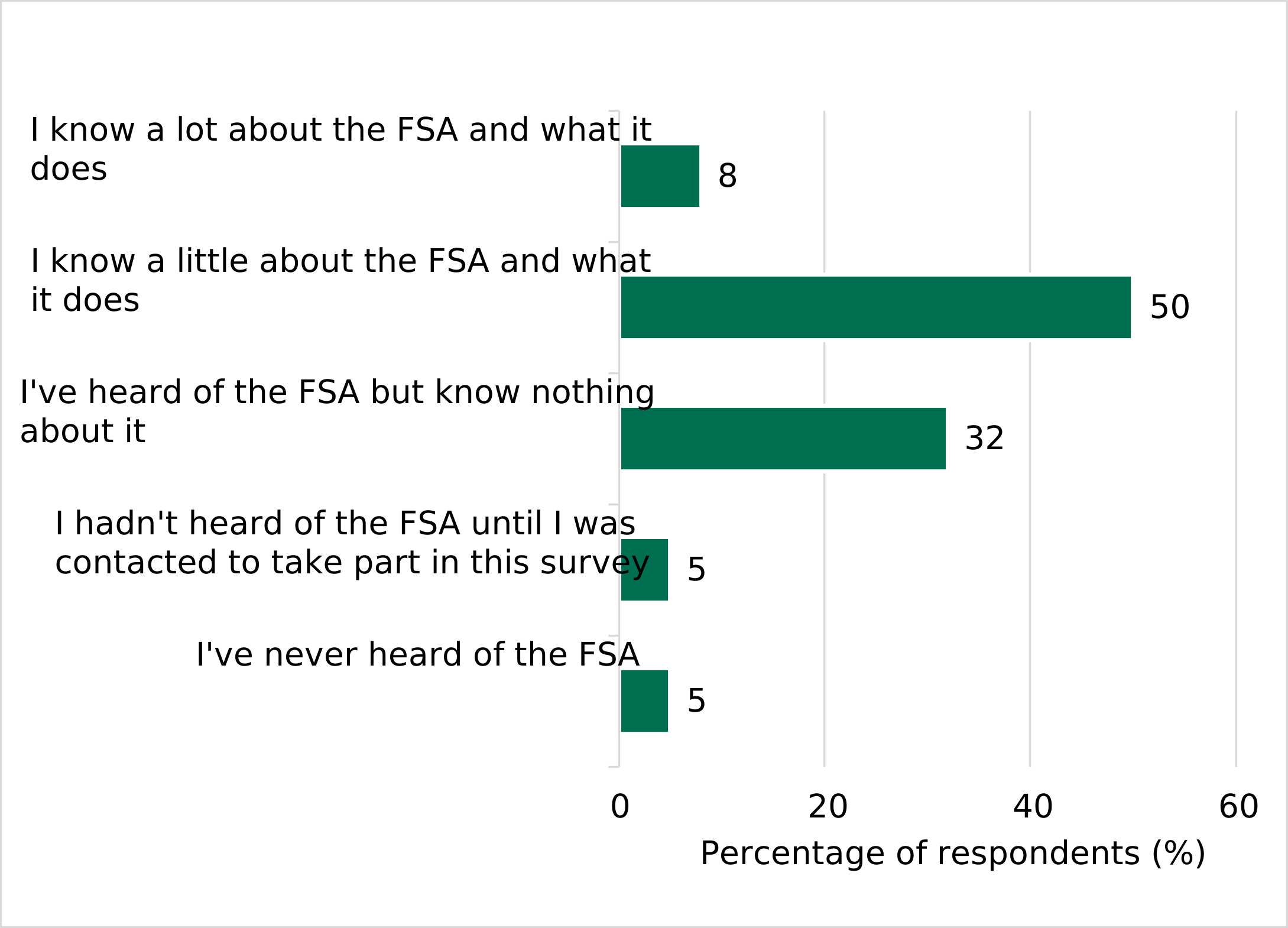
Most respondents reported at least some knowledge of the FSA; 8% reported that they knew a lot about the FSA and what it does, and 50% reported that they knew a little about the FSA and what it does. Around a third (32%) of respondents reported that they had heard of the FSA but knew nothing about it, 5% had not heard of the FSA until being contacted to take part in Food and You 2, and 5% had never heard of the FSA (Figure 1). (footnote 7)
Figure 1. Knowledge about the Food Standards Agency (FSA)
Download this chart
Source: Food and You 2: Wave 10
Trust and confidence in the FSA
Respondents who had at least some knowledge of the FSA were asked how much they trusted the FSA to do its job, that is to make sure food is safe and what it says it is. Most (78%) respondents reported that they trusted the FSA to do its job, 19% of respondents neither trust or distrust the FSA to do this, and 1% of respondents reported that they distrust the FSA to do this. (footnote 8)
Most respondents (83%) reported that they were confident that the FSA (or the government agency responsible for food safety) can be relied upon to protect the public from food-related risks (such as food poisoning or allergic reactions from food). Around eight in ten (81%) of respondents were confident that the FSA takes appropriate action if a food-related risk is identified and over three quarters (77%) were confident that the FSA is committed to communicating openly with the public about food-related risks. (footnote 9)
Concerns about food inside and outside the UK
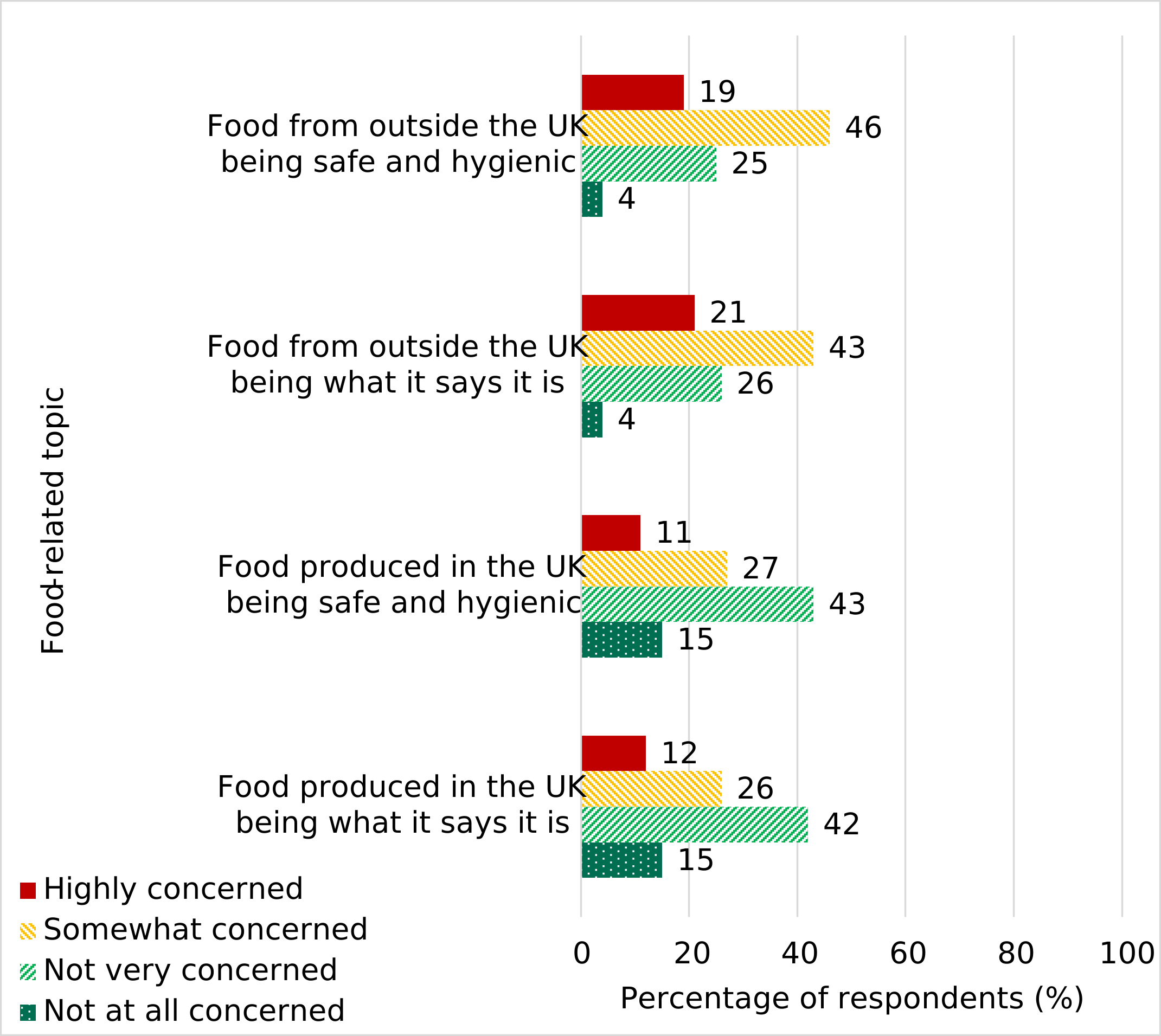
Respondents were more likely to report concern (footnote 10) about food from outside the UK (footnote 11) being safe and hygienic (65%) compared to food produced inside the UK (38%). Similarly, respondents were more likely to report concern about food from outside the UK being what it says it is (64%) compared to food produced inside the UK (38%) (Figure 2).
Figure 2. Level of concern about food produced inside and outside the UK
Download this chart
Source: Food and You 2: Wave 10
The reported level of concern about food produced outside the UK being safe and hygienic varied between different categories of people in the following ways:
- age group: respondents aged 45 years or older were more likely to be concerned about food produced outside the UK being safe and hygienic compared to younger respondents. For example, 53% respondents aged between 16-24 years reported concern compared to 70% of those aged between 55-64 years and 75% aged between 65-74 years
- household size: those living in smaller households were more likely to report concern about food produced outside the UK being safe and hygienic compared to those in larger households. For example, 75% of respondents in one-person households reported concern compared to 57% in households of five or more
- children in the household: respondents in households with no children under the age of 16 (68%) were more likely to report concern about food produced outside the UK being safe and hygienic compared to households with children aged under 16 (58%)
- NS-SEC: respondents in managerial, administrative and professional occupations (68%), intermediate occupations (69%) and semi-routine and routine occupations (67%) were more likely to report concern about food produced outside the UK being safe and hygienic compared to those who are long-term unemployed or never worked (48%) and full-time students (51%)
- urban vs rural: respondents living in a rural area (74%) were more likely to report concern about food produced outside the UK being safe and hygienic compared to those living in urban areas (63%)
- responsibility for cooking: respondents who are responsible for cooking (66%) were more likely to report concern about food produced outside the UK being safe and hygienic compared to those who don’t cook (49%)
- responsibility for food shopping: those with responsibilities for food shopping (67%) were more likely to report concern about food produced outside the UK being safe and hygienic compared to those who don’t shop for food (46%)
The reported level of concern about food produced outside the UK being what it says it is varied between different categories of people in the following ways:
- age group: older respondents were more likely to be concerned about food produced outside the UK being what it says it is, compared to younger respondents. For example, 76% of those aged 65-74 years and 77% of those over 75 were concerned about food produced outside the UK being what it says it is, compared to 54% of respondents aged between 16-24 and 59% aged between 35-44 years
- household size: smaller household sizes were more likely to report concern about food produced outside the UK being what it says it is, compared to larger households. For example, 73% of one-person households reported concern compared to 63% of respondents in households of 4 and 50% in households of 5 or more
- children: households with no children under the age of 6 (66%) and no children under the age of 16 (67%) were more likely to report concern about food produced outside the UK being what it says it is, compared to households with children aged under the age of 6 (53%) and under the age of 16 (57%)
- NS-SEC: respondents in managerial, administrative and professional occupations (66%), those in intermediate occupations (66%), small employers and own account workers (66%) and those in semi-routine and routine occupations (65%) were more likely to report concern about food produced outside the UK being what it says it is, compared to those who are long-term unemployed or never worked (49%)
- region (England) : levels of concern about food produced outside the UK being what it says it is varied by region in England. For example, respondents who live in the South-West (71%) were more likely to report concern about food produced outside the UK being what it says it is, compared to those who live in other regions in England, including the North-East (56%), North-West (60%) and the East Midlands (57%)
- urban vs rural: Respondents living in rural areas (74%) were more likely to report concern about food produced outside the UK being what it says it is, compared to those living in urban areas (62%)
- responsibility for cooking: respondents who are responsible for cooking (66%) were more likely to report concern about food produced outside the UK being what it says it is, compared to those who don’t cook (45%)
- responsibility for shopping for food: those with responsibilities for shopping (66%) were more likely to report concern about food produced outside the UK being what it says it is, compared to those who don’t shop for food (44%)
-
Question: How confident are you that… a) the food you buy is safe to eat. b) the information on food labels is accurate (for example, ingredients, nutritional information, country of origin). Responses: very confident, fairly confident, not very confident, not at all confident, it varies, don’t know. Base= 5690, all respondents.
-
NS-SEC (The National Statistics Socio-economic classification) is a classification system which provides an indication of socio-economic position based on occupation and employment status.
-
Question: How confident are you in the food supply chain? That is all the processes involved in bringing food to your table. Responses: very confident, fairly confident, not very confident, not at all confident, it varies, don’t know. Base= 5690, all respondents.
-
Please note: the figures of other ethnic groups are not reported due to low base / sample size.
-
Question: Which of the following, if any, have you heard of? Please select all that apply. Response: Food Standards Agency (FSA), (England) Department for Environment, Food and Rural Affairs (DEFRA), (England) The Office for Health Improvement and Disparities, (England) Environment Agency, (England) UK Health Security Agency (UKHSA), (England and Wales) Health and Safety Executive (HSE), (Wales) Public Health Wales (PHW), (Wales) Natural Resources Wales, (NI) Public Health Agency (PHA), (NI) Department of Agriculture, Environment and Rural Affairs (DAERA), (NI) Health and Safety Executive Northern Ireland (HSENI), (NI) Safefood, None of these. Base= 3926, all online respondents. Please note: All consumers taking part in the survey had received an invitation to take part in the survey which mentioned the FSA. An absence of response indicates the organisation had not been heard of by the respondent or a non-response.
-
Please note: the figures of other ethnic groups are not reported due to low base / sample size.
-
Question: How much, if anything, do you know about the Food Standards Agency, also known as the FSA? Response: I know a lot about the FSA and what it does, I know a little about the FSA and what it does, I've heard of the FSA but know nothing about it, I hadn't heard of the FSA until I was contacted to take part in this survey, I've never heard of the FSA. Base= 5690, all respondents. Please note: All consumers taking part in the survey had received an invitation to take part in the survey which mentioned the FSA.
-
Question: How much do you trust or distrust the Food Standards Agency to do its job? That is to make sure that food is safe and what it says it is. Responses: I trust it a lot, I trust it, I neither trust nor distrust it, I distrust it, I distrust it a lot, don’t know. Base= 3477, all respondents who know a lot or a little about the FSA and what it does. Please note: ‘I trust it a lot’ and ‘I trust it’ referred to as trust.
-
Question: How confident are you that the Food Standards Agency / the government agency responsible for food safety in England, Wales and Northern Ireland...a) Can be relied upon to protect the public from food-related risks (such as food poisoning or allergic reactions from food). b) Is committed to communicating openly with the public about food-related risks. c) Takes appropriate action if a food related risk is identified? Responses: very confident, fairly confident, not very confident, not at all confident, don’t know. Base= 5690, all respondents. Please note: ‘very confident’ and ‘fairly confident’ referred to as confident. Respondents with little or no knowledge of the FSA were asked about ‘the government agency responsible for food safety’, those with at least some knowledge of the FSA were asked about the FSA.
-
Either highly or somewhat concerned.
-
Respondents in Northern Ireland were asked about the UK and Ireland