Food and You 2: Wave 10 Key Findings
F&Y2 Wave 10 Chapter 2: Food security
This chapter reports the level of food security in England, Wales, and Northern Ireland, and how food security varied between respondents.
Introduction
This chapter reports the level of food security in England, Wales, and Northern Ireland, and how food security varied between different categories of people.
“Food security exists when all people, at all times, have physical and economic access to sufficient, safe and nutritious food that meets their dietary needs and food preferences for an active and healthy life.” World Food Summit, 1996.
Food and You 2 uses the U.S. Adult Food Security Survey Module developed by the United States Department of Agriculture (USDA) to measure consumers’ food security status.
Respondents are assigned to one of the following food security status categories:
- High: no reported indications of food-access problems or limitations.
- Marginal food security: one or two reported indications—typically of anxiety over food sufficiency or shortage of food in the house. Little or no indication of changes in diets or food intake.
- Low: reports of reduced quality, variety, or desirability of diet. Little or no indication of reduced food intake.
- Very low: reports of multiple indications of disrupted eating patterns and reduced food intake.
Those with high or marginal food security are referred to as food secure. Those with low or very low food security are referred to as food insecure.
More information on how food security is measured and how classifications are assigned and defined can be found in annex A and on the USDA Food Security website .
Food security
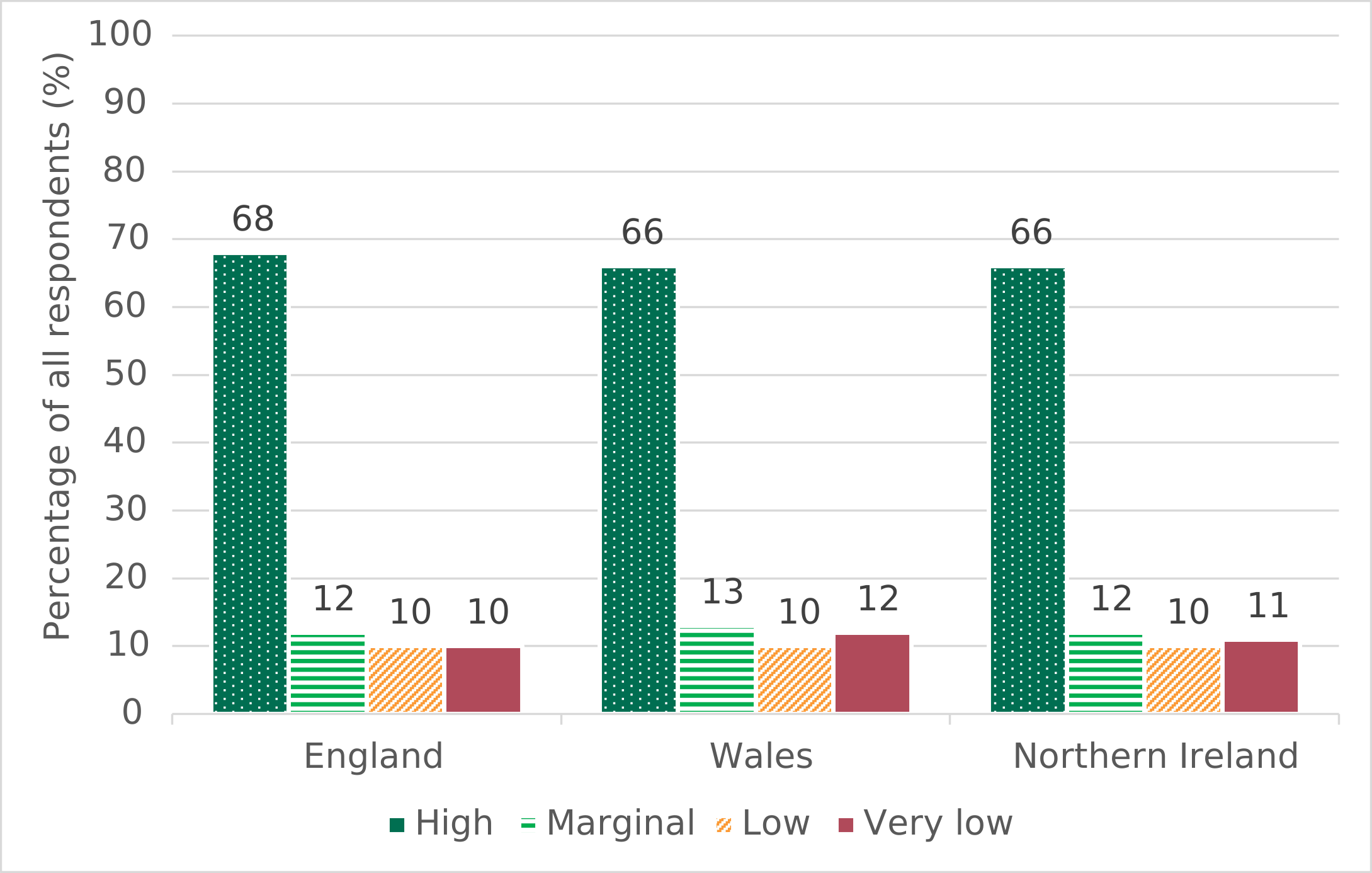
Across England, Wales, and Northern Ireland, 80% of respondents were classified as food secure (68% high, 12% marginal) and 20% of respondents were classified as food insecure (10% low, 10% very low). (footnote 1)
Around 8 in 10 of respondents were food secure (i.e. had high or marginal food security) in England (80%), Wales (79%) and Northern Ireland (78%). Approximately a fifth of respondents were food insecure (i.e. had low or very low food security) in England (20%), Wales (21%) and Northern Ireland (22%) (Figure 3).
Figure 3. Food security in England, Wales, and Northern Ireland
Download this chart
Source: Food and You 2: Wave 10
Experiences of food insecurity
Respondents were asked up to ten questions from the US Adult Food Security Survey Module, (footnote 2) to determine their food security classification.
All respondents were asked the first three questions from the food security survey module. Respondents were asked how often, if ever, they had experienced any of the following in the previous 12 months:
- I/we worried whether our food would run out before we got money to buy more
- The food that we bought just didn't last, and I/we didn't have money to get more
- I/we couldn't afford to eat balanced meals
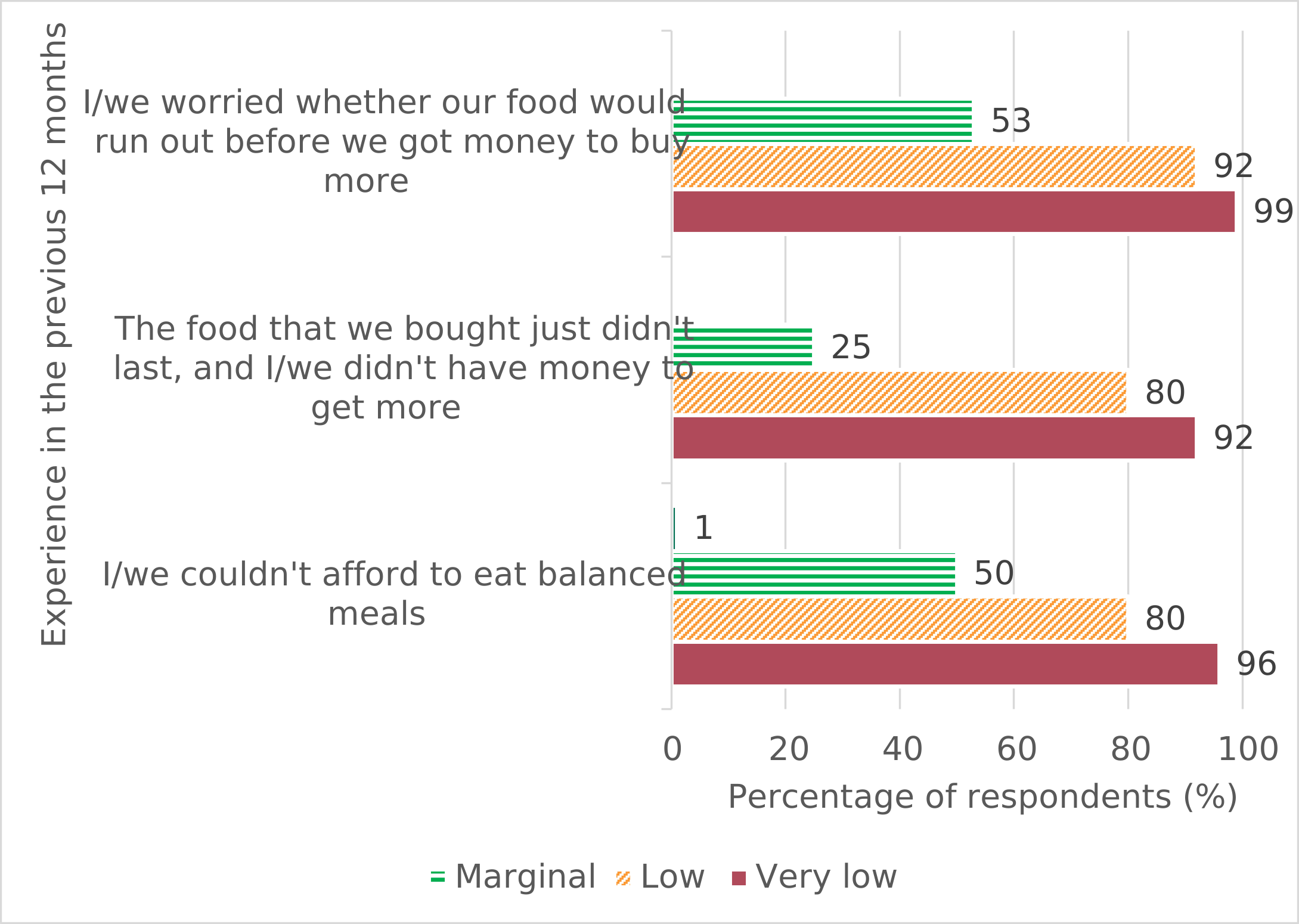
In the previous 12 months, respondents who had very low (99%), or low (92%) food security were more likely (footnote 3) to have worried whether their food would run out before they had money to buy more, compared to those with marginal food security (53%). (footnote 4) Respondents who had very low (92%), or low (80%) food security were more likely to report that the food that they bought just didn't last, and they didn't have money to get more, compared to those with marginal (25%) food security. (footnote 5)
Respondents who had very low (96%), or low (80%) food security were more likely to report that they couldn’t afford balanced meals, compared to those with marginal (50%) food security. (footnote 6) None of the respondents (0%) with high food security reported these experiences, because according to the USDA classification system those with high food security report ‘no indications of food access problems or limitations’.
Figure 4. Experiences of food security by food security classification
Download this chart
Source: Food and You 2: Wave 10
How food security differs between socio-economic and demographic groups
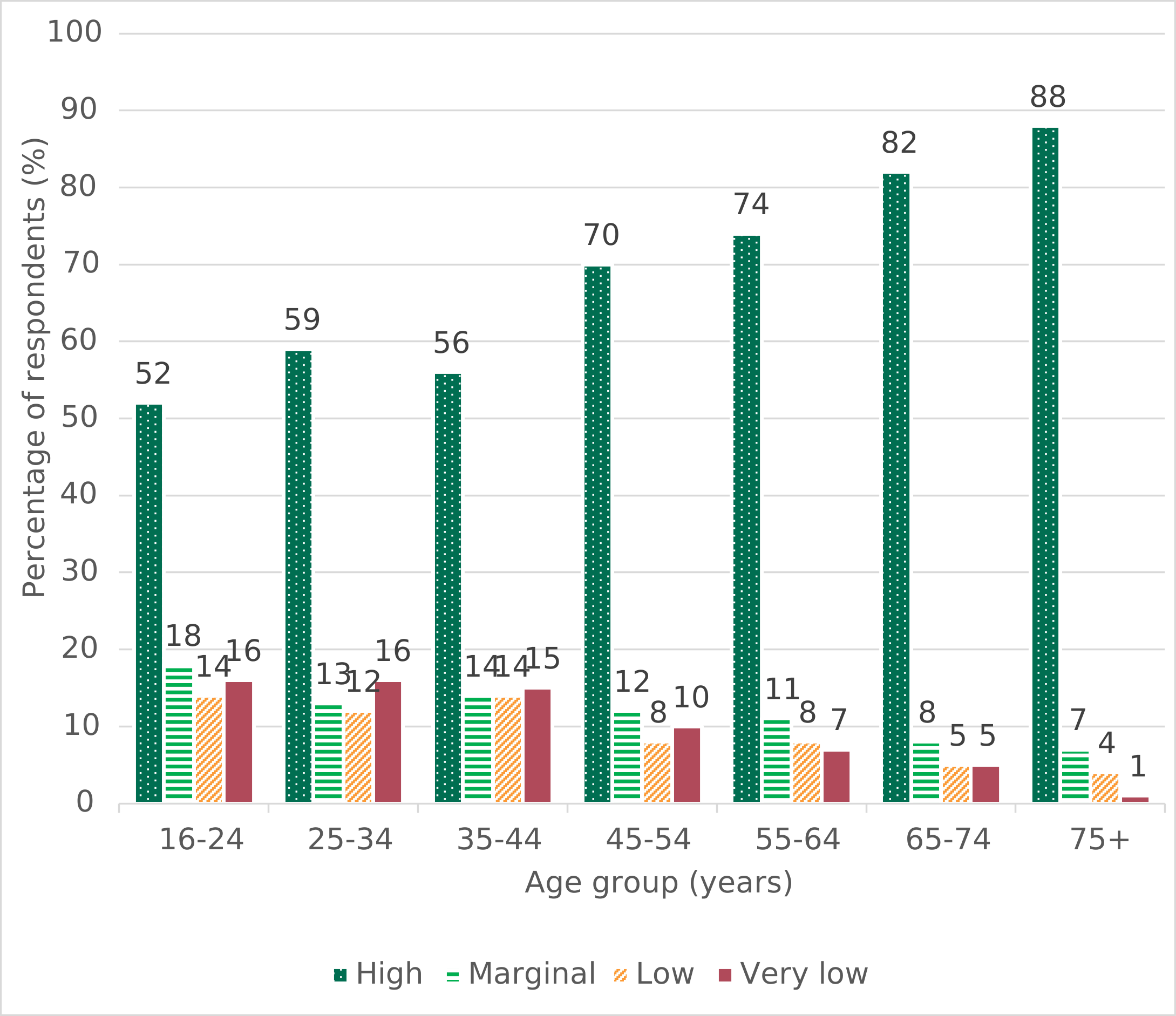
Food security varied by age group with older adults being more likely to report that they were food secure and less likely to report that they were food insecure than younger adults. For example, 30% of respondents aged 16-24 years were food insecure (14% low, 16% very low security) compared to 5% of those aged 75 years and over (4% low, 1% very low security) (Figure 5).
Figure 5. Food security by age group
Download this chart
Source: Food and You 2: Wave 10
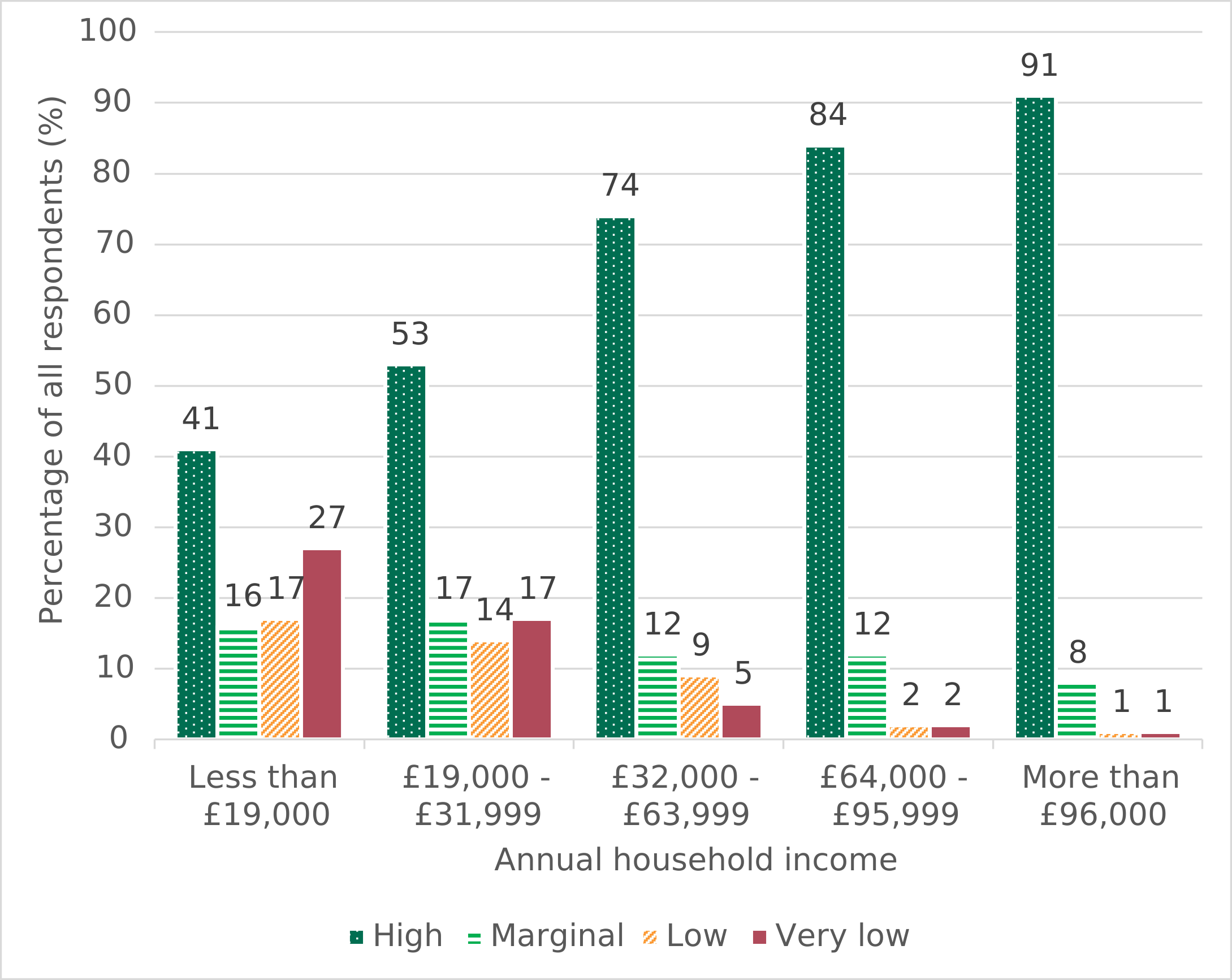
Food security was associated with household income. Respondents with lower incomes were more likely to report being food insecure than those with higher incomes. For example, 43% of those with an annual household income of less than £19,000 reported food insecurity (low 17%, very low 27%) compared to 4% of those with an income between £64,000 and £95,999 (low 2%, very low 2%) (Figure 6).
Figure 6. Food security by annual household income
Download this chart
Source: Food and You 2: Wave 10
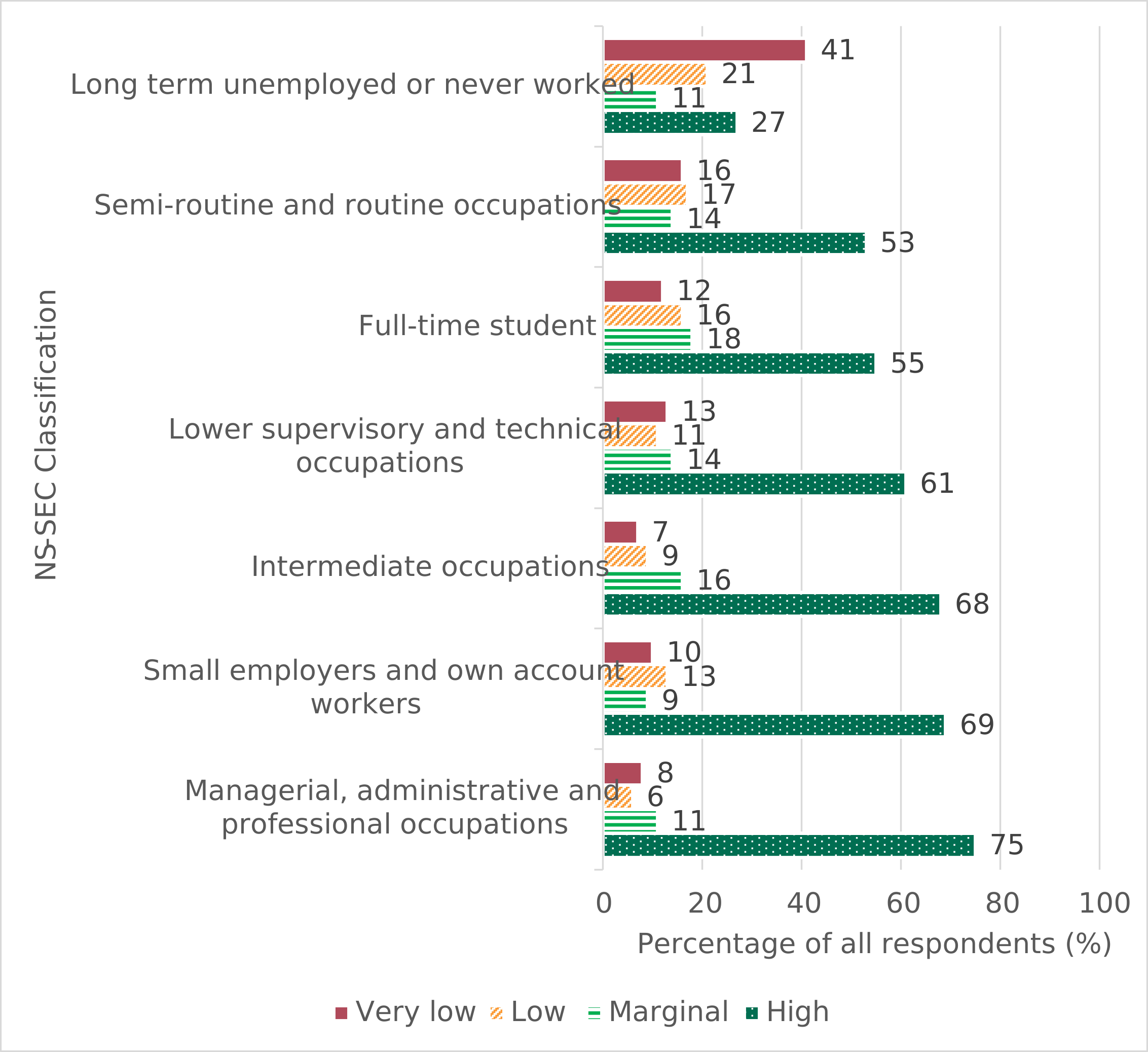
Respondents who were long-term unemployed or had never worked (62%) were more likely to report that they were food insecure compared to all other occupational groups (for example, 14% of those in managerial, administrative, and professional occupations and 15% of those in intermediate occupations) (Figure 7).
Figure 7. Food security by socio-economic classification (NS-SEC)
Download this chart
Source: Food and You 2: Wave 10
The reported level of food insecurity also varied between different categories of people in the following ways:
- Household size: respondents living in larger households were more likely to report that they were food insecure compared to those living in smaller households. For example, respondents living in households with 5 people or more (30%) were more likely to report that they were food insecure compared to respondents in households with 2people or fewer (15% in 2-person households, 20% in 1-person households)
- Children under 16 in the household: respondents in households with children under 16 reported (29%) were more likely to be food insecure than respondents in households without children under 16 (16%)
- Children under 6 in the household: respondents in households with children under 6 reported (31%) were more likely to be food insecure than respondents in households without children under 6 (18%)
- Long-term health condition: respondents with a long-term health condition (30%) were more likely to report being food insecure compared to those without a long-term health condition (15%)
- Region (England) (footnote 7): respondents living in the West Midlands (28%) were more likely to report being food insecure than those in the East of England (17%), London (19%), the South-East (17%) and the South-West (15%)
Food bank and social supermarket use
Respondents were asked if they or anyone else in their household had received a free parcel of food from a food bank or other emergency food provider in the last 12 months. Most respondents (94%) reported that they had not used a food bank or other emergency food provider in the last 12 months, with 3% of respondents reporting that they had done so. (footnote 8)
Respondents who had received a food parcel from a food bank or other provider were asked to indicate how often they had received this in the last 12 months. Of these respondents, 50% had received a food parcel on only one occasion in the last 12 months, 36% had received a food parcel on more than one occasion but less often than every month, and 4% had received a food parcel every month or more often. (footnote 9)
Social supermarkets
Social supermarkets, food clubs and community pantries/larders allow people to buy food items at a heavily discounted price, or as part of membership. These are generally community organisations and may offer additional services such as referral services and volunteering opportunities. Some or all of the food is surplus from the food supply chain.
Awareness and use of social supermarkets
Respondents were asked if they or anyone else in their household had used a social supermarket in the last 12 months. One in 20 respondents (5%) reported that they had used a social supermarket in the last 12 months and 81% of respondents reported that they had not used a social supermarket in the last 12 months. Around one in ten respondents (11%) reported that they had not heard of social supermarkets. (footnote 10)
The use of social supermarkets varied between different categories of people in the following ways:
- Annual household income: respondents with an income of less than £19,000 (12%) were more likely to have used a social supermarket than those with a higher income (for example, 1% of those with an income of £64,000-£95,999).
- Food security: respondents experiencing very low food security (21%) were more likely to have used a social supermarket than those with low (9%), marginal (5%) or high (2%) food security.
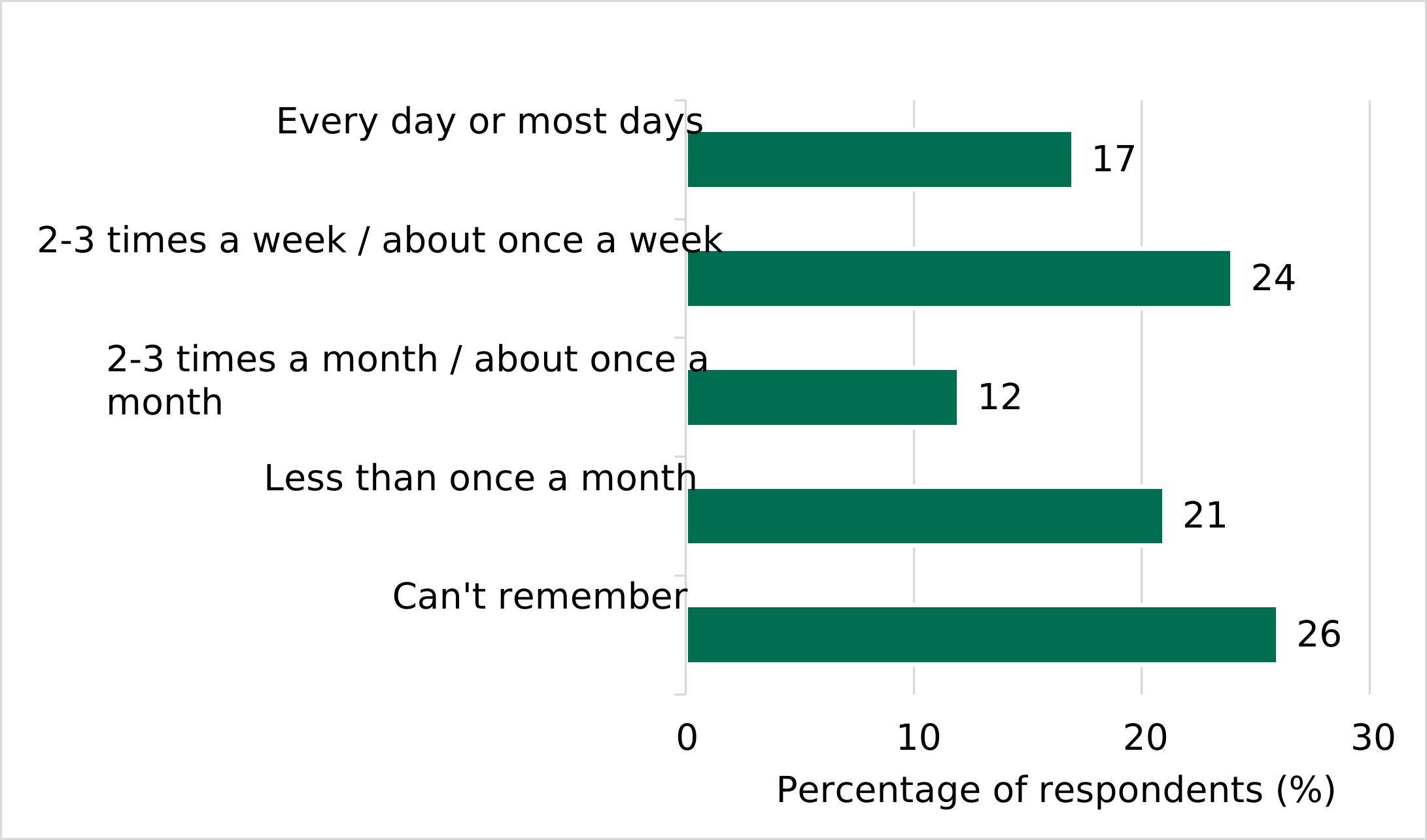
Respondents who had used a social supermarket were asked to indicate how often they had used this in the last 12 months. Of these respondents, 17% had used a social supermarket every day or most days, 24% had used a social supermarket 2-3 times a week or about once a week, 12% had used a social supermarket 2-3 times a month or about once a month, and 21% had used a social supermarket less than once a month. However, 26% of respondents who had used a social supermarket reported that they could not remember how often they had used a social supermarket in the last 12 months (Figure 8). (footnote 11)
Figure 8. Frequency of social supermarket use among social supermarket users
Download this chart
Source: Food and You 2: Wave 10
-
Question/Responses: Derived variable, see USDA Food Security guidance and Technical Report. Base= 5690, all respondents. Please note: See Annex A for information about the classifications and definitions of food security levels.
-
See the USDA Food Security guidance for further information about the survey and classifications.
-
Respondents who answered ‘often true’ or ‘sometimes true’
-
Question: Please say whether the statement below was often true, sometimes true or never true for you/people in your household in the last 12 months. I/we worried whether our food would run out before we got money to buy more. Responses: often true, sometimes true, never true, don’t know or prefer not to say, not stated. Base= 5690, all respondents.
-
Question: Please say whether the statement below was often true, sometimes true or never true for you/people in your household in the last 12 months. The food that we bought just didn't last, and I/we didn't have money to get more. Responses: often true, sometimes true, never true, don’t know or prefer not to say, not stated. Base= 5690, all respondents
-
Question: Please say whether the statement below was true for you/your household in the last 12 months. I/we couldn't afford to eat balanced meals. Responses: often true, sometimes true, never true, don’t know or prefer not to say, not stated. Base= 5690, all respondents.
-
Regional differences are only reported for England due to the low sample / base size in Wales and Northern Ireland.
-
Question: In the last 12 months, have you, or anyone else in your household, received a free parcel of food from a food bank or other emergency food provider? Responses: Yes, No, Prefer not to say. Base= 5690, all respondents.
-
Question: How often in the past 12 months have you, or anyone else in your household, received a free food parcel from a food bank or other emergency food provider? Responses: Only once in the last year, Two or three times in the last year, Four to six times in the last year, More than six times but not every month, Every month or more often, Don't know, Prefer not to say. Base= 177, all online respondents where anyone in household has used a food bank or emergency food or received a free food parcel from a food bank or other emergency food provider in the last 12 months.
-
Question: In the last 12 months, have you, or anyone else in your household, used a social supermarket (also known as a food club/hub or community pantry)? Responses: Yes, No, Prefer not to say, I had not heard of a social supermarket, food club/hub or community pantry before today. Base= 5690, all respondents
-
Question: How often in the last 12 months have you, or anyone else in your household, used a social supermarket (also known as a food club/hub or community pantry)? Responses: Every day, most days, 2-3 times a week, about once a week, about once a month, less than once a month, can’t remember. Base= 243, all who used a social supermarket in the last 12 month.