Bwyd a Chi 2, Cylch 10: Prif Ganfyddiadau
Bwyd a Chi 2, Cylch 10 - Pennod 5: Bwyta Gartref
Mae'r bennod hon yn rhoi trosolwg o ymddygiadau ymatebwyr mewn perthynas â diogelwch bwyd, gan gynnwys glanhau, golchi dwylo, coginio, oeri, labeli dyddiad a chroeshalogi.
Cyflwyniad
Mae’r ASB yn gyfrifol am ddiogelu’r cyhoedd rhag clefydau a gludir gan fwyd. Mae hyn yn cynnwys gweithio gyda ffermwyr, cynhyrchwyr a phroseswyr bwyd, a’r sectorau manwerthu a lletygarwch, i sicrhau bod y bwyd y mae pobl yn ei brynu yn ddiogel. Mae’r ASB hefyd yn rhoi canllawiau ymarferol ac argymhellion i ddefnyddwyr ar ddiogelwch a hylendid bwyd yn y cartref.
Mae arolwg Bwyd a Chi 2 yn gofyn i’r ymatebwyr am eu hymddygiadau mewn perthynas â bwyd yn y cartref, gan gynnwys gwybodaeth a’u hymddygiadau mewn perthynas â phum agwedd bwysig ar ddiogelwch bwyd, sef: glanhau, coginio, oeri, atal croeshalogi a dyddiadau ‘defnyddio erbyn’.
Mae yna ddwy fersiwn o’r modiwl ‘Bwyta gartref’; y modiwl craidd sy’n cynnwys nifer cyfyngedig o’r prif gwestiynau sy’n cael eu trafod yn flynyddol, a’r modiwl ‘archwiliad dwfn’ sy’n cynnwys cwestiynau ychwanegol ac sy’n cael ei anfon bob 2 flynedd. Mae'r bennod hon yn adrodd ar gwestiynau o'r modiwl craidd 'Bwyta gartref'. (footnote 1)
Glanhau
Golchi dwylio yn y cartref
Mae’r ASB yn argymell y dylai pawb olchi eu dwylo cyn paratoi, coginio neu fwyta bwyd, ar ôl trin bwyd amrwd, a chyn paratoi bwyd parod i’w fwyta.
Dywedodd y rhan fwyaf o’r ymatebwyr (70%) eu bod bob amser yn golchi eu dwylo cyn paratoi neu fwyta bwyd, a nododd 29% o’r ymatebwyr eu bod y gwneud hyn y rhan fwyaf o’r amser neu’n llai aml, tra dywedodd 1% nad ydyn nhw byth yn gwneud hyn. (footnote 2)
Dywedodd y rhan fwyaf o’r ymatebwyr (92%) eu bod bob amser yn golchi eu dwylo yn syth ar ôl trin cig, dofednod neu bysgod amrwd, a dywedodd 7% eu bod yn gwneud hyn y rhan fwyaf o’r amser neu’n llai aml, a dywedodd llai na 1% nad ydyn nhw byth yn gwneud hyn. (footnote 3)
Dywedodd tua pedwar o bob deg o’r ymatebwyr (44%) eu bod bob amser yn golchi eu dwylo cyn bwyta, dywedodd 52% o ymatebwyr eu bod yn gwneud hyn y rhan fwyaf o’r amser neu’n llai aml, a dywedodd 3% nad ydyn nhw byth yn golchi eu dwylo cyn bwyta. (footnote 4)
Golchi dwylio wrth fwyta allan
Gofynnwyd i’r ymatebwyr pa mor aml, os o gwbl, roeddent yn golchi eu dwylo neu’n defnyddio hylif diheintio dwylo (sanitising gel) neu weips cyn bwyta pan oeddent yn bwyta y tu allan i’w cartref. Dywedodd tua chwech o bob deg (62%) o’r ymatebwyr eu bod nhw bob amser neu’r rhan fwyaf o’r amser yn golchi eu dwylo, neu’n defnyddio gel neu weips diheintio dwylo, pan oeddent yn bwyta y tu allan i’w cartref, roedd 29% yn gwneud hyn tua hanner yr amser neu’n llai aml, ac nid oedd 8% byth yn gwneud hyn. (footnote 5)
Oeri
Mae’r ASB yn darparu canllawiau ar oeri bwyd yn gywir i helpu i atal bacteria niweidiol rhag tyfu.
Ydy’r ymatebwyr yn gwirio tymheredd yr oergell ac, os ydynt, sut?
Pan ofynnwyd iddynt beth yw’r tymheredd cywir y tu mewn i oergell, dywedodd 60% o’r ymatebwyr sydd ag oergell y dylai fod rhwng 0 a 5 gradd Celsius, fel yr argymhellir gan yr ASB. Dywedodd un rhan o bump (19%) o’r ymatebwyr y dylai’r tymheredd fod yn uwch na 5 gradd, dywedodd 5% y dylai’r tymheredd fod yn is na 0 gradd, ac nid oedd 16% o’r ymatebwyr yn gwybod beth oedd y tymheredd cywir ar gyfer y tu mewn i’w hoergell. (footnote 6)
O’r ymatebwyr hynny oedd ag oergell, dywedodd chwech o bob deg eu bod yn monitro’r tymheredd (60%); naill ai â llaw (49%) neu drwy ddefnyddio larwm tymheredd mewnol (11%). (footnote 7)
O’r ymatebwyr sy’n monitro tymheredd eu hoergell â llaw (hynny yw nad ydynt yn dibynnu ar larwm oergell), dywedodd 49% eu bod yn gwirio’r oergell unwaith yr wythnos neu’n amlach, fel yr argymhellir gan yr ASB. (footnote 8)
Coginio
Mae’r ASB yn argymell y bydd coginio bwyd ar y tymheredd cywir ac am yr amser cywir yn sicrhau bod unrhyw facteria niweidiol yn cael eu lladd. Wrth goginio porc, dofednod, a chynhyrchion briwgig, mae’r ASB yn argymell y dylai’r cig fod yn stemio’n boeth ac wedi’i goginio’r holl ffordd drwodd, ac nad yw unrhyw ran o’r cig yn binc, a bod unrhyw suddion yn glir.
Dywedodd y rhan fwyaf o’r ymatebwyr (80%) eu bod bob amser yn coginio bwyd nes ei fod yn stemio’n boeth ac wedi’i goginio’r holl ffordd drwodd. Fodd bynnag, dywedodd 19% nad ydyn nhw bob amser yn gwneud hyn. (footnote 9)
Gofynnwyd i’r ymatebwyr nodi pa mor aml y maent yn bwyta cyw iâr neu dwrci pan fo’r cig yn binc neu pan fo’r suddion yn binc. (footnote 10) O’r rheiny sy’n bwyta cyw iâr neu dwrci, dywedodd tua naw o bob deg (89%) nad ydynt byth yn bwyta cyw iâr na thwrci pan fydd yn binc neu pan fydd y suddion yn binc. Fodd bynnag, nododd 9% o’r ymatebwyr eu bod yn bwyta cyw iâr neu dwrci o leiaf yn achlysurol pan fydd yn binc neu pan fydd y suddion yn binc. (footnote 11)
Ailgynhesu
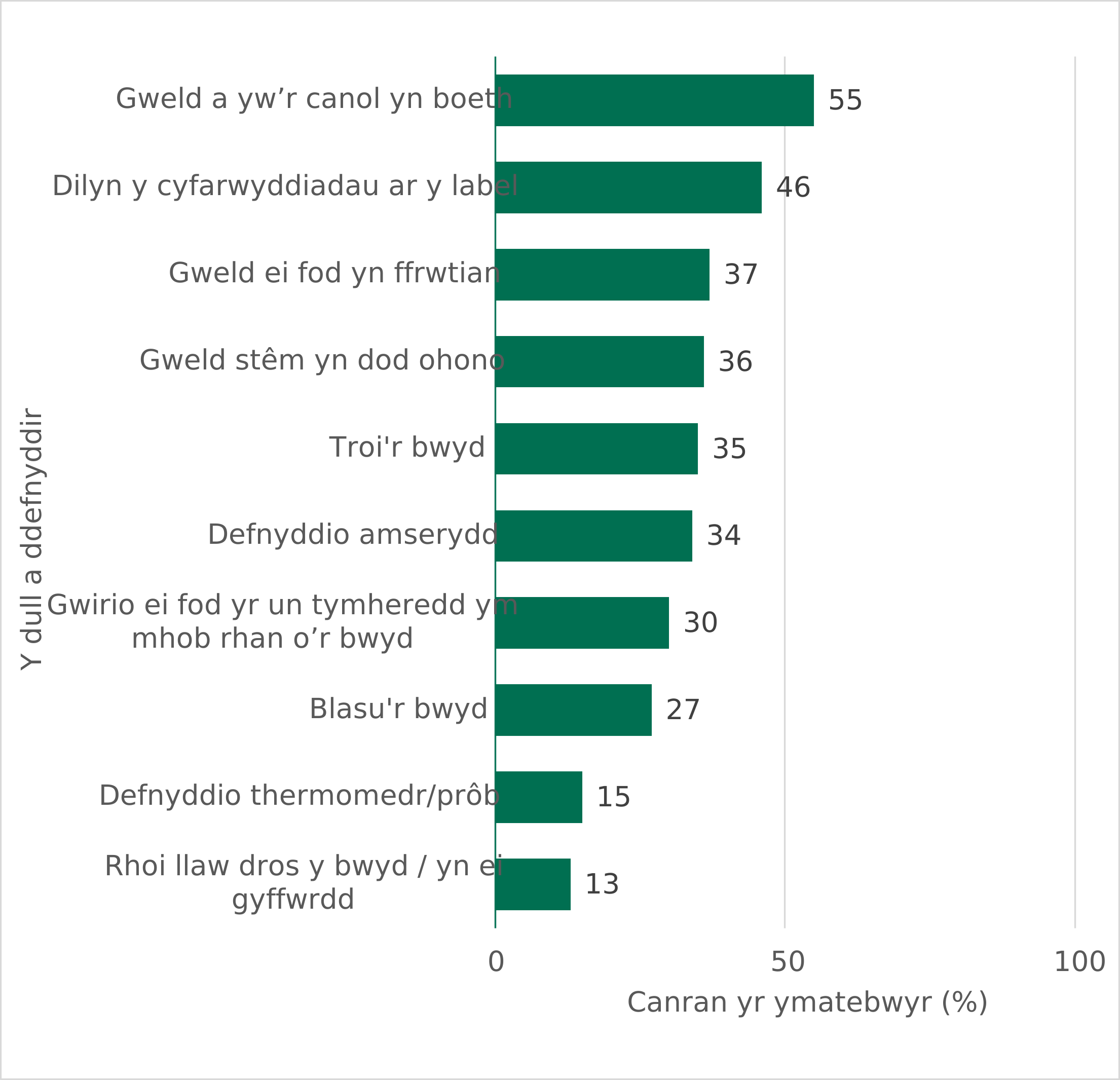
Gofynnwyd i’r ymatebwyr nodi sut maent yn gwirio bod bwyd yn barod i’w fwyta pan fyddant yn ei ailgynhesu. Y dull mwyaf cyffredin oedd gwirio bod y canol yn boeth (55%), a’r dulliau lleiaf cyffredin oedd defnyddio thermomedr neu brôb (15%) neu roi llaw dros y bwyd neu gyffwrdd ag ef (13%) (Ffigur 21). (footnote 12)
Mae’r ASB yn argymell ailgynhesu bwyd unwaith yn unig. Pan ofynnwyd i’r ymatebwyr sawl gwaith y byddent yn ailgynhesu bwyd, dywedodd y mwyafrif y byddent yn ailgynhesu bwyd unwaith yn unig (81%). Byddai 10% yn ailgynhesu bwyd ddwywaith, a byddai 3% yn ailgynhesu bwyd fwy na dwywaith. (footnote 13)
Ffigur 21. Sut mae’r ymatebwyr yn gwirio a yw bwyd sydd wedi’i ailgynhesu yn barod i’w fwyta.
Lawrlwytho’r siart hon
Ffynhonnell: Bwyd a Chi 2: Cylch 10
Bwyd dros ben
Mae’r ASB yn darparu canllawiau ar sut i storio bwyd dros ben. Mae’r ASB yn argymell bod pobl yn bwyta bwyd dros ben o fewn dau ddiwrnod neu’n ei rewi. Gofynnwyd i’r ymatebwyr am ba mor hir y byddent yn cadw bwyd dros ben yn yr oergell. Dywedodd tua chwech o bob deg (63%) o’r ymatebwyr y byddent yn bwyta bwyd dros ben o fewn deuddydd, dywedodd 28% o’r ymatebwyr y byddent yn bwyta bwyd dros ben o fewn 3-5 diwrnod, a dywedodd 2% y byddent yn bwyta bwyd dros ben ar ôl 5 diwrnod neu fwy. (footnote 14)
Atal croeshalogi
Mae’r ASB yn darparu canllawiau ar atal croeshalogi. Mae’r ASB yn argymell na ddylai pobl olchi cig na dofednod amrwd. Wrth olchi cig amrwd, gellir lledaenu bacteria niweidiol ar eich dwylo, eich dillad, eich offer a’ch arwynebau gwaith.
Gofynnwyd i’r ymatebwyr pa mor aml, os o gwbl, roeddent yn golchi cyw iâr amrwd. (footnote 15)Dywedodd tua chwech o bob deg (58%) o’r ymatebwyr nad ydyn nhw byth yn golchi cyw iâr amrwd. Fodd bynnag, dywedodd 39% o’r ymatebwyr eu bod nhw’n gwneud hyn yn achlysurol o leiaf. (footnote 16)
Sut a ble mae’r ymatebwyr yn storio cig a dofednod amrwd yn yr oergell
Mae’r ASB yn argymell y dylid gorchuddio cig a dofednod amrwd yn yr oergell, eu cadw ar wahân i fwydydd parod i’w bwyta, a’u storio ar waelod yr oergell i atal croeshalogi.
Gofynnwyd i’r ymatebwyr nodi, o blith ymatebion amrywiol, sut maent yn storio cig a dofednod yn yr oergell. Roedd yr ymatebwyr yn fwyaf tebygol o ddweud eu bod yn storio cig a dofednod amrwd yn eu deunydd pecynnu gwreiddiol (71%) neu ar wahân i fwydydd wedi’u coginio (50%). Dywedodd tua pedwar o bob deg o’r ymatebwyr eu bod yn storio cig a dofednod amrwd mewn cynhwysydd wedi’i selio (41%) a’u bod yn gorchuddio cig a dofednod amrwd â ffilm/ffoil (35%), gydag 13% o’r ymatebwyr yn cadw’r cynnyrch ar blât. (footnote 17)
Dywedodd y rhan fwyaf (62%) o’r ymatebwyr eu bod yn storio cig a dofednod amrwd ar waelod yr oergell, fel y mae’r ASB yn ei argymell. Fodd bynnag, dywedodd 21% o’r ymatebwyr eu bod yn storio cig a dofednod amrwd ble bynnag y mae lle yn yr oergell, dywedodd 12% eu bod yn storio cig a dofednod amrwd yng nghanol yr oergell, a dywedodd 7% eu bod yn eu storio yn rhan uchaf yr oergell. (footnote 18)
Dyddiadau ‘defnyddio erbyn’ ac ‘ar ei orau cyn’
Gofynnwyd i’r ymatebwyr am yr hyn maent yn ei ddeall am wahanol fathau o labeli dyddiadau a chyfarwyddiadau ar ddeunydd pecynnu bwyd, oherwydd os caiff bwyd ei storio yn rhy hir neu ar y tymheredd anghywir, gall achosi gwenwyn bwyd. Mae dyddiadau ‘defnyddio erbyn’ yn ymwneud â diogelwch bwyd. Mae dyddiadau ‘ar ei orau cyn’ yn ymwneud ag ansawdd bwyd.
Gofynnwyd i’r ymatebwyr nodi pa ddyddiad sy’n dangos nad yw bwyd yn ddiogel i’w fwyta mwyach. Nododd oddeutu dwy ran o dair (64%) o’r ymatebwyr yn gywir mai’r dyddiad ‘defnyddio erbyn’ yw’r wybodaeth sy’n dangos nad yw bwyd yn ddiogel i’w fwyta mwyach. Fodd bynnag, dywedodd rhai o’r ymatebwyr (11%) mai’r dyddiad ‘ar ei orau cyn’ yw’r dyddiad sy’n dangos nad yw bwyd yn ddiogel i’w fwyta mwyach. (footnote 19)
Dywedodd tua dwy ran o dair (65%) o’r ymatebwyr eu bod bob amser yn gwirio’r dyddiadau ‘defnyddio erbyn’ cyn coginio neu baratoi bwyd. Yn ogystal, nododd 32% o’r ymatebwyr eu bod yn gwirio’r dyddiadau ‘defnyddio erbyn’ y rhan fwyaf o’r amser neu’n llai aml, a dywedodd 1% o’r ymatebwyr nad oeddent byth yn gwirio’r dyddiadau ‘defnyddio erbyn’. (footnote 20)
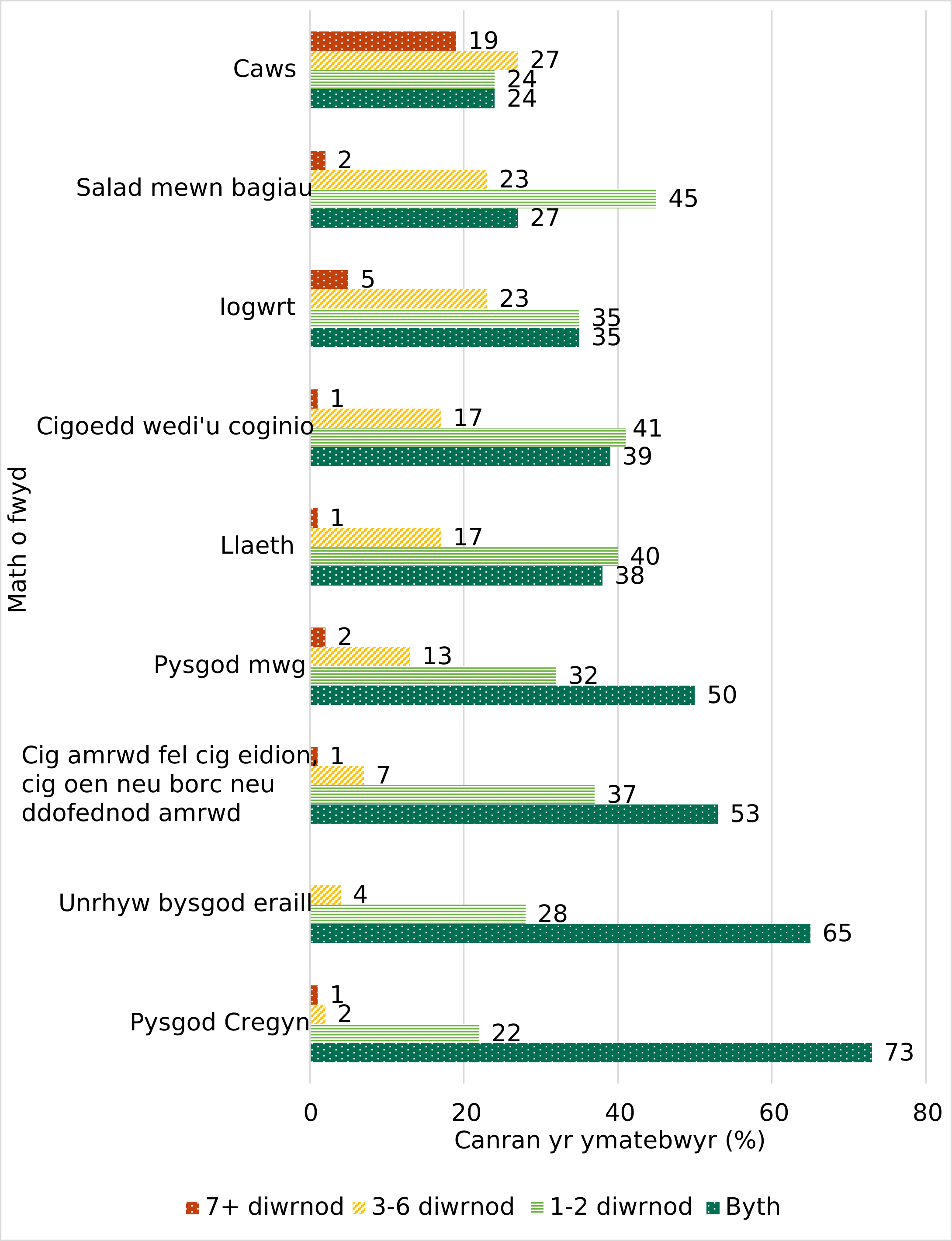
Gofynnwyd i’r ymatebwyr sy’n bwyta bwydydd penodol pryd, os o gwbl, yw’r dyddiad hwyraf y byddent yn bwyta’r math o fwyd ar ôl y dyddiad ‘defnyddio erbyn’. (footnote 21) Dywedodd y rhan fwyaf na fyddent yn bwyta pysgod cregyn (73%), na physgod eraill (65%) ar ôl y dyddiad ‘defnyddio erbyn’. Ni fyddai tua hanner yr ymatebwyr yn bwyta cig amrwd (53%) na physgod mwg (50%) ar ôl y dyddiad ‘defnyddio erbyn’. Salad mewn bagiau (70%) a chaws (70%) oedd y bwydydd yr oedd ymatebwyr yn fwyaf tebygol o ddweud y byddent yn eu bwyta ar ôl y dyddiad ‘defnyddio erbyn’. Byddai tua chwech o bob deg o’r ymatebwyr yn bwyta iogwrt (63%), llaeth (59%) a chigoedd wedi’u coginio (59%) ar ôl y dyddiad ‘defnyddio erbyn’ (Ffigur 22). (footnote 22)
Ffigur 22. Pa mor hir ar ôl y dyddiad ‘defnyddio erbyn’ y byddai ymatebwyr yn bwyta gwahanol fwydydd.
Lawrlwytho’r siart hon
Ffynhonnell: Bwyd a Chi 2: Cylch 10
Newidiadau i arferion bwyta
Mae’r adran hon yn rhoi trosolwg o’r newidiadau a wnaed gan yr ymatebwyr i’w harferion bwyta a siopa bwyd yn ystod y 12 mis diwethaf.
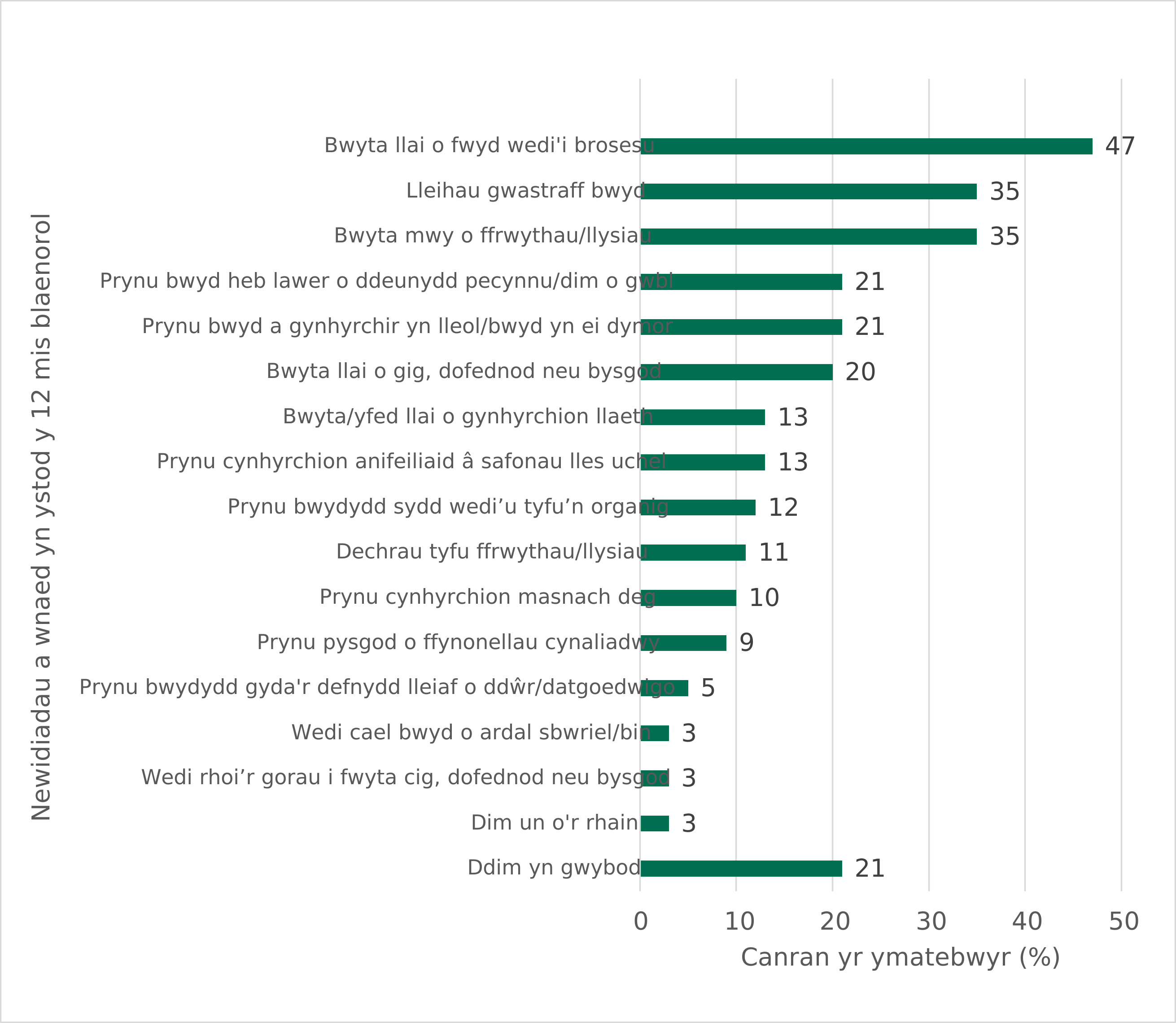
Gofynnwyd i’r ymatebwyr, pa newidiadau, o restr o opsiynau, a wnaed ganddynt yn ystod y 12 mis blaenorol, os o gwbl. Y newidiadau mwyaf cyffredin a nodwyd gan yr ymatebwyr oedd bwyta llai o fwyd wedi’i brosesu (47%), dechrau bwyta mwy o ffrwythau a/neu lysiau (35%), a dechrau lleihau gwastraff bwyd (35%). Dywedodd tua un rhan o bump o’r ymatebwyr eu bod wedi dechrau prynu bwyd heb lawer o ddeunydd pecynnu neu ddim o gwbl (21%), wedi dechrau prynu bwyd a gynhyrchwyd yn lleol neu fwyd sydd yn ei dymor (21%), a’u bod wedi bwyta llai o gig, dofednod, neu bysgod (20%). Fodd bynnag, dywedodd 3% o’r ymatebwyr nad oeddent wedi gwneud unrhyw un o’r newidiadau a restrwyd a dywedodd 21% o’r ymatebwyr nad oeddent yn gwybod a oeddent wedi gwneud unrhyw un o’r newidiadau a restrwyd yn y 12 mis blaenorol (Ffigur 23). (footnote 23)
Newidiadau i arferion bwyta ac ymddygiadau sy’n gysylltiedig â bwyd
Ffigur 23. Newidiadau a wnaed gan ymatebwyr yn ystod y 12 mis blaenorol
Lawrlwytho’r siart hon
Ffynhonnell: Bwyd a Chi 2: Cylch 10
-
Adroddwyd ddiwethaf ar y modiwl ‘Bwyta gartref’ llawn yn yr adroddiad Bwyd a Chi 2: Prif Ganfyddiadau Cylch 9. Adroddwyd ddiwethaf ar y modiwl craidd yn yr adroddiad Bwyd a Chi 2: Prif Ganfyddiadau Cylch 8.
-
Cwestiwn: Pan fyddwch chi gartref, pa mor aml, os o gwbl, rydych chi’n golchi eich dwylo cyn dechrau paratoi neu goginio bwyd? Ymatebion: bob amser, y rhan fwyaf o’r amser, tua hanner yr amser, weithiau, byth, ddim yn gwybod. Sylfaen = 4462, pawb a ymatebodd ar-lein a’r rheiny a gwblhaodd yr holiadur ‘Bwyta Gartref’ trwy’r post sy’n gwneud rhywfaint o waith paratoi neu goginio bwyd ar gyfer eu haelwyd.
-
Cwestiwn: Pan fyddwch chi gartref, pa mor aml, os o gwbl, rydych chi’n golchi eich dwylo yn syth ar ôl trin cig, dofednod neu bysgod amrwd? Ymatebion: bob amser, y rhan fwyaf o’r amser, tua hanner yr amser, weithiau, byth, dydw i ddim yn coginio cig, dofednod na physgod, ddim yn gwybod. Sylfaen = 4324, pawb a ymatebodd ar-lein, a’r rheiny a gwblhaodd yr holiadur ‘Bwyta Gartref’ trwy’r post, sy’n gwneud rhywfaint o waith paratoi neu goginio bwyd yn eu cartref, ac eithrio’r rheiny a ddywedodd ‘dydw i ddim yn coginio cig, dofednod na physgod’ a’r rheiny na wnaethant nodi dim.
-
Cwestiwn: Pan fyddwch chi gartref, pa mor aml, os o gwbl, rydych chi’n golchi eich dwylo cyn bwyta? Ymatebion: bob amser, y rhan fwyaf o’r amser, tua hanner yr amser, weithiau, byth, ddim yn gwybod. Sylfaen = 4812, pawb a ymatebodd ar-lein a’r rheiny a gwblhaodd yr holiadur ‘Bwyta Gartref’ trwy’r post.
-
Cwestiwn: Wrth fwyta y tu allan i’r cartref, pa mor aml, os o gwbl, rydych chi’n golchi eich dwylo, neu’n defnyddio hylif diheintio dwylo neu weips cyn bwyta? Ymatebion: bob amser, y rhan fwyaf o’r amser, tua hanner yr amser, weithiau, byth, ddim yn gwybod. Sylfaen = 4804, pawb a ymatebodd ar-lein a’r rheiny a gwblhaodd yr holiadur ‘Bwyta Gartref’ trwy’r post.
-
Cwestiwn: Beth ydych chi’n meddwl yw’r tymheredd cywir ar gyfer y tu mewn i’ch oergell? Ymatebion: llai na 0 gradd C (llai na 32 gradd F), rhwng 0 a 5 gradd C (32 i 41 gradd F), mwy na 5 ond llai nag 8 gradd C (42 i 46 gradd F), 8 i 10 gradd C (47 i 50 gradd F), mwy na 10 gradd C (dros 50 gradd F), arall, ddim yn gwybod. Sylfaen = 4789, pawb a ymatebodd ar-lein a phawb a gwblhaodd yr holiadur ‘Bwyta Gartref’ trwy’r post, ac eithrio’r rheiny sydd heb oergell.
-
Cwestiwn: Ydych chi, neu rhywun arall yn eich cartref, byth yn gwirio tymheredd eich oergell? Ymatebion: ydw, nac ydw, does dim angen i mi – mae ganddi larwm sy’n canu os yw’n rhy boeth neu’n rhy oer, ddim yn gwybod. Sylfaen = 4788, pawb a ymatebodd ar-lein a phawb a gwblhaodd yr holiadur ‘Bwyta Gartref’ trwy’r post, ac eithrio’r rheiny sydd heb oergell.
-
Cwestiwn: Pa mor aml, os o gwbl, rydych chi neu rywun arall yn eich cartref yn gwirio tymheredd yr oergell? Ymatebion: o leiaf bob dydd, 2-3 gwaith yr wythnos, unwaith yr wythnos, llai nag unwaith yr wythnos ond mwy nag unwaith y mis, unwaith y mis, pedair gwaith y flwyddyn, 1-2 waith y flwyddyn, byth/llai aml, ddim yn gwybod. Sylfaen = 2448, pawb a ymatebodd ar-lein a phawb a gwblhaodd yr holiadur ‘Bwyta Gartref’ lle’r oedd rhywun yn y cartref yn gwirio tymheredd yr oergell.
-
Cwestiwn: Pa mor aml, os o gwbl, rydych chi’n coginio bwyd nes ei fod yn stemio’n boeth ac wedi’i goginio’r holl ffordd drwodd? Ymatebion: bob amser, y rhan fwyaf o’r amser, tua hanner yr amser, weithiau, byth, ddim yn gwybod. Sylfaen = 4462, pawb a ymatebodd ar-lein a’r rheiny a gwblhaodd yr holiadur ‘Bwyta Gartref’ trwy’r post sy’n gwneud rhywfaint o waith paratoi neu goginio bwyd ar gyfer eu haelwyd.
-
Mae data ar fwyta cig coch, hwyaid, byrgyrs cig eidion, selsig a phorc pan fydd y cig yn binc, neu pan fydd y suddion yn binc neu’n goch, ar gael yn adroddiad Bwyd a Chi 2: Cylch 9.
-
Cwestiwn: Pa mor aml, os o gwbl, rydych chi’n bwyta cyw iâr neu dwrci os yw’r cig yn binc neu os yw’r suddion yn binc neu’n goch? Ymatebion: bob amser, y rhan fwyaf o’r amser, tua hanner yr amser, weithiau, byth, ddim yn gwybod. Sylfaen = 4455, pawb a ymatebodd ar-lein, a’r rheiny a atebodd yr holiadur ‘Bwyta Gartref’ trwy’r post, nad ydyn nhw’n figaniaid, yn bysglysieuwyr nac yn llysieuwyr, ac sy’n bwyta cyw iâr/twrci.
-
Cwestiwn: Wrth ailgynhesu bwyd, sut rydych chi’n gwybod ei fod yn barod i’w fwyta? (Dewiswch bob un sy’n berthnasol.) Ymatebion: Rwy’n gwirio bod y canol yn boeth, Rwy’n dilyn y cyfarwyddiadau ar y label, Rwy’n gweld ei fod yn byrlymu, Rwy’n defnyddio amserydd i sicrhau ei fod wedi’i goginio am gyfnod penodol, Rwy’n gwirio bod y tymheredd yn gyson drwyddo, Rwy’n gallu gweld stêm yn dod ohono, Rwy’n ei flasu, Rwy’n ei droi, Rwy’n rhoi fy llaw drosto/yn ei gyffwrdd, Rwy’n defnyddio thermomedr/prôb, Dim un o’r uchod, Dydw i ddim yn gwirio. [1]Sylfaen = 4258, pawb a ymatebodd ar-lein a’r rheiny a gwblhaodd yr holiadur ‘Bwyta gartref’ trwy’r post sy’n gwneud rhywfaint o waith paratoi bwyd neu goginio yn eu cartref, ac eithrio’r rheiny a ddywedodd ‘Dydw i ddim yn ailgynhesu bwyd’ a’r rheiny na wnaethant nodi dim.
-
Cwestiwn: Sawl gwaith y byddech chi’n ystyried ailgynhesu bwyd ar ôl iddo gael ei goginio am y tro cyntaf? Ymatebion: ddim o gwbl, unwaith, ddwywaith, mwy na dwywaith, dydw i ddim yn gwybod. Sylfaen = 4267, pawb a ymatebodd ar-lein a phawb a gwblhaodd yr holiadur ‘Bwyta Gartref’ sy’n ailgynhesu bwyd gan ddefnyddio un o’r dulliau yn y cwestiwn blaenorol.
-
Cwestiwn: Pryd yw’r hwyraf y byddech chi’n bwyta unrhyw fwyd dros ben sydd wedi’i storio yn yr oergell? Ymatebion: yr un diwrnod, o fewn 1-2 ddiwrnod, o fewn 3-5 diwrnod, mwy na 5 diwrnod yn ddiweddarach, mae’n amrywio gormod, ddim yn gwybod. Sylfaen = 4812, pawb a ymatebodd ar-lein a’r rheiny a gwblhaodd yr holiadur ‘Bwyta Gartref’ trwy’r post.
-
Mae data ar olchi mathau eraill o gig, pysgod a dofednod ar gael yn y modiwl ‘Bwyta Gartref’ llawn (gweler y canlyniadau diweddaraf yn Bwyd a Chi 2: Cylch 9)
-
Cwestiwn: Pa mor aml, os o gwbl, rydych chi’n golchi cyw iâr amrwd? Ymatebion: bob amser, y rhan fwyaf o’r amser, tua hanner yr amser, weithiau, byth, ddim yn gwybod. Sylfaen = 4462, pawb a ymatebodd ar-lein a’r rheiny a gwblhaodd yr holiadur ‘Bwyta Gartref’ trwy’r post sy’n gwneud rhywfaint o waith paratoi neu goginio bwyd ar gyfer eu haelwyd.
-
Cwestiwn: Sut rydych chi’n storio cig a dofednod amrwd yn yr oergell? Dewiswch bob un sy’n berthnasol. Ymatebion: oddi wrth fwydydd wedi’u coginio, wedi’u gorchuddio â ffilm/ffoil, mewn cynhwysydd wedi’i selio, yn eu deunydd pecynnu gwreiddiol, ar blât. Sylfaen = 4359, pawb a ymatebodd ar-lein, a’r rheiny a gwblhaodd yr holiadur ‘Bwyta Gartref’ trwy’r post, ac eithrio’r rheiny a ddywedodd ‘dydw i ddim yn prynu nac yn storio cig na dofednod’, ‘dydw i ddim yn storio cig/dofednod yn yr oergell’ a’r rheiny a atebodd ‘Ddim yn gwybod’.
-
Ble yn yr oergell rydych chi’n storio cig a dofednod amrwd? Ymatebion: ble bynnag y mae lle, ar silff uchaf yr oergell, yng nghanol yr oergell, ar waelod yr oergell. Sylfaen = 4287, pawb a ymatebodd ar-lein, a’r rheiny a gwblhaodd yr holiadur ‘Bwyta Gartref’ trwy’r post, sy’n storio cig/dofednod amrwd yn yr oergell, ac eithrio’r rheiny nad ydynt yn prynu/storio cig/dofednod, nad oes ganddynt oergell neu a atebodd ‘Ddim yn gwybod’.
-
Cwestiwn: Pa un o’r rhain sy’n dangos nad yw bwyd yn ddiogel i’w fwyta mwyach? Ymatebion: y dyddiad ‘defnyddio erbyn’, y dyddiad ‘ar ei orau cyn’, y dyddiad ‘gwerthu erbyn’, y dyddiad ‘arddangos tan’, pob un o’r rhain, mae’n dibynnu, dim un o’r rhain, ddim yn gwybod. Sylfaen = 4812, pawb a ymatebodd ar-lein a’r rheiny a gwblhaodd yr holiadur ‘Bwyta Gartref’ trwy’r post.
-
Cwestiwn: Pa mor aml, os o gwbl, rydych chi’n edrych ar ddyddiadau ‘defnyddio erbyn’ pan fyddwch chi ar fin coginio neu baratoi bwyd? Ymatebion: bob amser, y rhan fwyaf o’r amser, tua hanner yr amser, weithiau, byth, mae’n amrywio gormod i ddweud, ddim yn gwybod. Sylfaen = 4462, pawb a ymatebodd ar-lein a’r rheiny a gwblhaodd yr holiadur ‘Bwyta Gartref’ trwy’r post sy’n gwneud rhywfaint o waith paratoi neu goginio bwyd ar gyfer eu haelwyd.
-
Mae’r ymatebwyr a atebodd ‘Ddim yn gwybod / Dydw i byth yn gwirio dyddiad defnyddio erbyn hwn’ wedi'u heithrio o’r cylch hwn.
-
Cwestiwn: Pryd, os o gwbl, yw’r hwyraf y byddech chi’n bwyta neu’n yfed yr eitemau canlynol ar ôl eu dyddiad ‘defnyddio erbyn’? a = cigoedd wedi’u coginio; b = pysgod mwg; c = salad mewn bagiau; d = caws; e = llaeth; f = cig amrwd fel cig eidion/porc/cig oen/dofednod; g = pysgod cregyn; h = unrhyw bysgod eraill; i = iogwrt. Ymatebion: 1-2 ddiwrnod ar ôl y dyddiad ‘defnyddio erbyn’, 3-4 diwrnod ar ôl y dyddiad ‘defnyddio erbyn’, 5-6 diwrnod ar ôl y dyddiad ‘defnyddio erbyn’, 1-2 wythnos ar ôl y dyddiad ‘defnyddio erbyn’, mwy na phythefnos ar ôl y dyddiad ‘defnyddio erbyn’, dydw i ddim yn bwyta/yfed hyn ar ôl y dyddiad ‘defnyddio erbyn’, ddim yn gwybod/dydw i byth yn gwirio’r dyddiad ‘defnyddio erbyn’ ar gyfer y bwyd hwn. Sylfaen A= 4383, B=3387, C=4340, D=4530, E=4510, F=4335, G=3387, H=3836, I=4358, pawb a ymatebodd ar-lein a’r rheiny a gwblhaodd yr holiadur ‘Bwyta Gartref’ trwy’r post sy’n bwyta A/B/C/D/F/F/G/H/I. Sylwer: nid yw’r ffigurau a ddangosir yn adio i 100% gan na ddangosir pob ymateb.
-
Cwestiwn Pa rai o’r newidiadau canlynol, os o gwbl, ydych chi wedi’u gwneud yn ystod y 12 mis diwethaf? Ymatebion: Rhoi’r gorau i fwyta cig neu ddofednod neu bysgod yn gyfan gwbl, Bwyta llai o gig neu ddofednod neu bysgod, Bwyta llai o wyau/yfed llai o laeth neu gynnyrch llaeth, Bwyta llai o fwyd wedi’i brosesu, Dechrau bwyta mwy o ffrwythau a/neu lysiau, Dechrau gwastraff cyn lleied o fwyd â phosib, Dechrau tyfu ffrwythau a/neu lysiau, Dechrau prynu cynhyrchion anifeiliaid â safonau lles uchel, Dechrau prynu cynhyrchion masnach deg, Dechrau prynu bwyd wedi’i gynhyrchu’n lleol neu fwyd sydd yn ei dymor, Dechrau prynu bwydydd gydag ychydig iawn o ddeunydd pecynnu neu ddim deunydd pecynnu o gwbl, Dechrau prynu bwydydd sydd wedi’u cynhyrchu heb fawr o ddefnydd o ddŵr a/neu ychydig o ddatgoedwigo, Dechrau prynu bwydydd a dyfwyd yn organig, Dechrau prynu pysgod o ffynonellau cynaliadwy, Dechrau cael bwyd o ardal wastraff neu finiau archfarchnad neu siop (freeganism), Arall, Dim un o’r rhain, Ddim yn gwybod. Sylfaen = 3926; pawb a ymatebodd ar-lein.
-
Sylwch fod yr opsiynau ymateb ar yr echelin-y yn labeli talfyredig. I gael manylion llawn yr opsiynau ymateb, gweler troednodyn 81.